
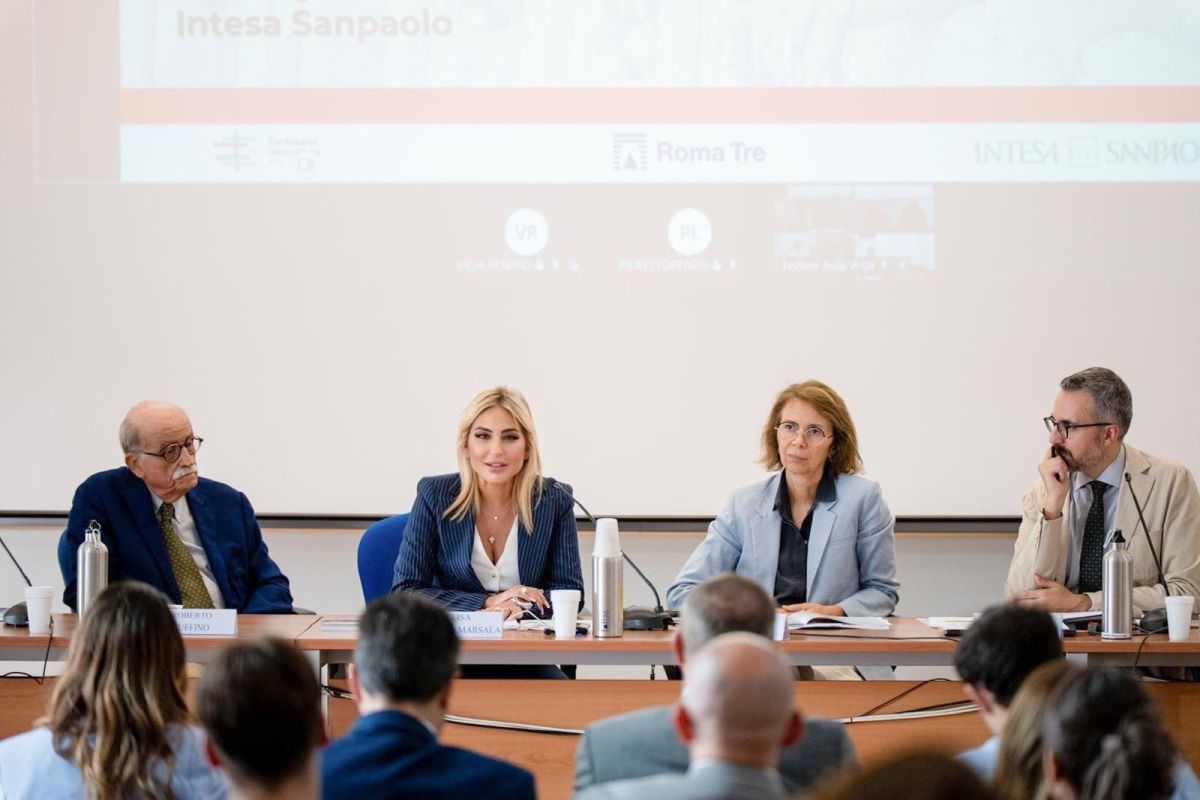
ROMA (ITALPRESS) – The geography of the desires of mobility of Italian adolescents is experiencing a profound change. As a backdrop to this new scenario, the progressive openness to non-traditional international markets and an increasingly widespread global educational offer: if the United States absorbs a lower interest rate than the past (from 72% compared to 84% earlier), China’s attractiveness as a destination for a period of study among young people, whose interest has increased from 29% in 2017 to 45% in 2026. This is what emerges from the second edition of the research that Fondazione Intercultura ets has entrusted to Ipsos-Doxa to understand the perception and attraction of the Asian country by comparing a representative sample of 500 Italian students (14-19 years) with 114 former participants in the annual mobility programs in China with Intercultura. The aim of the study is to understand the perceived Asian country, assess its attraction and measure the long-term impact of a life and study experience in this country at adolescent age, from a school, work and personal point of view. The research was presented in Rome, during the event “Moving Minds: Italian adolescents, China and intercultural mobility. The perceptions of young people through the encounter and intercultural mobility in China” organized by Fondazione Intercultura ets, in partnership with Intesa Sanpaolo and Università degli Studi Roma Tre.Mattia Baiutti, Secretary General of Fondazione Intercultura, underlines: “The survey confirms the value of international student mobility at adolescent age in the development of cross- and non-cognitive skills fundamental to work and, more so, for active citizenship. This applies not only to the nearest and traditional destinations, but also to culturally farther contexts, such as the Far East and China in particular. And it is significant that they are the same teens to recognize in China a destination of particular interest in a study and growth experience.” Elisa Z scope Marsala, Head of Education Ecosystem and Global Value Programs of Intesa Sanpaolo, points out that “preparing young people to the challenges of an increasingly global world means offering them concrete opportunities for growth, comparison and openness to international cultures and markets. The results of this research confirm the value of student mobility experiences in the development of linguistic, intercultural and relational skills increasingly required in study and work paths. To Intesa Sanpaolo support programmes such as those of Fondazione Intercultura means investing in the human capital of the country, promoting educational opportunities capable of expanding the horizons of children, strengthening their autonomy and accompanying them in the construction of a more open, conscious and global citizenship.” Andrea Alemanno, Head of Public Affairs & Corporate Reputation of Ipsos stresses that “China is one of the great powers of our time, among young Italians emerges an increasingly less stereotypical knowledge of the country. In addition to the recognition of its economic, technological and political role, attention is growing towards its cultural, human and relational dimensions. This shows curiosity about this reality and the will to understand it better. The research emphasizes inequivocally the value of direct experience, especially the one that goes beyond the holiday. When a country is lived it does not only change the way to look at it: it also changes those who live it. Former exchange participants tell us to have more relational skills, autonomy and adaptability today. So international mobility goes far beyond the discovery of a strategic reality like China: it represents a formative experience that contributes to building more aware young people, open to the world and prepared to face the challengesof an increasingly global and complex society.” The interest in China is driven by a strong dualism between the future and tradition. Italian students are attracted mainly by technological innovation (45%) and lifestyle (41%), recognizing the country the exclusive advantage of offering access to emerging markets and technologies (44%). At the same time, the desire to learn Chinese grows, which is attested as the second most desired non-Western language (37%) after Japanese. Among the nucleus of young people “very interested” to China (28% of the total, consisting mainly of girls 14-15 years of high school), the interest in learning the language sketches even to 63%. Overall, the general sentiment towards the country has improved sharply, with the positive opinion of students from 54% of 2017 to 88% today. From 2003 to today, there are almost 1,200 Italian students and students who have chosen China for a school year or for a study stay of 4 weeks. The growth of departures has been constant over time, reaching the share of 100 students in the 2019-20 school year. In 25 years of strategic partnership, some 830 students from secondary schools of the second degree – from both Italy and abroad – took part in international school programs thanks to the contribution of Intesa Sanpaolo and the Intercultura Foundation. For nearly 60 countries around the world, these young people have lived up to a whole year of school abroad, acting as ambassadors of a new global mentality. Their path does not end with the term of the scholarship, but continues with the active construction of careers in international contexts: a pact of trust between institutions and young people in support of the human capital of the country. Of these 830 boys, 40 chose precisely China as a destination of their study stay. -photo press office Intesa Sanpaolo-(ITALPRESS).
