
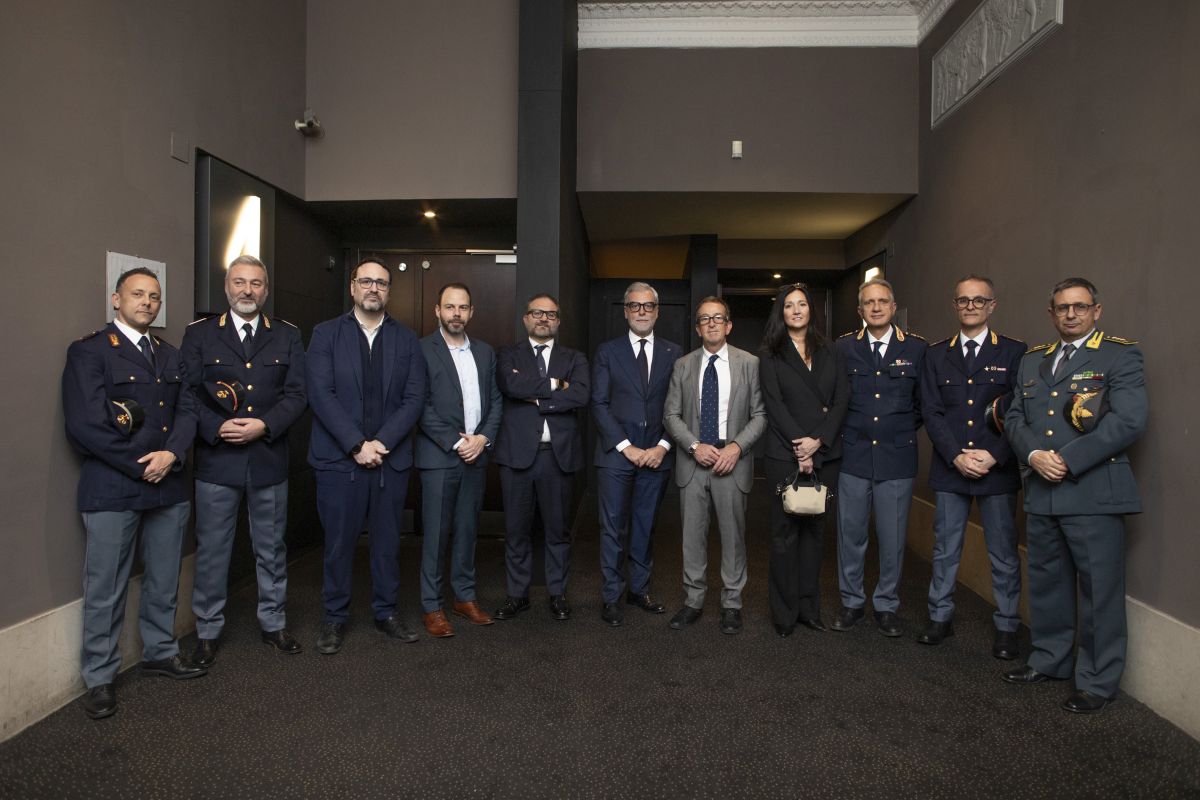
ROMA (ITALPRESS) – What drives young Italians to use illegal channels to enjoy audiovisual content? What levers exploit to decrease a phenomenon that involves altogether 56% of children from 10 to 25 years? To these questions FAPAV – Federation for the Protection of Audiovisual and Multimedia Content Industries – has tried to give an answer through a survey conducted by Ipsos Doxa and presented by President Nando Pagnoncelli this morning in Rome, at the headquarters of the CIVITA Association. The photo that emerges from the qualitative-quantitative analysis focused on a very wide youth scissors (from 10 to 25 years) draws a very interesting behavioral picture from the new generations regarding audiovisual piracy. The propensity to perform illicit acts in the use of audiovisual content by the very young (10-14 years) and the adolescent belt (15-25 years) is not only derived from anticonformist motivations, rebellion or transgression towards society, even from the generalized awareness that piracy harms the industry and economy of our country, with strong occupational repercussions. 56% of the Italian boys perform acts of piracy because it has not yet matured the perception that such behaviors can generate, being real crimes, consequences and real risks to an individual character. However, there is a greater conviction of the 15-25 year olds than pre-adolescents, in performing illicit acts driven by reasoned and justified by the desire to change a system which is believed to be far from their vision. On the contrary, the very young do not have rigid convictions, they simply behave emulating most of their peers. Even the perception of some personal risks related to piracy varies significantly with age: if viruses and malware are considered very likely risks by 40% of the 10-14 years and by 44% of the 15-25 years, scams and data thefts are more concerned about the very young (35%) compared to the older (28-29%). The paradox with respect to this trend is that 62% of the 15-25 year old pirates declare to have suffered pirate cyber attacks, but this experience does not result in greater caution. On the contrary, they seem to have developed mitigation strategies (use of dedicated devices, technical precautions) that lead them to perceive less risks. The perception of the consequences of audiovisual piracy appears in a general way for young people rather depotentiated. This minimisation comes from the feeling that it is a widespread phenomenon, without visible victims. Moreover, there is almost a sort of indifference to the economic and social damage caused by the illegal phenomenon. In fact, only 33% of the 10-14 year olds and 38% of the 15-25 year olds declare that they have received information on the risks of audiovisual piracy, especially in school or family. However, a fact appears interesting: the pirates are more informed of the risks than the non pirates. Precious suggestions emerge from the analysis: If you want to change perceptions and rooted behaviors, it is not enough to convey general information about the risks and effects of piracy, a collective-massmedia narrative must be promoted around acts of piracy. To speak concretely and crediblely of individual consequences and risks, making them perceive as common and real appears more effective than the focus on social damage (also working). School and family are crucial in creating the right cultural framework, in conveying disapproval to behavior that, even if not habitual, causes harm and danger to all. These consequences must emerge more continuously and through effective communication. After the introduction of the Secretary General of the Civita Association, Simonetta Giordani, and the institutional greetings of Federico Mollicone, President VII Commission Culture, Science and Education of the Chamber of Deputies, the research presented has left ideas of analysis and reflection that have been debated in a subsequent institutional comparison moderated by Andrea Biondi, journalist of the Sun 24 Special Advisory Committee for the Law of Autore (MiC) and Professor LUISS, LucianaVI Migliavacca, President of UNICE, Chairman of Scuolattiva Onlus, Ivano Gabrielli. To close the event Nicola Maccanico, Vice President Civita. During the morning, the FAPAV/ACE Awards (Alliance for Creativity and Entertainment) were also announced, assigned to the Nucleo Speciale Beni e Servizi della Guardia di Finanza and to the Postal Police for the significant professional, social and cultural commitment to protect and support the Copyright, Intellectual Property and Creativity. To hand over the Awards to Colonel Fabio Marco Vetrano, Commander of the Radiodiffusion Group and Editoria of the Guardia di Finanza, and to Luigi Rinella, Central Director for the Scientific Police and Cyber Security, President FAPAV, Federico Bagnoli Rossi, and Larissa Knapp, Executive Vice President & Chief Content Protection Officer MPA.“We are very happy with this investigation that, for the first time, deepens more in detail. The results clearly show the need to work even more decisively on a narrative that highlights what can happen by pirated audiovisual content. The new Italian legislation, one of the most advanced at European level, together with the innovative AGCOM procedure with the blockade in 30 minutes of all illegal content, certainly represents a new and effective frontier in terms of contrast. But that’s not enough. We need more communication and at the same time we need to promote awareness campaigns and legal education. For FAPAV one of the pillars of the fight against piracy is precisely communication. For example, our “We Are Stories” campaign, which came to the third edition, tells the stories of young people who have realized or wish to realize the dream of working in audiovisual industries, claiming that choosing legality you can protect these dreams. In essence, to combat any form of piracy, it is necessary to act on multiple fronts by synergistically involving Institutions, Industries and Forces of the Order,” said Federico Bagnoli Rossi, President FAPAV. “Educational activities are the most powerful tool in the long term that we have to shape responsible digital habits and strengthen respect for creativity – said Larissa Knapp, Executive Vice President and Content Protection Officer of the Motion Picture Association. Italy is a global leader in this area, from the pioneer blocking framework of AGCOM sites to the exceptional work of the Postal Police and the Guardia di Finanza in the dismantling of sophisticated piracy networks. MPA and ACE are proud to support FAPAV and these partners, and we look forward to expanding our collaboration to protect the creative economy and safeguard consumers in an increasingly complex digital world.” “Among young Italians remains a widespread unawareness of the impact of piracy. The resulting behavior is consistent with the life season that they are going through, characterized by the search for autonomy, the need for acceptance in the peer group and the low perception of risk. The sub-assessment of social and economic damage to the sector is accompanied by the conviction that controls and sanctions are rare. Inverting this trend will take time: it is a game that is played both against technological advance, which facilitates the illicit use of audiovisual content, as well as against the typical dynamics of age. In communication it will be crucial to act on the right levers: personal and immediate risks, concreteness of sanctions, languages and credible faces for boys, also through testimonials and partnerships. Thus piracy will stop appearing as a ‘less evil in their eyes’, said Nando Pagnoncelli, President Ipsos Doxa.
– FAPAV press office photos –
(ITALPRESS).
