
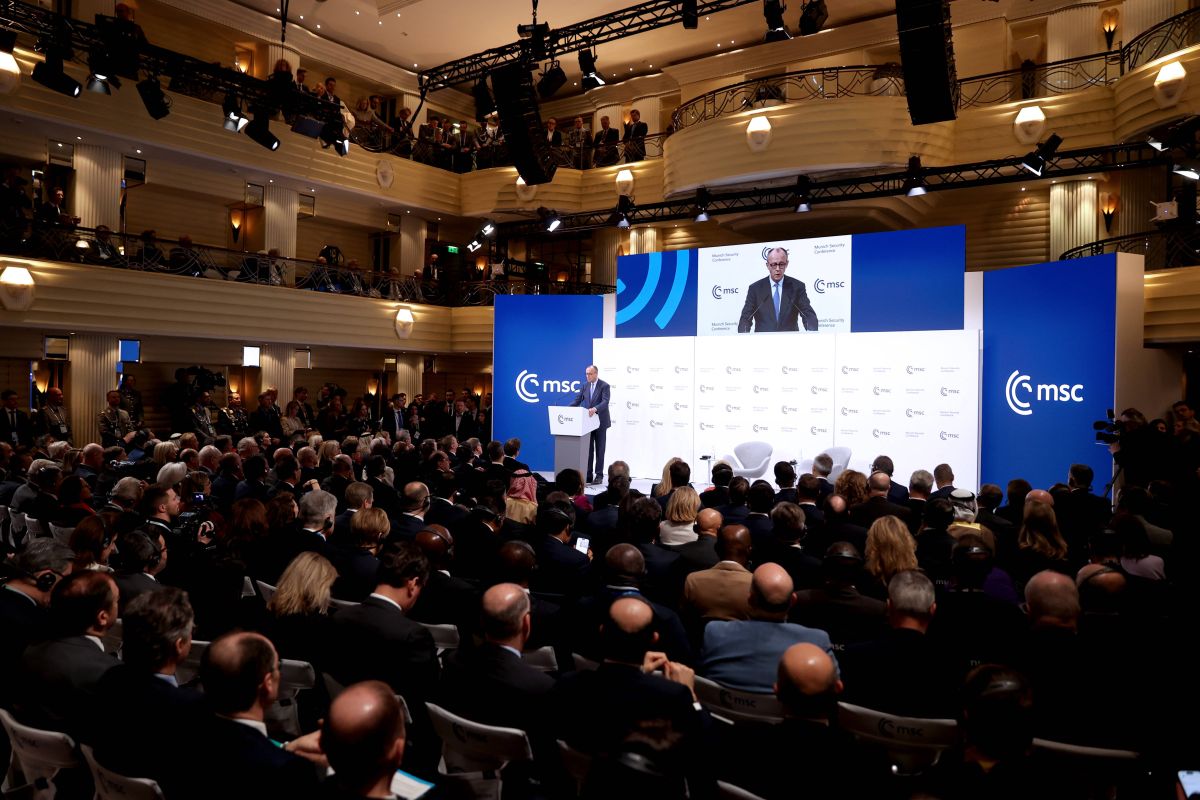
MONACO DI BAVIERA (GERMANY) (ITALPRESS) – The 62nd Conference on Security in Munich opened today with a series of interventions focusing on transatlantic relations, European autonomy and multilateral solidarity, in a global context marked by persistent tensions and conflict in Ukraine. In his opening speech, German Chancellor Friedrich Merz offered a firm analysis of geopolitical dynamics, stating that “the international order based on rights and rules no longer exists in the form we knew” and that “in an age of rivalry among great powers, neither will the United States be strong enough to act alone.” The Chancellor stressed the need to “restore and revive transatlantic trust” between Europe and the United States.
Merz also revealed the start of confidential talks with French President Emmanuel Macron on the development of a European nuclear deterrent to be integrated within the NATO framework, indicating a boost towards a more strategic autonomy at European level, even within the alliance.
The NATO Secretary-General, Mark Rutte, highlighted that the Alliance is destined to become “more Europe-driven” in the coming years thanks to the increase in defence costs by the European States. At the same time, Rutte reiterated the centrality of cooperation with the United States and the need for a “phase transition” through the Alliance’s planning processes.
The President of the European Commission, Ursula von der Leyen, explained the operational elements of the Security Action for Europe (Safe) programme, specifying that the resources allocated – including approximately 90 billion euros of loans to Ukraine – are bound by conditions that favour the production of strategic technologies in Europe and in partner countries.
In the context of Ukraine as a key element of the security agenda, President Volodymyr Zelensky reiterated the centrality of the ongoing war in defining “Euro-Atlantic strategic priorities”, stressing that the conflict continues to influence the security of the entire continent and requires an increase in joint production of defensive capacities. Zelensky’s overall message reiterated the urgency of strengthening European collective security architecture and engaging partners in a framework of lasting operational cooperation.
Vice-Premier and Foreign Minister Antonio Tajani represented the Italian position through an articulated intervention, which recalled the importance of full interoperability between European forces and NATO, the need for joint industrial reinforcement and Italy’s commitment to support initiatives capable of promoting a multi-level deterrence. Tajani said that “Italy supports the construction of common European operational capacities and interoperability with NATO, strengthening the industrial and technological resilience of the Union”.
At the same time, French President Emmanuel Macron intervened in institutional work, bringing attention to European strategic sovereignty and the importance of balancing European autonomy with the maintenance of effective cooperation both transatlantic and multilateral. Looking at the next two days of the conference, attention will focus on panels dedicated to support Ukraine, the future of the European deterrence shield, the challenges posed by strategic competition and the proposals for strengthening the productive chains of defence.
Tomorrow the intervention of the US Secretary of State Marco Rubio, who will list Washington’s priorities in view of the new round of negotiations on the Ukrainian conflict.
– Photo IPA Agency –
(ITALPRESS).
