
by Stefano Vaccara
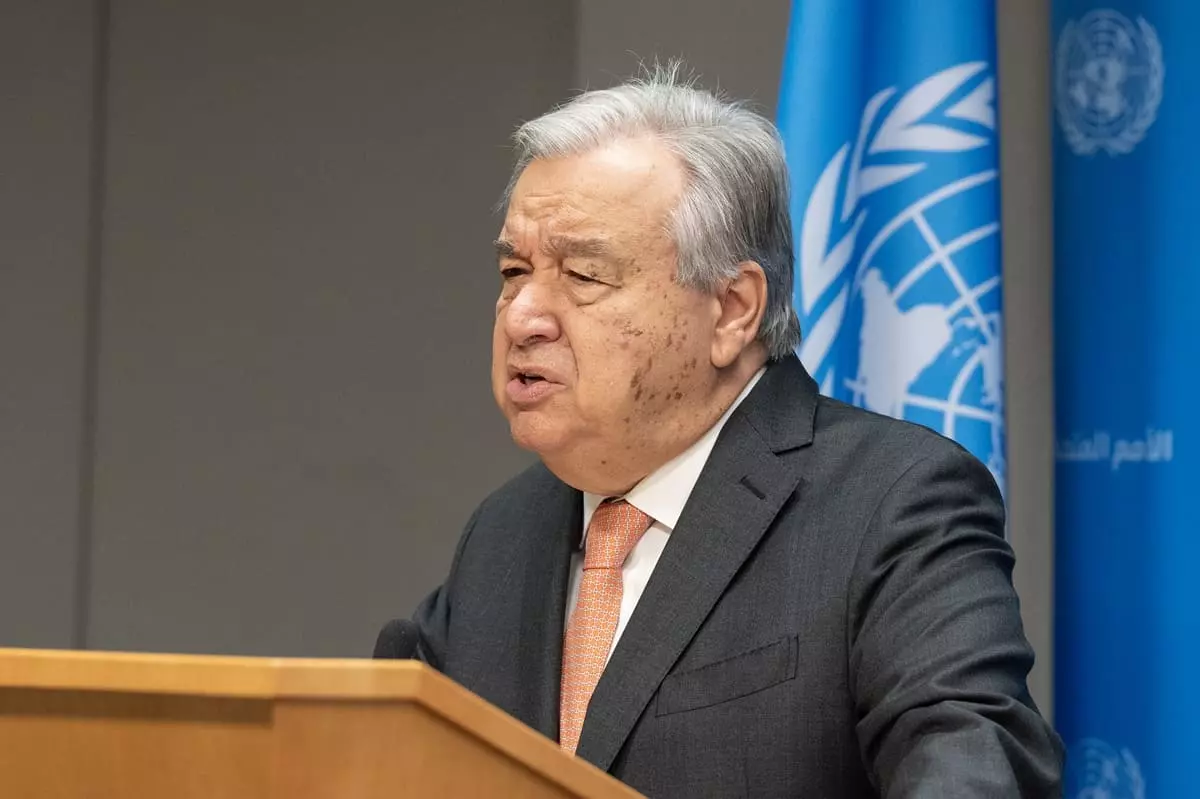
NEW YORK (USA) (ITALPRESS) – At the United Nations Security Council, during the high-level open debate on “Reaffirming international rule of law: Pathways to reinvigorating peace, justice, and multilateralism”, Secretary General Antonio Guterres launched without means the alarm that the state of international law is under siege and risks being replaced by a “law of the jungle only dealt with”. Guterres underlined that this approach erodes trust among countries, fuels impunity and undermines the foundations of the multilateral system built on the UN Charter, reasserting that for smaller countries international law is a “lifeline” of sovereignty, dignity and justice, while for powers it must be a guardrail of behavior even during disagreement and conflict. It then indicated three action priorities: respectful of legal obligations, use of peaceful dispute resolution instruments and strengthening international courts, because “there can be no sustainable peace without liability”.
Among the interventions, Italy’s position was clear, with Ambassador Giorgio Marrapodi who reiterated the firm adherence of his country to the United Nations Charter, sovereignty and territorial integrity of States and human rights. Marrapodi, at his first speech to the Council after presenting the credentials in Guterres, drew up a framework of long-term commitments, recalling the need to comply with international legal obligations, to promptly address violations of law, to translate fundamental rights in reality daily for societies, to peacefully resolve disputes, and to support cooperation between the International Court of Justice and the Security Council. He also reaffirmed the importance of making the United Nations more democratic, representative and transparent to deliver to future generations a world where law prevails and not force prevails. Ambassador Tammy Bruce, Deputy Representative of the United States, presented a vision of the United States of a different international order, and as a concrete commitment to peace, listed a series of diplomatic and operational initiatives, including efforts for a truce in Sudan, support for agreements between the Democratic Republic of the Congo and Rwanda, the approval of a peace plan on Gaza and responses to crisis in Haiti and Western Sahara. The delegation defended US action as part of a new era of peace and international stability, citing also freedom of navigation as a key element.
The EU ambassador to UN Stavros Lambrinidis reiterated that support for international law is not a weakness or a remnant of the past, but a commitment of principle that ensures that all voices are heard and that no national interest can justify the rejection of the fundamental rules laid down by the UN Charter. Expected were the interventions of Venezuela and Iran. The ambassador of Caracas Samuel Moncada denounced that international law requires responsibility and constancy, attacking US military actions against his country as serious violations of the Charter and immunity of Heads of State. Iranian diplomat Amir Saeid Iravani closed the debate with a strong accusation to the United States for the use of coercive threats and actions without consequences, rhetorically asking what remains of the UN Charter when a superpower can stand above the law. The debate closed without a presidential declaration, because of the political differences between the members, leaving the fundamental question open: how to defend international law in an increasingly fragmented and conflicting world.
– photo IPA Agency –
(ITALPRESS).
