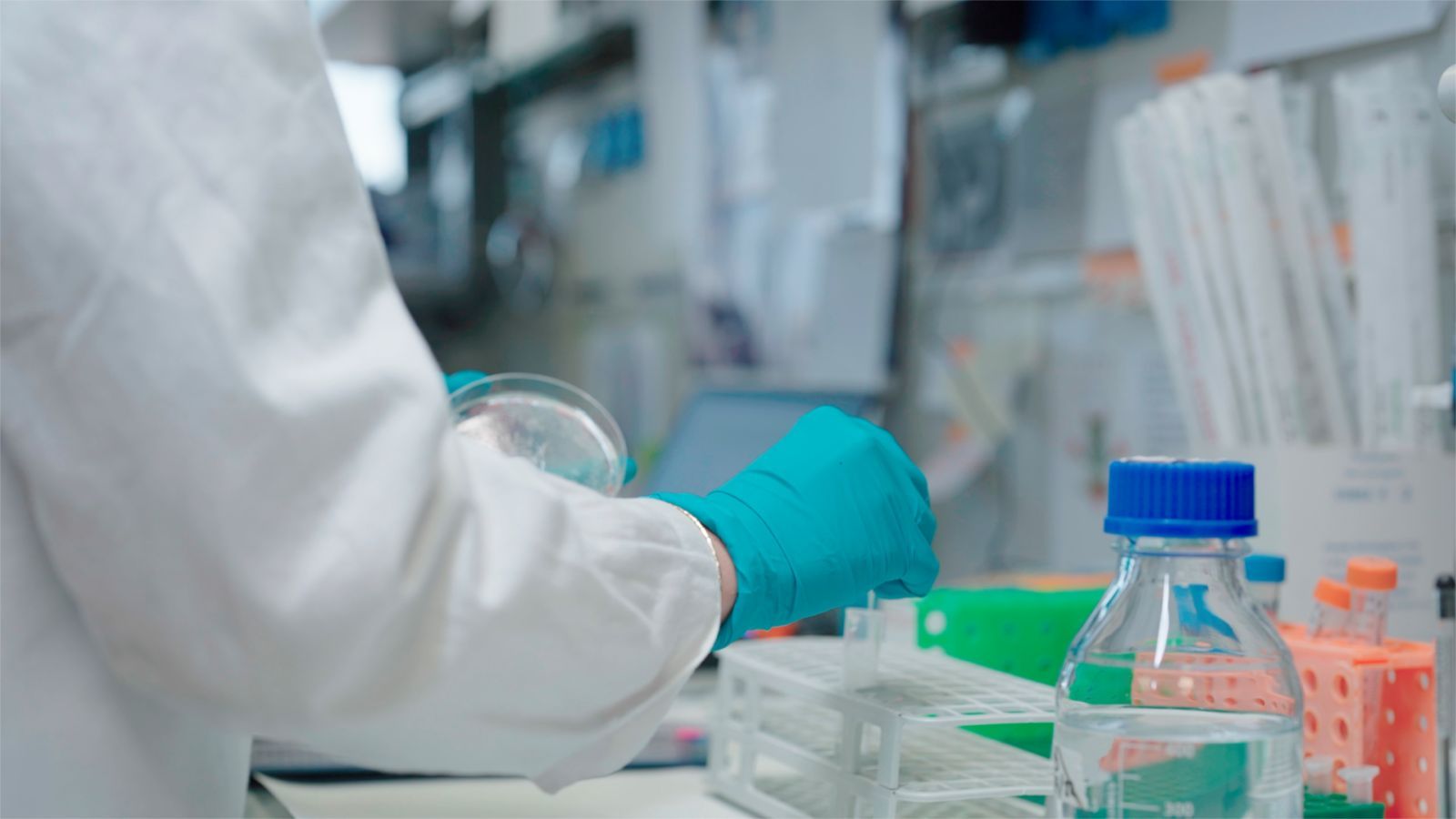
MILAN (ITALPRESS) – The Unit of Ethology and transplantation of bone marrow of the IRCCCS Hospital San Raffaele of Milan is a national and international reference centre for the diagnosis and treatment of the main hematological and hemato-oncological diseases. Clinical activity integrates in advanced research with experimental programs ranging from hematopoietic stem cell transplantation to the latest gene and cell therapies, such as CAR-T. The Unit follows patients with leukemia, lymphomas, myelomas, neoplasia honeyloproliferative, talassemies, falciform anemies and severe autoimmune diseases, offering personalized treatments according to the most modern international guidelines and ensuring a complete path from diagnosis, therapy, up to follow-up.Great attention is reserved to translational medicine, thanks to the collaboration with the Institute’s laboratories and The Unit is also accredited by the main national and international scientific bodies and collaborates with Italian and European networks, distinguishing itself as a pole of excellence also in the university and postgraduate training of doctors and nurses. “Emathology reflects the integrated structure of the San Raffaele system: clinical assistance, education and research”, explains Professor Fabio Ciceri, Director of the Comprehensive Cancer Center, Head of the Unit of Hematology and transplantation of Midollo Osseo of the IRCCCS Hospital San Raffaele in Milan and Ordinary of Emathology at the Università Vita-Salute San Raffaele. “Unity, in particular, sums up this triad in a clinical reality that has: an integrated department of transplants of marrow and intensive hematology, an outpatient area of day hospital, and a training activity for graduate schools students. In addition, research is highly integrated into the entire assistance system.” The care model is based on a multidisciplinary and longitudinal load of patients. “Moreover, the hematology of San Raffaele is also integrated with the transfusional medicine system that, together with the non-oncological pathology area of the sector, represents a very important part of it. The entire Unit is organized in accordance with a principle of multidisciplinaryity and long-term care of patients, in line with the first mission of the whole Hospital San Raffaele. Longitudinal means that of the patient we take care from prevention, to screening, early diagnosis and then to the definition of a therapeutic plan with the involvement of all possible disciplines, starting from radiotherapy and all the specialties that deal with complications related to treatments and disease. Together we are organized in Pathology Areas, so-called Disease Units, or areas dedicated to specific sectors, in particular to acute leukemias, myelodisplasia, myeloma, lymphomas, myeloproliferative diseases and non-oncological diseases, such as hemoglobinopathy and other rare diseases.” It also manages the size of research, which has always been the hallmark of the Hospital. “The Unit of Hematology has tried to interpret the fundamental mission of the Institute, which is to produce research and innovation to cure the patient. Research means making available to our laboratories, especially in areas of immunological type and molecular biology, interpretative hypotheses based on patient material. Often these hypotheses generate scientific feedback that, in turn, translate into new therapies and therapeutic perspectives for patients giving rise to a virtuous circle between research and the clinic that we consider intrinsic and characteristic of our reality.” Moreover, it is important to point out that, on the organizational level, the Ematologia had a decisive role in the path that led the San Raffaele to be recognized as Comprehensive Cancer Center. “The Hematology of San Raffaele was the promoter, I would say its own coordinator, of a process of reorganization of the entire oncological activity of the Hospital in the perspective of the standardization of the activities according to the criteria of the European organization of the Cancer Institute. Today we can say that the San Raffaele has become a Comprehensive Cancer Center and the Hematology within it plays a fundamental role, both in the development of procedures and multidisciplinary lines that belong historically, both and especially through the availability of advanced therapies such as CAR-T and new cell therapies, the new immunotherapies available for all patients and for all cancer diagnoses.” The Unit continues in its clinical and research activity with the aim of making the relationship between laboratory, training and care increasingly integrated, offering patients access to innovative therapies and increasingly personalized treatment paths. -photo IRCCS San Raffaele Hospital in Milan –(ITALPRESS).