
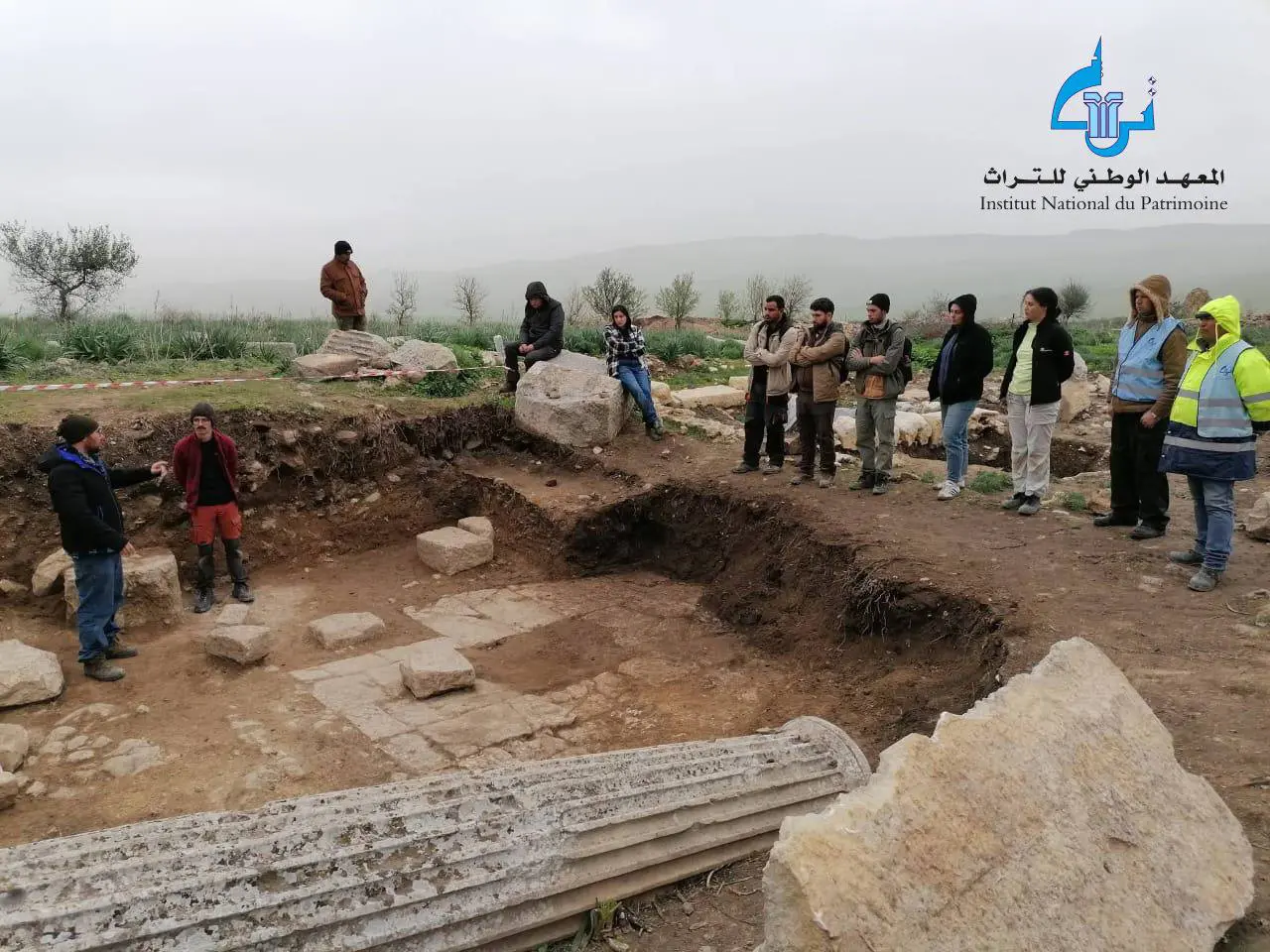
TUNISI (TUNISIA) (ITALPRESS) – The archaeological excavations conducted by an Italian-Tunisian equipe on the site of Henchir El Metria (Numluli), in the district of Béja continue. The programme is jointly implemented by the National Institute of Heritage and the University of Sassari, according to the agency Tap. The works are concentrated in the public square and in the Byzantine church. The excavations brought to light important archaeological discoveries dating back to Roman and Byzantine periods. Among the findings found are several Roman capitals and columns belonging to the Capitolium temple, statues of Roman deities, terracotta lizards, as well as panels of Byzantine mosaics of high historical and artistic value.
The Italian archaeological mission began in the site of Numluli in 2022 and is dedicated to the study of the urban structure and material finds, with the aim of deepening the scientific knowledge on this ancient city, which remains one of the archaeological sites still little explored in Tunisia. The operation is carried out in close coordination with the National Institute of Heritage and is funded by the Italian Ministry of Foreign Affairs and International Cooperation, with the support of the Italian Embassy in Tunis. Considered one of the best preserved Roman centers in northern Tunisia, the site of Henchir El Metria includes a square dominated by a Capitoline temple, a large temple, thermal baths, as well as a martyrium and an early Christian church.
– Photos Tunisian National Institute of Heritage –
(ITALPRESS).
