
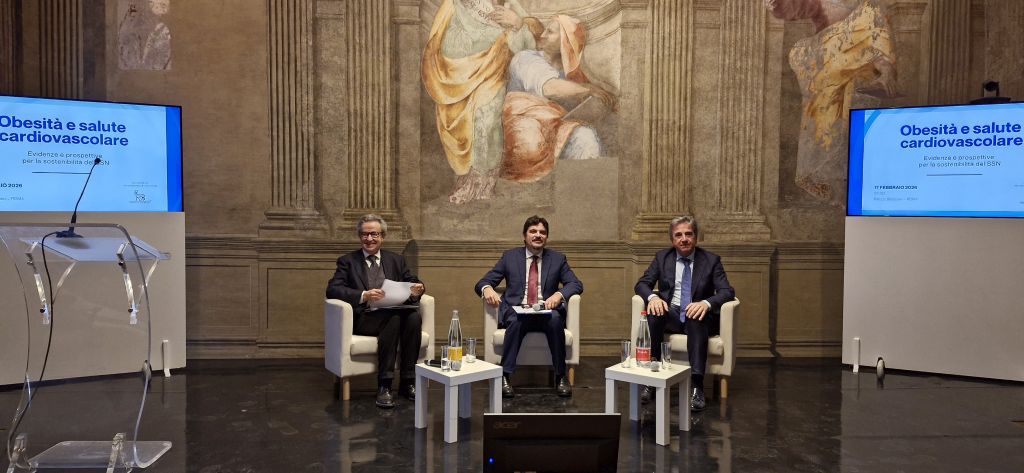
ROMA (ITALPRESS) – With over 1.4 million patients hospitalized in 5 years and an annual average expenditure of 2 billion euros, Cardiovascular Events Major Events (MACE) are confirmed among the most urgent challenges for public health and the sustainability of the healthcare system. Strictly related to the obesity of which they represent the main and most serious complication, the MACE results in a progressive increase in hospitals over time and high health costs, making up the most important share of direct costs linked to obesity. The use of pharmacological treatments that can reduce MACE in people with obesity combined with lifestyle interventions, can generate a significant economic impact for the whole system, with an estimated savings of 550 million euros in two years. These are the main results of the study conducted by CEIS Centre for Economic and International Studies at the University of Rome ‘Tor Vergatà and presented today in Rome in the presence of some of the leading experts in the field, gathered to discuss the impact of obesity and cardiovascular complications on the sustainability of the National Health Service. The analysis provides, for the first time in Europe, a comprehensive assessment of the epidemiological and economic burden of MACE in people with obesity and quantifies the economic benefit deriving from the use of effective therapeutic options in reducing cardiovascular risk. The results of the analysis confirm the significant epidemiological and economic impact of MACE in Italy, highlighting the central role of obesity not only as a disease, but also as a risk factor for repeated hospitalizations and for the increase of health costs. The emerging picture is alarming: between 2015 and 2019 are estimated 1.4 million hospitalized patients for MACE in Italy, with an average annual expenditure of 2 billion euros charged to the SSN and an average cost for hospitalization of 6,837 euros. Although hospitalizations for MACE constitute the most important component of direct costs related to obesity, there are also other items of expenditure not negligible – drugs for complications related to obesity, specialist visits, diagnostic examinations and inspection visits – which however represent a significant share of costs (55%) to the SSN. Overall, direct costs affect around 59% of total economic burden related to obesity, the remaining part is due to indirect costs, mainly due to the loss of productivity caused by disease and its complications. The study confirms the critical role of obesity in increasing cardiovascular risk: the incidence of MACE is significantly greater in the population with obesity, with a risk of occurrence detected by 67-85%, than overweight people (21-32%). Particularly worrying data on reospedalizations: one month after the first shelter for MACE, people with obesity are reospedalized with a frequency 1.4 times higher than overweight patients. Cardiovascular diseases absorb approximately 1’85% (6.6 billion euros) of direct costs related to obesity. The study of CEIS is a fundamental contribution to understanding the epidemiological and economic impact of obesity and its cardiovascular complications in Italy. The analysis is based on the results of the SELECT trial, the first CVOT study that showed a link between weight loss and cardiovascular risk reduction. The study also demonstrated superiority in terms of effectiveness and safety of semaglutides on people with established cardiovascular disease and overweight or obesity, without diabetes. SELECT clinical study showed how semaglutide treatment reduces the risk of MACE by 20% In the analysis, evidence from real world studies related to semaglutide use has not been consideredreductions in the risk of MACE up to 57%: data suggesting that in clinical practice the savings resulting from hospitalization alone could be significantly higher. Overall, the results of the analysis highlight the urgent need for targeted prevention strategies in patients with obesity and the integration of effective drug therapies, such as semaglutis, with life-style interventions: cost-effective therapies to reduce hospitalization, improve clinical outcomes in this high-risk population and ensure the sustainability of the National Health Service over the long term. “We are the first country in the world that recognizes obesity as disease and this I believe is a boast, we are demonstrating to the whole world to be at the height of an effective health service and that, above all, meets the needs of citizens – said Roberto Pella, Intergroup Speaker Obesity, Diabetes and Chronic Diseases not Transmissible, in the margin of the presentation of the study -. The steps still to be done are many: first of all the insertion into the LEA and then especially the refinancing of the fund in the next manoeuvres. Today the government has a very high focus, as well as the regions, and therefore for this reason I am convinced that in the next manoeuvre we will find those important resources to follow what are the answers that patients ask us today.” According to Paolo Sciattella, Researcher EEHTA of CEIS, Faculty of Economics, University of Rome “Tor Vergata”, ‘Obesity is a high impact pathology for the National Health Service and for the social system as a whole. A study has shown that the impact is higher than 13 billion euros a year: 6 billion euros, therefore 50% is due to cardiovascular diseases. Our study has tried to focus attention on those that are called MACE, i.e. the most adverse cardiovascular events, therefore non-fatal impact, non-fatal stroke and cardiovascular mortality. We did this study based on real-world data integrated with literature data. Every year 330 thousand subjects are hospitalized for MACE, for a total of 380 thousand hospitalizations and an impact on the National Health Service of 2 billion euros a year, of course only for what concerns hospital care”. “When we go to apply to these numbers the reduction of effectiveness that has been certified by the record studies – for example semaglutide has demonstrated a reduction of 20% of the risks of cardiovascular events – we estimate “Semaglutide is a drug belonging to the class of GLP-1 agonists and is a peculiar drug within this class, because it is the only one that has been studied in a very precise population of obese subjects with ischemic cardiovascular disease. Until the realization of the Select study, there was no evidence that a pharmacological treatment in obese subjects with high cardiovascular risk could determine a reduction of cardiovascular events – the words of Pasquale Perrone Filardi, Director of the Complex Operating Unit of Cardiology AOU “Federico II” of Naples, Past President of the Italian Society of Cardiology (SIC) -. The uniqueness of this study, which represents a milestone in the treatment of obese patient with ischemic cardiopathy, was precisely to have studied a population of more than 12,000 patients with ischemic cardiovascular disease, therefore with pre-excessive coronary or cerebrovascular disease or peripheral limbs and obesity with a body mass index greater than 27, treating them with semaglutis to the weekly dose of 2.4 mg. The results regarding the primary objective of the study, which wasvery strict because the compound of cardiovascular death, stroke and heart attack, has demonstrated a clamorous result of 20% reduction of this primary objective, with a series of secondary objectives achieved, including cardiovascular mortality, which obviously give a very solid, very broad profile of effectiveness”.
– photo xi2/Italpress –(ITALPRESS).
