
by Stefano Vaccara
NEW YORK (USA) (ITALPRESS) – The Supreme Court has inflicted Donald Trump a political and institutional strike of first magnitude. In a “6-3” judgment, the judges ruled that the President exceeded his powers by imposing large-scale duties without the authorization of Congress. This is not a technical detail: it is a direct blow to the pillar of its economic strategy.
The majority, led by the President of the Supreme Court, John Roberts, made it clear that the head of the White House cannot use a 1977 emergency law to tax imports. The Constitution empowers Congress to regulate trade and impose taxes. Period.
In other words: the executive cannot replace the legislature. The dissent, signed by Conservative judges Brett Kavanaugh, Clarence Thomas and Samuel Alito, argued that the president should have wide margins in foreign and commercial policy. Kavanaugh warned that the decision could generate chaos, especially for possible billionaire refunds to importers who have already paid their duties. But the majority chose to reiterate a fundamental principle: the presidential powers are not unlimited. Trump reacted by defining the sentence “a shame”. It is predictable that you are now looking for other legal bases to reintroduce tariffs through different tools, such as sections 232 or 301 of commercial laws. But the political damage is evident: the architecture of its generalized duties has been dismantled.
On the economic level, the impact is enormous. Since 2025 the Treasury has cashed over $200 billion in tariff revenue. If they have to take refunds, we talk about over $100 billion potentially to return. This could weigh on the federal deficit. And it remains a fact often obscured by rhetoric: duties do not pay “the others”.
They largely pay US companies and consumers in the form of higher prices. Congressional reactions show a fracture. Speaker of the House, Mike Johnson (R-Louisiana), as expected, defended Trump’s strategy, stating that “Congress and administration will determine the best path in the coming weeks” and claiming that the duties have strengthened the American negotiating lever.
But other Republicans hired a different tone. Senator John Curtis (R-Utah) stated that the decision confirms that the checks and balances system remains strong after almost 250 years. Senator Chuck Grassley (R-Iowa) reiterated that Congress must reappropriate its constitutional role on trade. Senator Bernie Moreno (R-Ohio) also criticized the Court and asked Congress to intervene to codify duties, a sign that the Republican front is not monolithic but crossed by tensions between institutionalists and loyalists.
Among the Democrats, Senator Tim Kaine (D-Virginia) spoke openly about reaffirming the separation of powers. And from California, Governor Gavin Newsom has requested that the duties collected be refunded to Americans with interest.
The central political figure, however, is another. In a time when many fear an excessive concentration of power in the executive, the Supreme Court recalled that there are limits. There are still judges in Washington! Trump is not above trade law. The battle on duties is not over.
But the institutional message is already written. If the Court can restrict the presidential power over duties, can it also be done on other fronts? In an America crossed by the Epstein scandal and increasing institutional tensions, the ruling recalls that executive power has precise boundaries. Trump can accuse the judges, Congress, anyone. But the message is clear: to rule without limits is no longer possible.
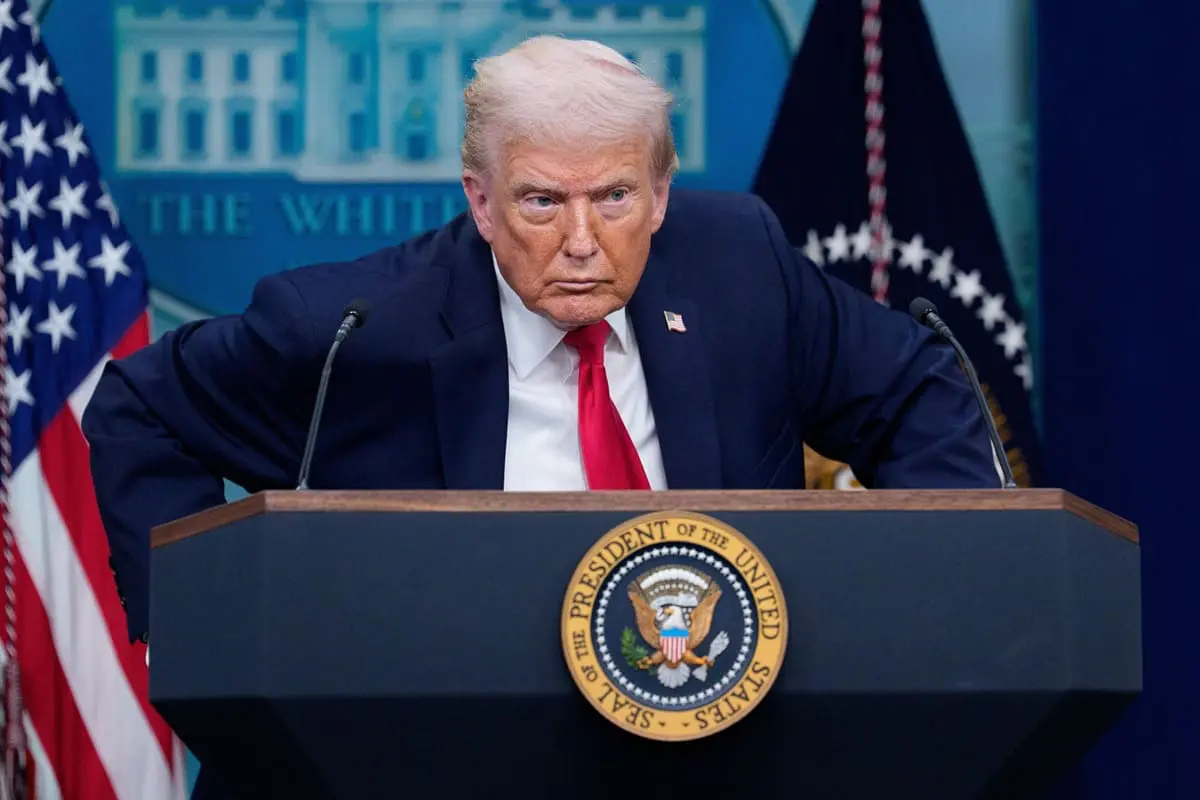
-Photo IPA Agency-
(ITALPRESS).
