
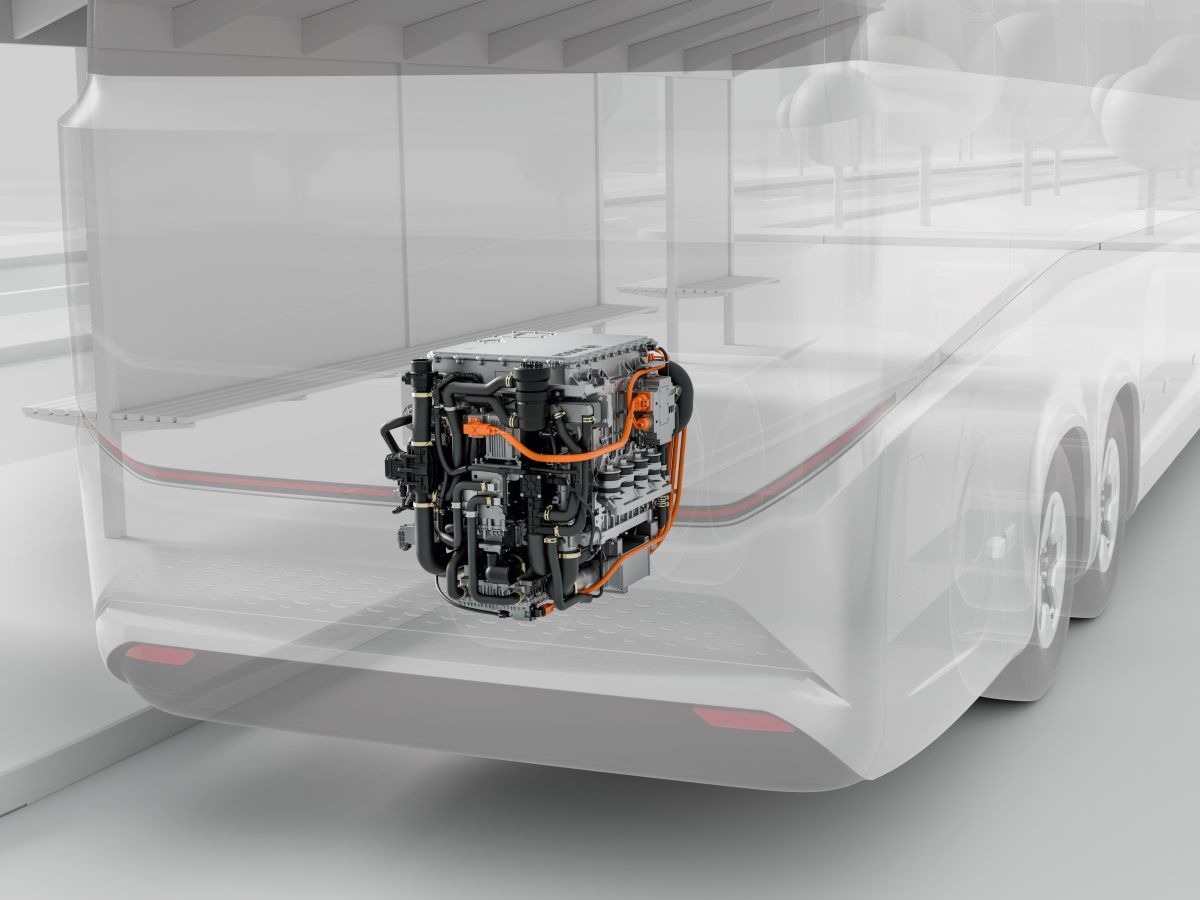
BERLIN (GERMANY) (ITALPRESS) – European cities are increasingly adopting sustainable solutions for local public transport. During the Mobility Move exhibition in Berlin, Bosch presented the fuel cell power module (FCPM) C100, a new version of its fuel cell unit particularly suitable for urban buses. Thanks to this neutral climate solution, vehicles can be electrically powered and, if it is used renewable hydrogen, they are completely CO2 emissions.
“In addition to battery electric buses, fuel cell electric vehicles can also contribute to the fight against climate change,” said Jan-Oliver Ròhrl, Executive Vice President of the Bosch Power Solutions division and global manager of Bosch business activities for commercial vehicles. “The fuel cell is particularly suitable for buses that run long distances every day and have few charging opportunities during the route.” EU legislation stipulates that by 2030 the carbon emissions of new urban buses must be reduced by 90% compared to 2019. From 2040, the regulations will extend to all other types of buses. Vehicles with the fuel cell module, recognised by the EU as zero emissions, can significantly contribute to achieving this goal.
The compact variant C100 is a novelty in Bosch’s FCPM portfolio, covering a power range from 100 to 300 kilowatts. The C100 is designed to be mounted on the roof of the vehicle, a common solution in the European market. The system, easily integrated, is designed for urban buses between 12 and 18 meters long and offers the usual CAN and diagnostic interfaces. FCPM C100 is based on the FCPM C190 variant for long-distance buses and buses, where it is installed in the back, as in diesel vehicles. Bosch plans to test the C190 on demo vehicles in the first half of 2026. To complete the range there is FCPM C300, whose power of 300 kilowatt makes it the ideal energy source for heavy trucks and buses.
Bosch has been working for many years in the development of a hydrogen-based economy and is producing technical solutions for the production, infrastructure and use of hydrogen itself. In 2025, the company announced the launch of its PEM Hybrion electrolysis stack for hydrogen production. Bosch also works on hydrogen engine technologies and offers direct injection and port injection components. For the development of the mobile fuel cell, at the end of 2025, the Bosch development team won the German Future Prize, the recognition of the Federal President for Technology and Innovation.
– Bosch press office photos –
(ITALPRESS).
