
Every time an Italian film stays out of the Oscar race for Best International Film, a discussion is reopened that, by now, has stopped being episodic and has become structural. The exclusion of Familia by Francesco Costabile from the shortlist 2026 of the Academy of Motion Picture Arts and Sciences has not caused a scandal, but a take-up. It was not a question of wrong, but of missed opportunity. It is a substantial difference, because it signals a shift of perception: we no longer consider ourselves among the natural favorites, but among the participants possible.
The relationship between Italy and the Academy is not born today and is not born in a marginal position. Even before Vittorio De Sica received recognition for Sciuscià in 1947, an Italian had already engraved his name in the history of the Oscars. Gaetano Gaudio, who emigrated from Calabria to the beginning of the twentieth century, won in 1937 as director of photography. It was not a folkloric episode, but a signal of the Italian presence within the very construction of the Hollywood imagination. Gaudio helped define a visual language that would become a model for American classic cinema. Italy, therefore, was not only an object of representation: it was an active part of the formal invention of modern cinema.
Then came what, without emphasis, we can define the age of gold. Federico Fellini won four Oscars for La strada (1957), Le notte di Cabiria (1958), 81⁄2 (1964) and Amarcord (1975), imposing himself as a central author in the international scene. His success strengthened the idea that Italian cinema could be deeply rooted in its culture and at the same time universally understandable. Alongside him, Vittorio De Sica won two awards for Yesterday, Today and Tomorrow (1965) and Il giardino dei Finzi Contini (1972), demonstrating that Italian realism was not a local current but a paradigm able to influence the world.
La vignetta di Danilo Pergamo per ilNewyorkese
In front of the camera, Anna Magnani shined, rough and bright, awarded in 1956 for La rosa tatuata, and above all Sophia Loren, who in 1962 won for La Ciociara, the first actress to be awarded for an interpretation in non-English language.
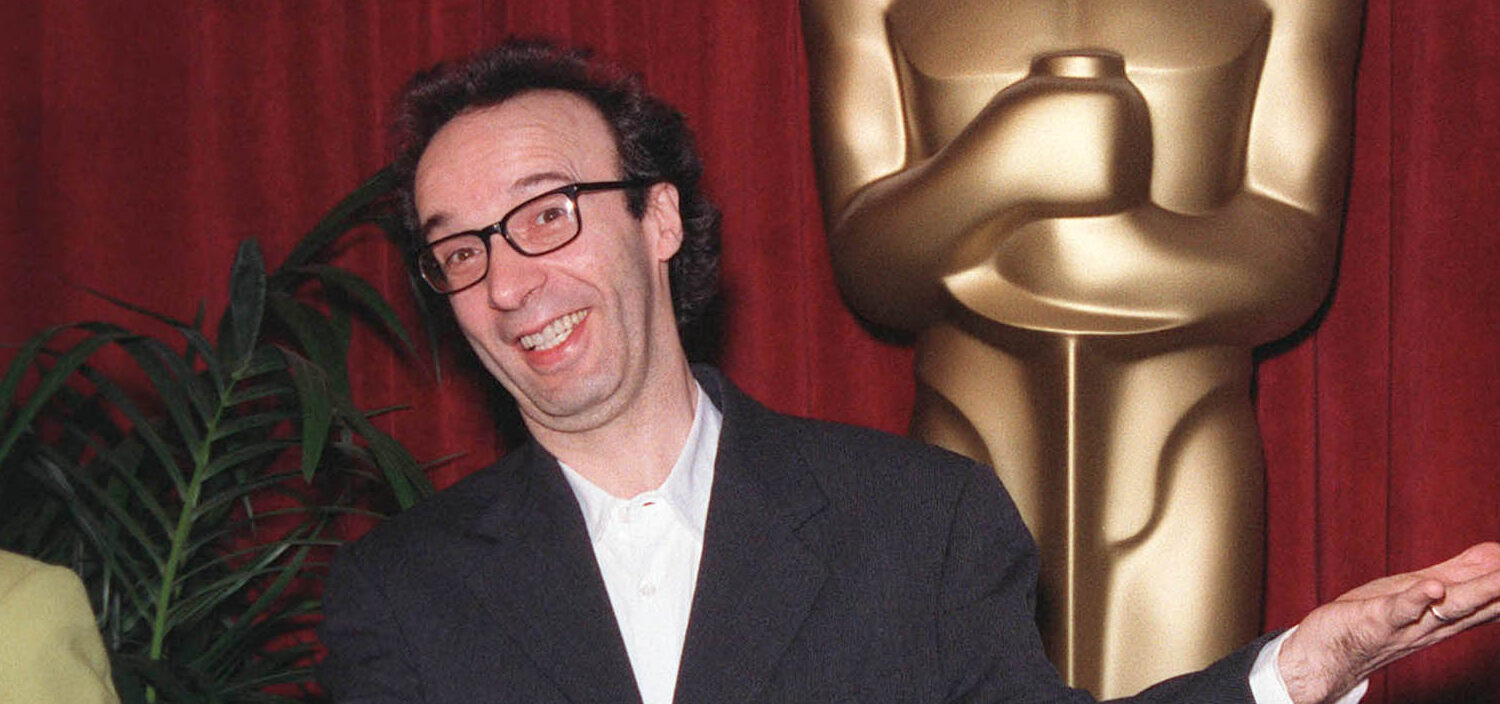
When in 1999 Roberto Benigni jumped on the chairs of the Dolby Theatre stringing the Oscar for Life is beautiful, it seemed that tradition had never stopped. The Nineties had already reported Italy to the centre with the New Cinema Paradiso by Giuseppe Tornatore and the Mediterranean by Gabriele Salvatores. Until 2014, when Paolo Sorrentino with The Great Beauty seemed to renounce the thread with Fellini, with Rome, with the very idea of cinema as a look that dazzles. Behind the scenes, musicians, costume designers, stage designers, directors of photography: Ennio Morricone twice awarded, Vittorio Storaro, Milena Canonero, Dante Ferretti.
In all these cases it was not simply individual victories, but the affirmation of a recognizable film identity. Italian cinema was able to transform local contexts into shared symbols, starting from deeply located stories to reach a universal dimension. The balance between rooting and opening constituted its strength.
In recent years, only two films have actually passed the shortlist barrier: It was the hand of God of Sorrentino and I Captain of Matteo Garrone. No victory. The first returned to Naples in 1984, transforming a private trauma into a training story; the second reversed the look on migration, following the journey before the landing in Europe and building an epic path of growth. In 2025 Vermiglio di Maura Delpero stopped before the final nomination. A film of great finesse, set in a frontier microcosm with outfield war and a mountain community observed with measure. And then Familia, an intense work in the story of domestic violence, without being able to extend the story beyond that nucleus. They are coherent and personal films, but today is not enough. To assert itself it is necessary that a work is supported by a system capable of giving it continuity, weight, recognisability. This is where fragility emerges.
We produce a lot, but rarely we concentrate resources and strategies on a few titles that can represent us abroad. Other European countries have found a balance between national identity and global presence; we are often linked to the internal market and models that do not favour a real international projection. The use of our history also weighs: it is not a limit in itself, but it becomes when the past becomes a refuge and the opening outward remains secondary.
We stay the country of Fellini and De Sica. But the prestige is not preserved by inertia. Without an industrial and cultural vision able to really support our cinema in the world, inheritance is likely to remain only memory.
What happened to Italian cinema? It’s from IlNewyorkese.
