
By Lucia Rotta
ASTANA (KAZAKISTAN) (ITALPRESS) – A strong participation of citizens, an efficient organization and a regular conduct of the voting process: the judgement of international observers who witnessed the referendum held today in Kazakhstan is unanimous. The citizens were asked perhaps the most important question for the political life of a state, or whether they are in favour or not of the new draft Constitution presented at the initiative of the President of the Republic, Kassym Jomart Tokayev.
An event that for express desire of the authorities has been accompanied by the maximum transparency possible, calling to collection 359 observers from 38 countries and 11 organizations. Among them was also an Italian, Domenico Palmieri, secretary general of Isia-Italian Institute for Asia. Palmieri visited 12 seats, in which he saw, as reported in a briefing to the press, “internal families, even with children”, arrive to express his opinion “with sincere interest”. The new Constitution provides for important changes in the political arrangement, and to a question put by the Italpress Palmieri agency has observed that the most important point is perhaps what introduces a new figure, that of the vice president who will have to support the head of the State, a central figure in the presidential Republic of Kazakhstan.
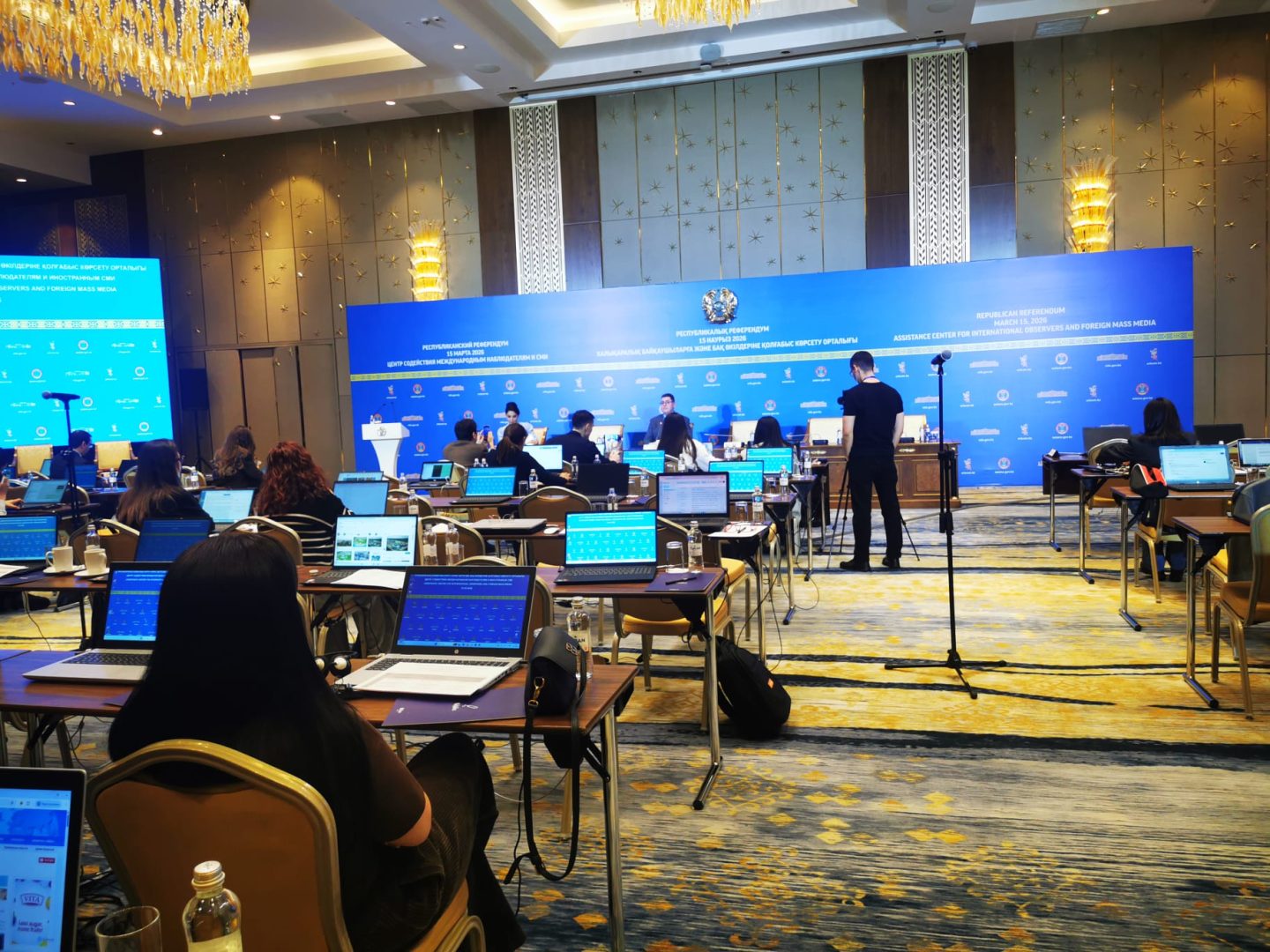
The changes envisaged by the new text are substantial also in the field of the rule of law, as pointed out by US observer Ralph Winnie, vice president of the America-Eurasia Center. Winnie visited 6 election seats, and in all he noted “a strong support” from the population to the referendum question. “People heard it was important for Kazakhstan. The idea of promoting the rule of law was a very important point for many people I have spoken to,” said Winnie in the briefing that some 35 foreign journalists participated in. “I have seen many young people but also many older people, who obviously want to play a role in the future of their country,” he continued. Another American opinion, Wesley Alexander Hill, of the International Tax and Investment Center. “For many young people it was the first time to vote, but they were not there simply because they had become elders. The point for them was to express their opinion. There was definitely a great interest in this referendum,” he said. The turnout figures are right for Hill: at 18, local time, the Electoral Commission reported a 70.98 percent participation.
The first big bet was precisely this, because according to Kazaka legislation a constitutional referendum provides for the obligation to achieve quorum. It was therefore fundamental to the interest of citizens in the question asked, and the interest was rewarded by an efficient organization, in particular under the information aspect, as Malgorzata Samoyedny, president of the Opportunity Institute for Foreign Affairs in Poland. “At the entrance of each seat we found a billboard with clear instructions. Each information was given in two languages, kazaka and Russian. It was easy to find information material, and this is a very important point,” he said.
The organization of the voting day found unanimous opinions among observers from the various countries, and the choir of positive voices also joined Russia with observer Andrey Kartapolov, president of the Defense Committee at the Duma. Kartapolov praised “the intense work of preparation” on a day where “we did not find any violation”. A single omen has made the difference between the observers of Moscow and others: to see protected, even in the future and with the new Constitution, the Russian language, currently spoken by a high percentage of the population along with the Kazakh language.
– Photo lcr/Italpress –
(ITALPRESS).
