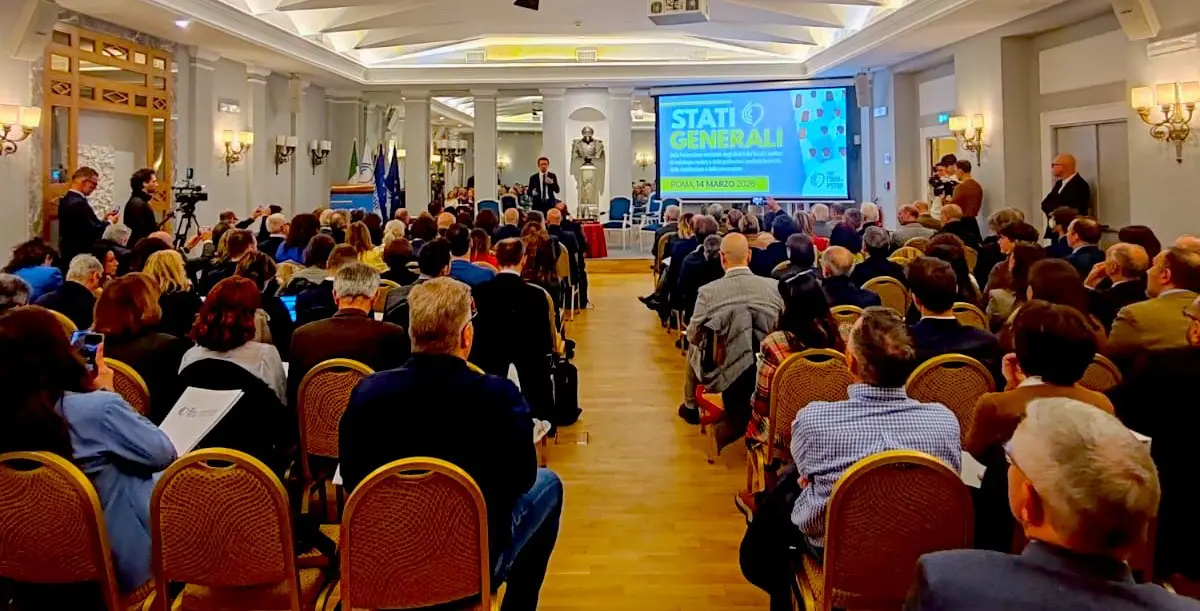
ROMA (ITALPRESS) – Starting an open confrontation with the Government, Parliament and the Regions on the Law on the reorganization of health professions. This is the goal of the general states of the National Federation of Orders of Technical Health Care, Rehabilitation and Prevention (FNO TSRM and PSTRP), held last Saturday in Rome.‘With the DDL on health professions we want to promote an overall reorganization in the sector, addressing central nodes such as the shortage of staff, the evolution of professional skills, the updating of training paths and the development of professional growth opportunities – said the Minister of health, The contribution of technical professions, rehabilitation and prevention will also be decisive in strengthening territorial health, which is one of the development axes of our welfare system. Schillaci also explained that ‘the healthcare system is facing a profound change, requiring more flexible, integrated and locally oriented organizations. In this scenario, the role of health professions is becoming increasingly relevant. From the day of study and comparison a picture has emerged made of complex needs and criticalities affecting the current health system. Among the main notions are the shortage of staff, the increasing difficulty in making health professions attractive, the need to address the effects of ageing of the population and, last but not least, the poor economic and social recognition reserved to professionals in the sector. To the general states, the FNO TSRM and PSTRP has outlined a shared address line with the National Albo Commissions and Orders (TSRM and PSTRP). An orientation that aims to integrate into the broader modernization process of the SSN, with the aim of strengthening its capacity to respond to the needs of citizens. According to the National Federation, the key factors of change concern different areas: personal investments and introduction of new models of takeover designed to accompany the evolution of health needs of the population and to keep pace with technological innovation. Among the priorities indicated by the National Federation, there is the need to make the professions increasingly qualified and updated, able to face the health challenges of the coming years. In this perspective, the proposal for an international comparison is also included, with the aim of aligning the competences of Italian professionals to European standards. This through increasingly advanced training models, capable of guaranteeing greater autonomy and professional responsibility and of enhancing work within the multi-professional team, while contributing at the same time to reduce waiting times and costs for healthcare. ‘The national health service is not only defended by economic resources: it is defended above all by enhancing the skills, work and responsibility of health professions. It is on this human capital that you play the future of Italian health – said the president of FNO TSRM and PSTRP, Diego Catania -. We wanted to promote this moment of reflection because we are convinced that the reorganization of health professions should start from a very clear assumption: the centrality of professional skills in the protection of health of citizens – he said -. The professions that this Federation represents, from the technical-diagnostic area to the technical-assistance area, from rehabilitation to prevention, constitute an essential component of the health system. Professions that work with competence, responsibility and dedication every day within the national health service, which guarantee diagnosis, safety, preventioni would like to thank the rapporteur for his work. For the FNO TSRM and PSTRP, a further step concerns the development of specialization paths, to be realized through the establishment of master degrees to clinical address, to be alongside those already existing. The goal is to train professionals with advanced skills, able to manage even complex cases and to contribute concretely to the reduction of waiting lists. Among the points considered central there is also the theme of economic valorization of the professions represented. Advanced proposals include the extension of the flat tax to 5% on overtime and the recognition of the specificity allowance for the occupations engaged in emergency relief, as well as those already provided for in other categories. The new tools of professional growth are added to these demands, including the introduction of the executive for a professional area. An important role, finally, is attributed to the development of shared multi-professional (PDTA) medical diagnostics, with the aim of promoting common operational protocols in the different contexts of care. A model that aims to enhance the contribution of all professionals, in compliance with their respective skills, and to strengthen the health of proximity, closer to the health and social needs of citizens. ‘From the Higher Council of Health there is a great attention, a great listening. The important thing is that this is an opportunity to establish dialogues that can enhance the quality of these professionals – said the president of the Higher Council of Health, Alberto Syracuse, intervened at the day -. The primary aspect is to succeed in carrying out a comparison, in which the Council is absolutely present, but above all that the conditions are created to increase the professionalism regarding the new needs of a changing society”. From the discussion it emerged that the reorganization of health professions should not be read as an internal question, but as a lever of sustainability of the healthcare system. The starting point is not the professional perimeters, but the ability of the SSN to respond to already changed needs. The reform of health professions does not aim to eliminate or reduce the number of occupations in Italy, but to work on the development of the skills of each, through the mapping of distinctive and transversal specificities, career paths and areas of overlap of skills between professions. From this analysis there are opportunities for task sharing and task shifting, and the need to define a system of certification and evaluation of skills that also recognize field experience. In the day, among others, they enriched the panel of the speakers: Carlo Catalano, General, Director-General of Military Health, Mariella Mainolfi, Director-General Health Professions of the Ministry of Health, Claudio Costa, Coordinator interregional technical group Human resources, training and training needs of the Health Commission – Conference of Regions and Autonomous Provinces, the Honorables Simona Loizzo, Marta Schifone, Ugo Cappellacci, of the Commission Social Affairs of the Chamber of Deputies, Massimo Miscusi, Director-General Through general states, the FNO TSRM and PSTRP identifies programmatic lines for a stronger national health service and closer to people. The decisive step now is political: to transform these indications into concrete interventions, through the reform of health professions and its implementing decrees, recognizing the work of those who every day contributes to the protection of healthitalians. -photo press office FNO TSRM and PSTRP –(ITALPRESS).