
ROMA (ITALPRESS) – The growth of investments in the water sector continues, which in the period 2021-2029 is on an average of 90 euros per inhabitant, with a peak in the two years 2025-2026 linked also to the implementation of the PNRR. An increase that is reflected on the improvement of the quality of the service, even if there are differences between the industrial management and the “in economics” at the head of local authorities, especially in the South. Criticism that must be resolved in the light of climate change – which has led to a situation of water “bankruptcy” worldwide – and the new European directives, which will impose more stringent standards on water quality and treatment.
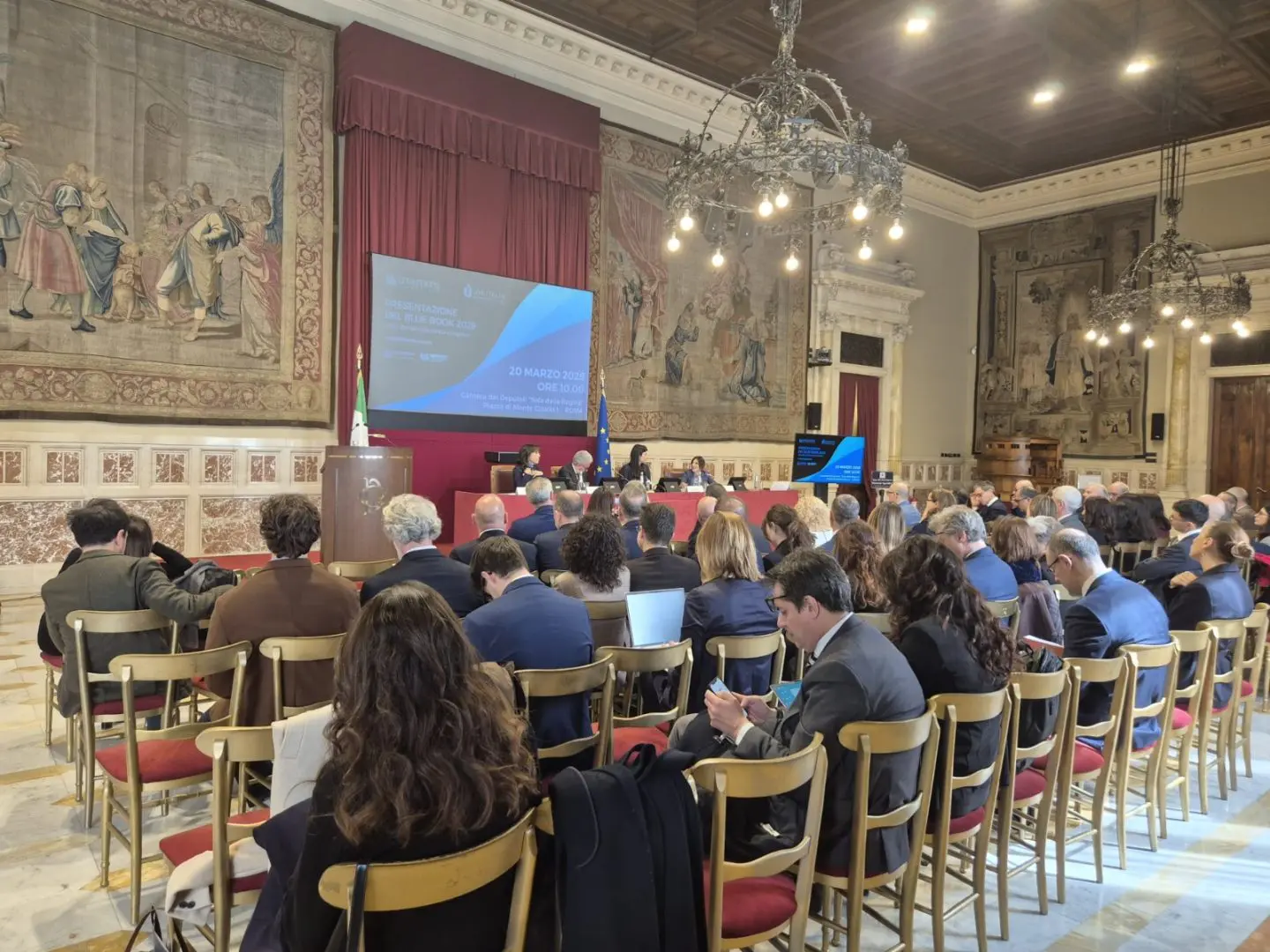
This is the picture that emerges from the new Blue Book – the complete monograph of the data of the water service – realized by the Utilitatis Foundation and promoted by Utilitalia, to which they contributed Enea, the National Department of Civil Protection, the Higher Institute of Health, the Basin Authorities of the hydrographic districts, the Cima Foundation and The European House – Ambrosetti. Investments in the water sector have risen from an average of 66 euros per year per inhabitant in 2021 to 106 euros in 2026 (last year of the PNRR); up to 2029 a physiological reduction of approximately 10% regarding the years of maximum intensity, but with a level that will still be maintained on the 90 euros annual, greater than 21% regarding 2021.
“This demonstrates – explains Mario Rosario Mazzola, president of the Fondazione Utilitatis – how the PNRR was not a substitute but a propulsor of the investments of the managers, witnessing the structural repositioning of an industry that has developed an industrial maturity in a short time.” The section, highlights the president of Utilitalia Luca Dal Fabbro, “it leaves behind the phase of the PNRR with a greater industrial maturity and organizational capacity. Now, however, there is a need for a public contribution of at least 2 billion euros a year for the next 10 years, in order to carry out an extraordinary plan of interventions aimed at ensuring the protection of the resource and the territory, which cannot fall solely on tariffs”.
In the next ten years about half of the Italian population will be involved in renewals or new procedures of water supply, opening a strategic phase for the reorganization of the sector. Utilitatis has analyzed 113 concessions covering 46 million inhabitants (80% of the population), with an increasing impact in the medium term: about 7 million citizens within five years and about 20 million within ten years. The next decade, therefore, will be decisive to consolidate management uniqueness, strengthen industrial capacity and reduce territorial differences.
It is still very low (22 euros per inhabitant in 2024) the data on the investments of the “economic” management, that is where the local authorities are directly involved in the water service; a picture that still affects 1310 municipalities for about 6,9 million inhabitants ( 12% of the Italian population) especially in the South, hindering investments and economies of scale. On the other hand, the governance of the water service has made significant progress with an increasing aggregation towards industrial management: today 86% of the population (49.8 million inhabitants) lives in municipalities with integrated service entrusted to a single operator.
The process of sub-entry of the single operator in different territorial areas, especially in Calabria, Molise and Valle d’Aosta, is gradually reducing the number of managements leading to local authorities. This is therefore a positive process of implementation of sector governance, also the result of the reform actions promoted by the PNRR. In 2025, the average national expenditure for the integrated water service amounted to 411 euro annually for a family of three components (150 m3), an increase of 7% compared to the previous year also due to the increase in investments. Despite the increase, the unitary tariff is averaged on 2,6 euro/m3, remaining below the European average (3,4 euro/m3) and confirming a balance between sustainability for families and investment needs. The dynamics of water service spending are directly linked to the results achieved in terms of technical quality and infrastructure modernization efforts. The Blue Book sample has over 324 thousand km of network, of which 30% with more than 30 years, and recorded average losses of 37.9%. They remain critical also on the front of the continuity of service, flooding (up to 27 episodes every 100 km in the South) and the reuse of waste water, down to 3.4% against a potential of 13.4%.
At the same time, the quality of drinking water is maintained on high levels, with very limited non-compliance, and stands out for the attention of managers in the analysis and monitoring of the resource: 4,4 million parameters analyzed in 2024 for 295 thousand samples (+197% compared to the minimum number of withdrawals required by the legislation, testifying to a particularly intensive monitoring level). In this context, the companies in the sector are struggling with a global water challenge that is no longer emerging but structural: according to United Nations University, we have entered a phase of “bankruptcy” where, worldwide, the balance between demand and availability has been overcome in many systems. This requires a significant acceleration of adaptation policies, infrastructure modernization and dedicated finance, if you think that 15% of the GDP of the Mediterranean Area (1,902 billion $) and 20% of the Italian one (384 million €) could not be generated without the water resource.
To get out of an emergent logic, in the face of an ever more marked alternation in our country of phases with intense rains and dry periods, resorting to technological, managerial or innovative financial solutions, is now indispensable. Thanks to the integration of optical satellites and radars, for example, you can monitor the status of invasive in almost real time and in any weather condition. The service developed by DPC and CIMA Foundation provides time series and indicators of anomalous useful to quickly identify situations of water scarcity, with a view to preventing resource management. At the same time, it is essential to waste as much resource as possible. Water savings, or “blue certificates”, represent a strategic lever to transform water saving and reuse into a measurable economic value, orienting investments and behavior towards more efficient resource management. Through models inspired by energy efficiency and water credit volunteers, it is possible to activate market mechanisms capable of rewarding those who reduce consumption and empower large users.
– Comin and Partners press office photos –
(ITALPRESS).
