
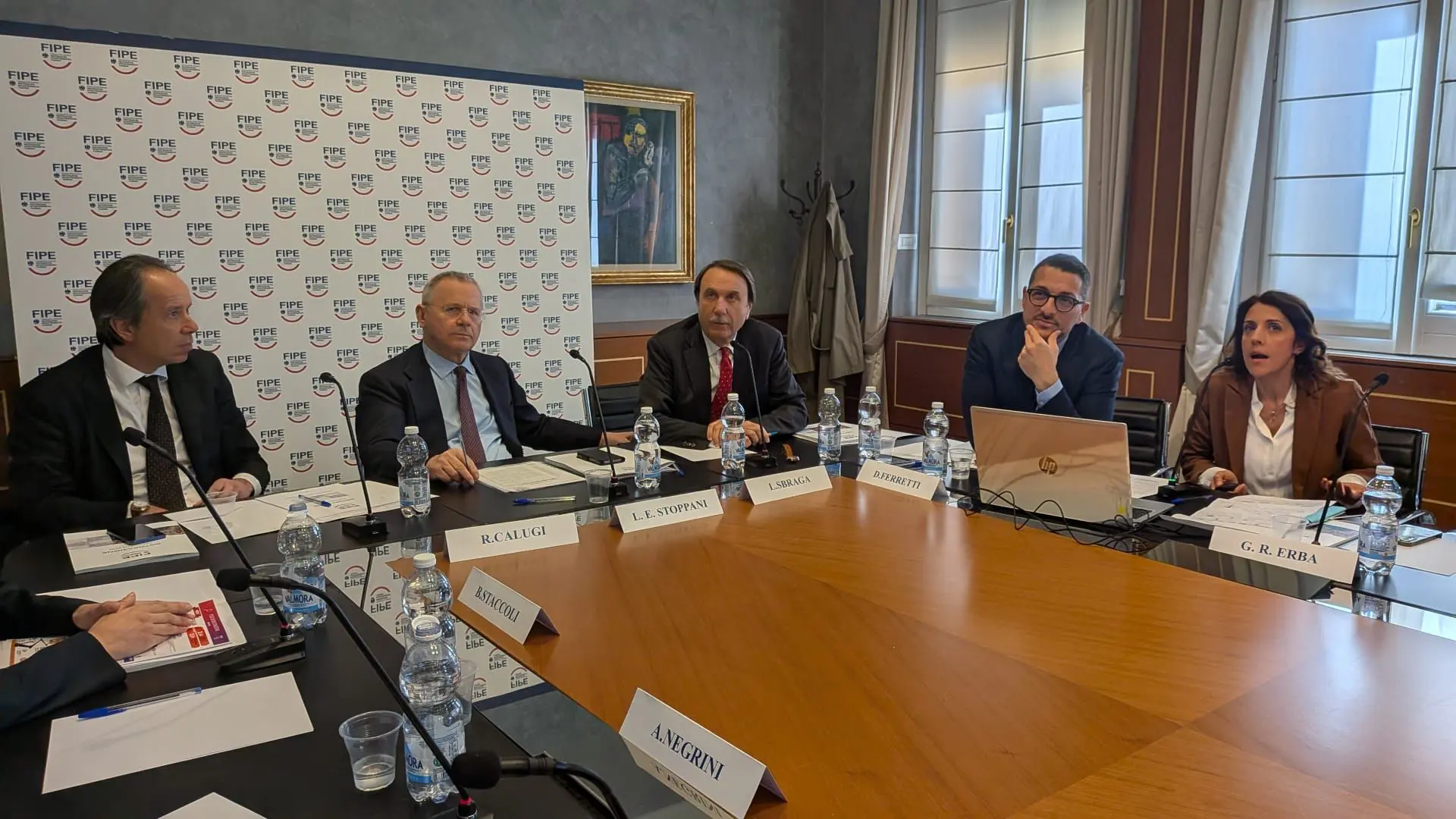
ROMA (ITALPRESS) – The 2025 of the restaurant has recorded a (moderate) growth, although in the presence of numerous structural issues and a context marked by the slowdown of the economy and international tensions. This is the photograph taken by FIPE-Confcommercio’s 2026 Restoration Report, presented today in Rome by the Office of Studies of the Federation which saw the intervention of President Lino Enrico Stoppani and the testimonies of Alessandro Negrini and Fabio Pisani, chef-patron of the restaurant Aimo and Nadia of Milan, and Betty Staccoli of the Staccoli Caffè di Cattolica. The Report highlights the consolidation of the positive trend of added value, which in 2025 stabilizes at 59.3 billion euros, with a real growth of half a percentage point. Consumption has reached 100 billion euros, increasing by 0.5% on 2024, but still below pre-Covid levels (-5.4%).
The companies are 324.436, slightly down (-1%) on the previous year. The largest contraction (-2.2%) is recorded in the bar channel as an effect of structural difficulty of the format but also of the evolution of enterprises towards other business models. Substantially stable the restaurant sector (-0.4% on 2024), while it marks a +3.5% the banqueting sector and collective catering. On the price side, food lists mark +3.2% on 2024. In 2025 the process of adapting the lists resulting from the inflationary shock of the post- pandemic years continued, although Italian catering is, from this point of view, one of the most virtuous in Europe. On the prospects of 2026, the risks of a new energy shock triggered by the Middle East conflict. Uncertainty makes investment choices more targeted: in 2025 28.4% of enterprises have made modernizations, 25.8% have planned them in 2026.
On the labour side there is a decrease in employee employment, which loses over 114,000 units (-10.3%). The meeting between demand and job offer remains a criticality of the sector, with an enterprise on two that declares to encounter difficulties in finding staff. Although catering continues to be an important employment area for young people (61.6% of workers are under 40), the only occupation that resists the general decline is that of over 60, highlighting how in the public exercises the active stay at work is progressively stretching, also because of the demographic crisis. Productivity remains a structural criticality of the sector: compared to 2024 it decreases by a percentage point and remains clear the distance from the values ten years ago. The focus of the 2026 Report is dedicated to entrepreneurs and their biographies, which see personal, family and professional stories often strongly interwoven with each other. The family confirms an essential strategic asset: 37.3% leads a family business and about 70% of entrepreneurs are assisted daily by family members in the management of the business, an aspect of great identity value because it favors the transmission of values, knowledge and skills.
In the context of a widespread change in the sense of work, especially among young people, entrepreneurs stand out for a strong identification with their activities: passion and vocation for catering (47.4%), family continuity (35%), desire for autonomy (21.6%) are the main motivations that push to do business. And if for 76.2% the activity is a piece of its personal history, another 65% feels the responsibility of the social role it plays for the benefit of the territory. Finally, 54.3% of entrepreneurs cannot imagine themselves with a different job. Entrepreneurs are also fully aware of the high commitment that requires the guidance of a public exercise: 8 out of 10 owners work over 40 hours per week, 1 out of 2 over 60 hours. Here, then, the cautele towards the idea that the children follow the family footprints: among the entrepreneurs whose children work, 48.6% have children occupied in the company, and yet 45.4% would prefer that they develop a different professional path, while if 24.4% does not have a clear position, 16.2% hopes, instead, a family continuity but without any conditioning. Only for 10.5% of entrepreneurs generational continuity is a significant personal desire.
Although the family continues to play a central role, the data shows signs of a possible adaptation of this model to more diversified and lesser entrepreneurial paths linked to the only generational continuity. “The 2026 Restoration Report gives us the image of an industry that resists the slowdown of the economy, recording an increase in added value and consumption, confirming how the catering is an indispensable pillar of the daily life of the Italians – commented Lino Enrico Stoppani, President of FIPE-Confcommercio -. The increasing difficulties of enterprises in finding staff are reflected in the decline of dependent employment, confirming the need for active policies that favour the intersection of demand and job offer, continuing vocational requalification and a better strategy on school guidelines for young people. Demographic transformations, the difficulties regarding productivity and marginality are triggering profound changes in the sector, with the family model which, if the prevailing form of access and organization of the enterprise remains, is however called to a profound evolution to value the qualities and not to disperse the values that have brought Italian cuisine to the UNESCO recognition – intangible heritage of humanity”.
– photo office press FIPE –
(ITALPRESS).
