
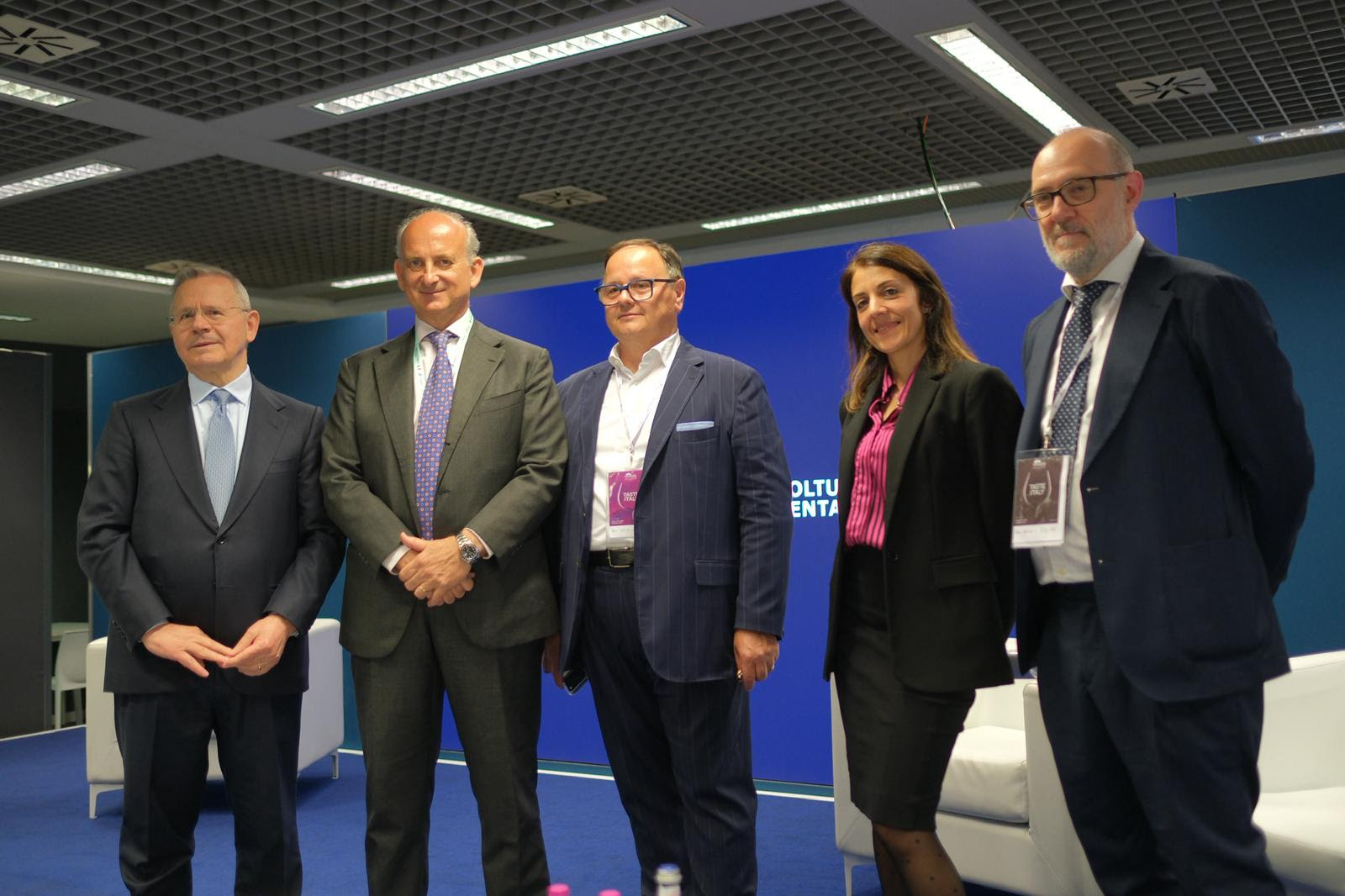
VERONA (ITALPRESS) – Twelve billion euros: it is the value of wine consumption in restaurants, trattorias, pizzerias and wine bars, with a share on the average receipt of more than 21%. A factor – that of wine in catering – which contributes significantly to the 59.3 billion euros of added value of the sector despite the last year was marked by a contraction of expenditure but also of the volumes consumed. In this context, the trends in catering seem to reflect the trend of the market, with the reds and the most dense wines in difficulty, while the fresh whites and sparkling wines reign. This is what emerged today in Veronafiere from the presentation of the investigation, in collaboration with Vinitaly, of the new Observatory Fipe-Uiv “Vino & Ristorazione”, the first in Italy entirely dedicated to the horeca-vino relationship.
The 58th edition of the Italian Wine Fair has in fact kept to baptism the protocol of understanding between the Italian Union wines (Uiv) and Fipe-Confcommercio (Federazione Italiana Pubblici Esercizi) aimed at the mutual enhancement of the compartments, also through the activity of the Observatory to monitor the state of art and the evolution of styles of consumption, trends and products.
According to the results of the research, conducted on a representative sample of 500 enterprises between restaurants-tractors, restaurants-pizzerie, pizzerias, cocktail bars and wine shops with service, the wine maintains a significant weight on the turnover of the catering, averaging more than 21%, with an incidence exceeding 30% for 22% of the respondents. A fundamental impact, it records the Observatory, which is also found in the now acquired presence of the wine card, used by 3 restaurants on 4 but also by half of the pizzerias-restaurants (4,1 million the total items in paper).
Here the wine represents a pillar of the offer – managed in a very wide part directly from the owner as an instrument of positioning and narrative of the territory – which, however, is renewed less than once a year in 54% of the cases. This poor replacement, according to the data collected, fits in a context of poor enological training of refreshers: in a third of the premises there are no forms of updating (quota that rises to 61% in pizzerias and 50% in cocktail bars), and half of those who form it through the word pass with agents or distributors.
“The world of Italian wine lacked a tool to explore the dynamics with food – said President Uiv, Lamberto Frescobaldi – a binomy that made the fortune of Italian cuisine and wine in the world. Now it is time to leverage this synergy to grow our sectors, starting from mutual understanding. In this first report it has already emerged the need to work to better transfer the innovation of product that the wine expresses – it has concluded -, but we can and must definitely team up to really listen to consumers”.
For Lino Enrico Stoppani, President Fipe-Confcommercio: “The wine is a strategic element of the Italian catering offer, both on the economic and cultural level, because it contributes to defining the identity and quality of the customer experience. In fact there is no full conviviality without the accompaniment of the meal with a good wine The data of the Observatory however highlight the need to invest more in training and communication, starting from the maps of the wines to be improved in the proposed combinations, which remain a fundamental instrument of valorization of the overall offer of restaurants. In a context of consumption in slowdown, it is increasingly important to strengthen the collaboration between restaurateurs and producers to intercept new trends and build a coherent and competitive offer, able to also support the marginality of enterprises”.
On the consumption front, if for more than half of the restaurateurs the orders of wine are “unchanged” compared to the two-year period 2021/22, those who declare instead of having found cali are clearly greater in the matter of expenditure (-17 the net balance between the quotas of responses that indicate increase and bending) but still more at the level of consumption (-28). To record the most significant pushovers on the volumes consumed are restaurants/tractors (net balance at -35). Not by chance, of 53% that obvious criticality in the management of wine, the first voice is linked to the decline of demand.
In the choice of wines, the main character is still the “lightness”: the less demanding wines (the sparkling wines and even lighter whites) highlight positive net balances in double digit, while braking is the demand for light reds and to a greater extent than those structured. And if the cocktails are now a fixed presence in paper for a fifth plentiful of the premises, it still prevails (44%) the share of restaurants and pizzerias that value the mixology as not consistent with the location of the premises.
Looking to the future, most of the restaurants expect a stable situation (43%), a good 26% is pessimistic and waits for a general reduction of alcohol consumption (quota that rises to 34% in restaurants/pizzerie) with 8% that believes that low and no-alcohol will take foot at their premises.
“Restaurants are central in the story of Italian wine and its connection with territories and identity – commented the president of Veronafiere, Federico Bricolo -. The 58th edition of Vinitaly celebrates it with an enhanced gastronomic offer, from the Restaurant d’Autore to the stellate proposals in the regional pavilions, in a fil-rouge with the candidacy of the Italian cuisine to Unesco heritage just from this fair. Wine and catering are a consolidated marriage that, in order to continue to grow, must invest in the dialogue: for this reason with Vinitaly we support the Fipe-Uiv Observatory, certain that will bring value to the enoic business made in Italy”.
-Photos press office Veronafiere-Vinitaly-
(ITALPRESS).
