
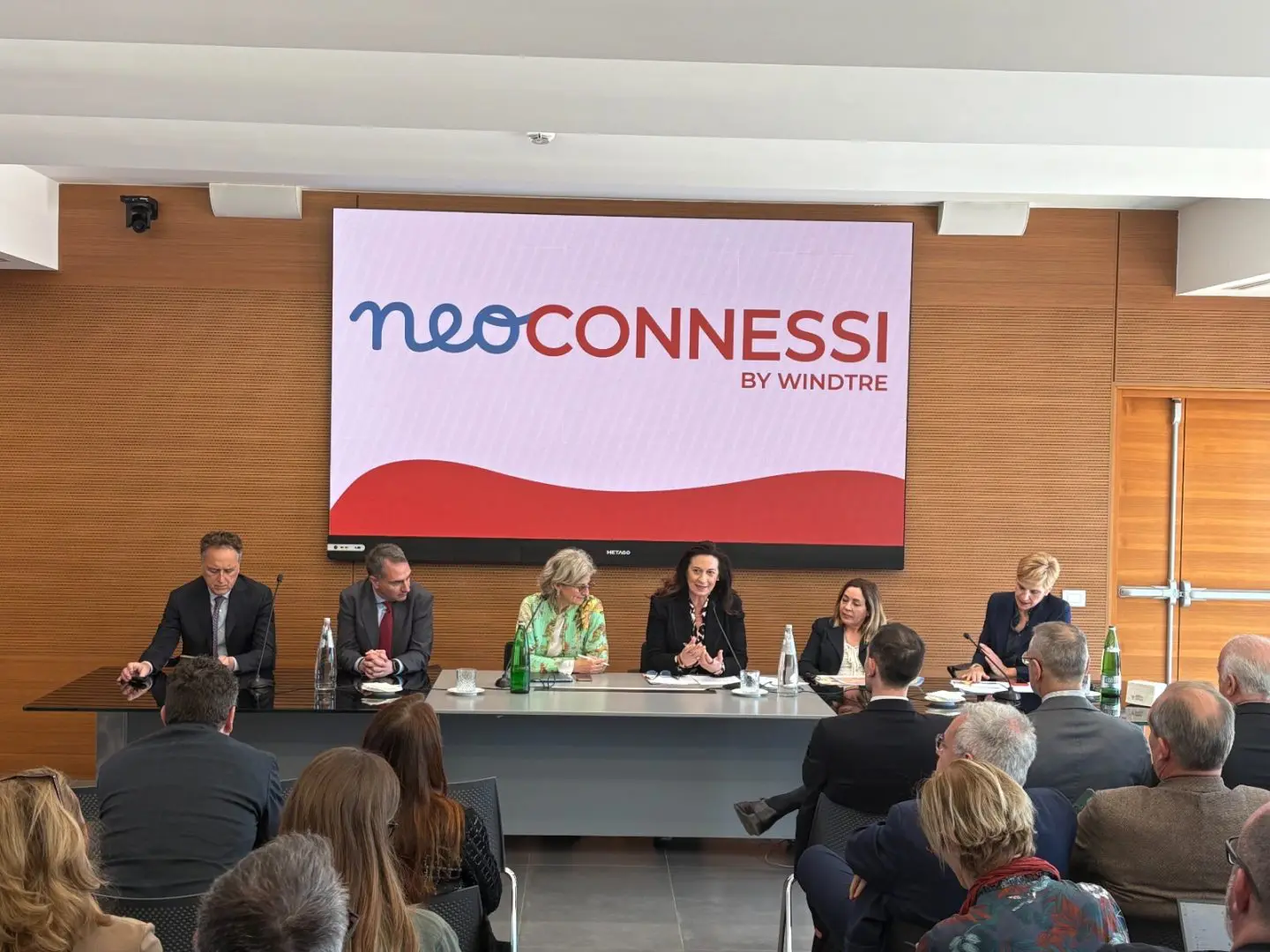
ROMA (ITALPRESS) – The digital skills of elementary children grow by 8 percentage points, the average increases the ability to better manage time in front of the screen and to recognize digital isolation, while almost 9 out of 10 students throughout the sample notice improvements in the online habits of parents. These are some of the evidence provided by the impact assessment of NeoConnessi, the digital education program of Wind Tre that has achieved cumulatively 2.5 million children and half of Italian schools, realized by Triadi, spin-off of the Politecnico di Milano. The analysis was presented today at the conference “Digital education works!”. The data shows that children and adolescents live a continuous exposure to digital: 72% use the Internet to do research and 26% have already experienced AI tools. However, a child out of 4 does not recognize fundamental risks such as fake news, while 3 out of 4 have no awareness of excessive screentime, deepfake and improper sharing of personal data. Families also appear fragile: three out of four do not feel safe in guiding children and daughters in the use of technology. The study, based on tests administered before and after the course, highlights a net impact: digital education strengthens skills and changes behaviors, generating a systemic effect between school and family.
Triadi’s results show that structured interventions can really improve skills, awareness and digital habits, with positive effects on child welfare. The analysis, in fact, notes that before the path children are already very exposed to digital, but without adequate critical tools. After the course, the skills, measured thanks to the correct test responses, increase from 82% to 90%. Improve netiquette (+19%), understanding artificial intelligence (+15%) and online research (+14%). Approximately half of pupils say they know new digital risks from the beginning. In the first grade secondary, the most advanced skills grow: students improve in source selection (+13 points) and increase the ability to recognize and prevent emerging risks, from digital isolation (+8) to visual and postural stress (+7). It also raises attention to copyright and personal data management. The greater attention to the screentime also leads to a change in behaviors: the number of those who do not pay attention and increases that of those who declare to actively monitor it. Overall, students show a stronger ability to orient themselves in digital, distinguishing reliable content and better assessing the impact of their online actions.
But not only, one of the most significant results is the effect generated on the family context: 89% of students observe an improvement in the use of digital by parents after the school path. In addition, 77% of families say they have introduced, wanted to introduce or have improved the use of parental control. A particularly important systemic effect: the knowledge acquired by children and daughters activate new domestic habits, strengthening the awareness of adults on privacy, security and management of online time. The evaluation also highlights the central role of the school. 98% of the teaching staff feel more prepared and safer in dealing with digital issues, while 79% declare that they have obtained concrete ideas for daily teaching and over 90% detect improvements in the cognitive, social and emotional skills of students. Another area is the introduction of media education elements, in line with the Digital Citizenship Guidelines issued by the Ministry of Education and Merit and also referred to in the report: guidelines that include themes such as artificial intelligence, digital communication, online research and sources verification. In this context, 81% of the teaching staff intends to introduce or broaden these contents in their teaching.
“The impact assessment of NeoConnects shows that the program works on all three levels: students improve digital skills and learn to recognize risks that they previously ignored, from cyberbullying to deepfake, from sharenting to personal data management; teachers feel more prepared; families acquire concrete tools to accompany children. What is more striking is the effect that goes beyond school: 89% of young people notice a more correct and safe use of digital even by parents. In a context where about three out of four families do not feel safe in guiding their children online, structured digital education shows that they can produce concrete and measurable results.” Gabriele Guzzetti, Director of Triadi. According to Roberto Basso, director of External Relations and Sustainability of Wind Tre, the data “help us out of a misleading narrative: it is not a single platform the problem, nor is technology itself. Kids and girls grow up in a complex digital ecosystem, which requires more aware adults, equipped school and shared responsibility. With this year’s edition NeoConnessi will reach 2.5 million students and more than half of Italian schools: a dimension that makes the project one of the broadest and most continuous observers on the relationship between minors and digital in our country – concludes -. An observatory that shows a clear thing: when education is structured, continuous and involves families and institutions, behaviors really change.” Teresa Mazzone, president SIP Lazio and Commission digital dependencies, points out that “we need the family, pediatrics, society and school to grow a child in the best possible ways. At what age to introduce the smartphone and not deny internet access? We stopped at 13 years because the risk areas are so many: doomed psychophysical health to online security“. Therefore it is necessary to “prevent the risks of addiction, promote real and creative experiences; technology clearly should not be demonized, but it is necessary to raise awareness of the family to use parental control but above all to foster the relationship”, he concludes.
– photo xb1/Italpress –
(ITALPRESS).
