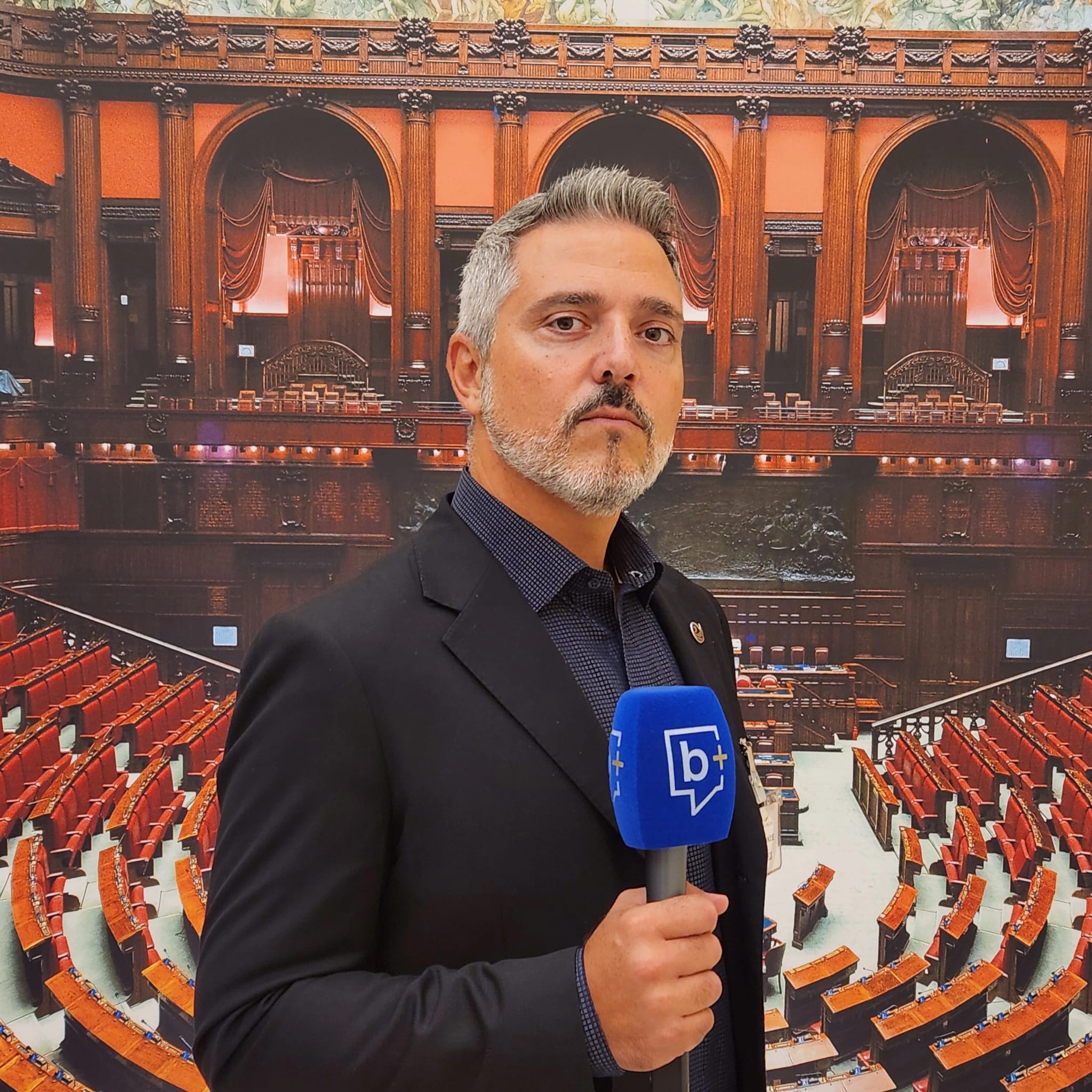
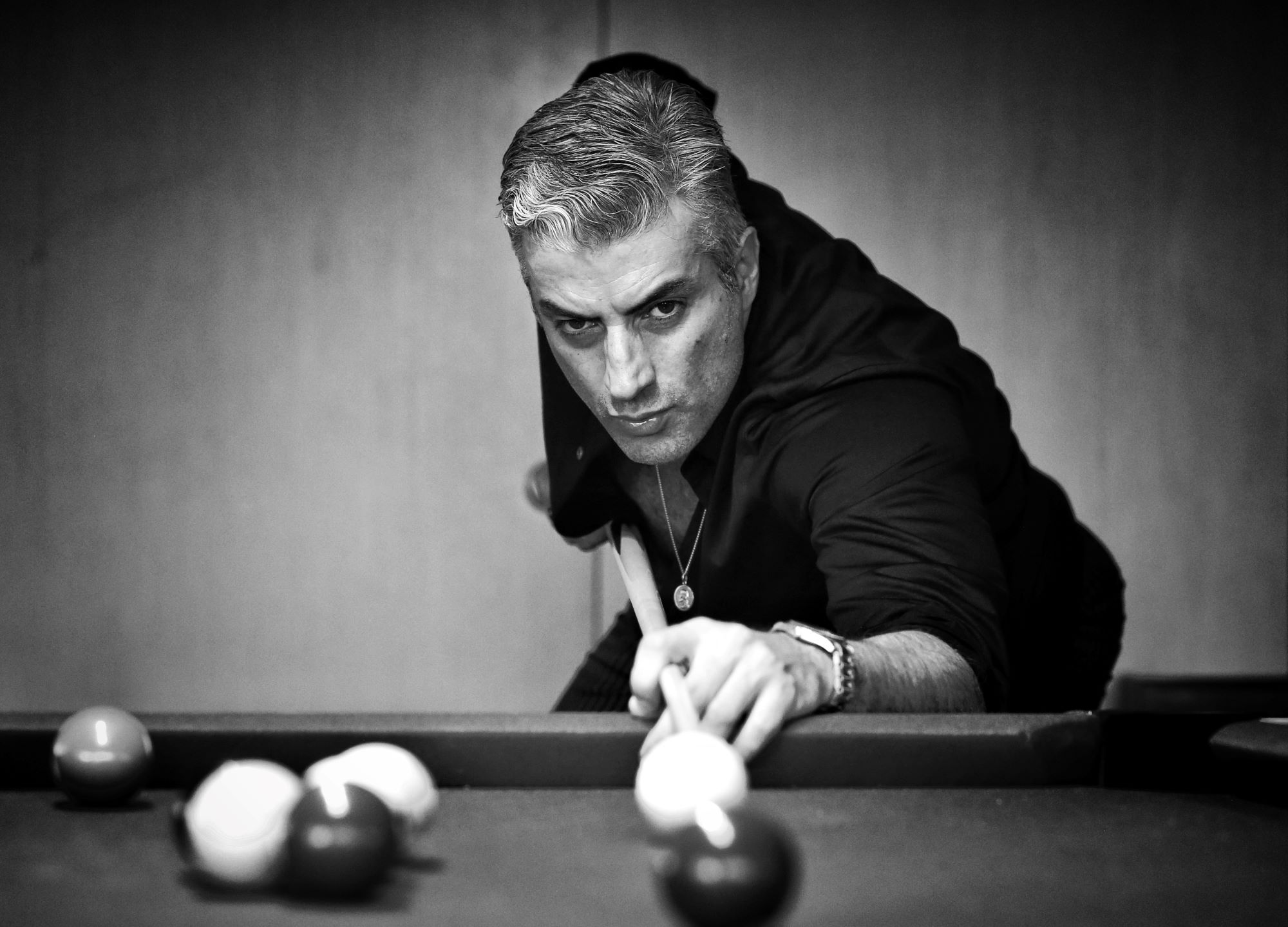
Who is Fabrizio Brienza. Born in Campobasso, in southern Italy, in 1969, Fabrizio Brienza studied graphic design in Florence before launching a modeling career in Milan — walking for Armani, Valentino, Versace, and Dolce & Gabbana. He moved to Miami in 1997, ran the nightlife scene in South Beach, and broke into acting with his debut in The Versace Murder (1998). Hollywood followed: The Adjustment Bureau alongside Matt Damon and Emily Blunt, Duplicity with Clive Owen, A Walk Among the Tombstones with Liam Neeson. He currently recurs as Nico, the underboss to Chazz Palminteri’s character, in Godfather of Harlem on MGM+. Between film sets, he is the doorman at Paul’s Casablanca, one of New York City’s most storied and selective clubs. He was recently featured in the Louis Vuitton City Guide for New York and appeared on the cover of The New York Times. With his unmistakable accent, his Versace fur coats, and a philosophy built entirely on refusing to sell out, Brienza is one of those Italians New York simply does not forget.
Actor, model, nightlife icon — who are you today?
We’re from the South of Italy — I’m from Molise — and we have all the talent in the world. We’re self-made. We live life, we learn from it, and acting comes naturally. And being Italian in New York? It’s like driving a Ferrari down Park Avenue. You are always two steps above everybody else. Being Italian is the best thing in the world. You don’t know it when you’re in Italy, because you’re always surrounded by Italians. When you travel the world, you realize: you are the cashmere of the human race.
How did your relationship with america begin?
As a kid I used to write letters to the Italian ambassador to Hawaii because I wanted to become a surfer and move there. He actually wrote me back — I still have the letter. I never made it to Hawaii. But America was always in here. I grew up watching American movies, I always loved that energy — that sense that anything is possible. In Italy, if you want to do something and you’re not the son of the Prime Minister or the nephew of the Pope, they cut your legs every single time. In America, if you’ve got the guts, they promote you. That’s the difference.
Was being italian a lever or an obstacle?
A lever. Always. You don’t realize it when you’re home, because you’re surrounded by Italians. Then you travel the world — you meet everyone else — and you understand that you are the cashmere of the human race. Italian is premium goods. It’s silk. The rest of the world is polyester. And look at Sean Connery: fifty years of career with a Scottish accent, playing every single character. I understood late that my accent wasn’t a limitation. It was my brand.
You turned down l’Isola dei Famosi. Why?
They contacted me and I said no immediately. I don’t like reality TV, I’ve never been a fan. Unless it’s a competition where you actually have something to show — Top Chef, something like Anthony Bourdain — then fine. But putting a group of people in a room to gossip, fight, and sleep around? That’s a sell-out. Sure, you get popularity. But for what? I only do projects that fulfill me. That I actually want to do. I don’t sell out just because. In Miami, once you’ve built your reputation, you name your price and they pay it. In New York, every day is the first day of school. It doesn’t matter who you were yesterday.
How much does reputation count in new york versus raw talent?
I’ve lived all over America — Los Angeles, San Francisco, Las Vegas, Miami, New York — and every city has its own logic. In Miami, once you build your reputation, you name your price and they give it to you. In New York, every day is the first day of school. They don’t care who you are or what you did yesterday. You could be the president, the best at whatever you do — today is a new day and you start over. I experienced it myself.
Social media: how did you get there and what did it give you?
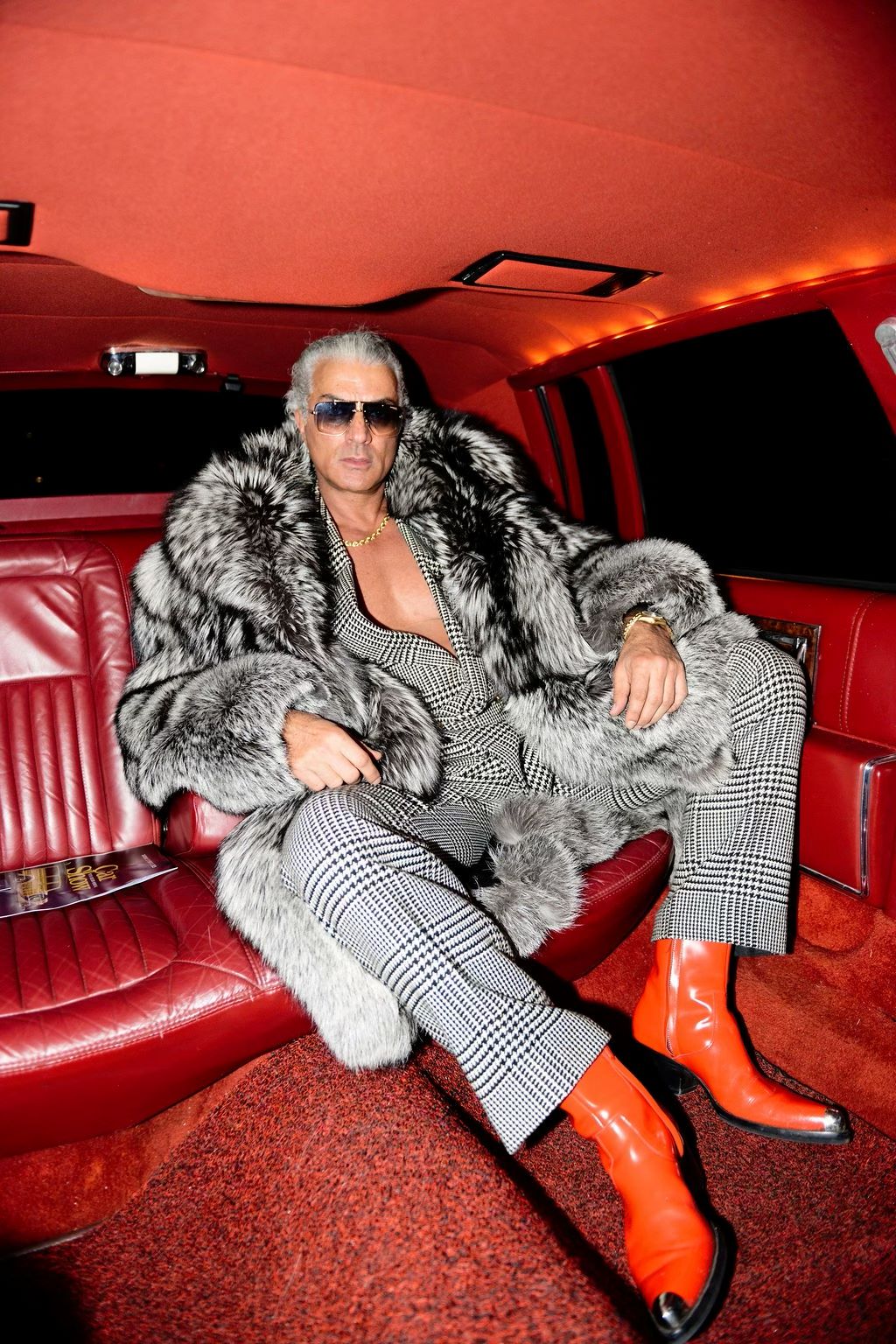
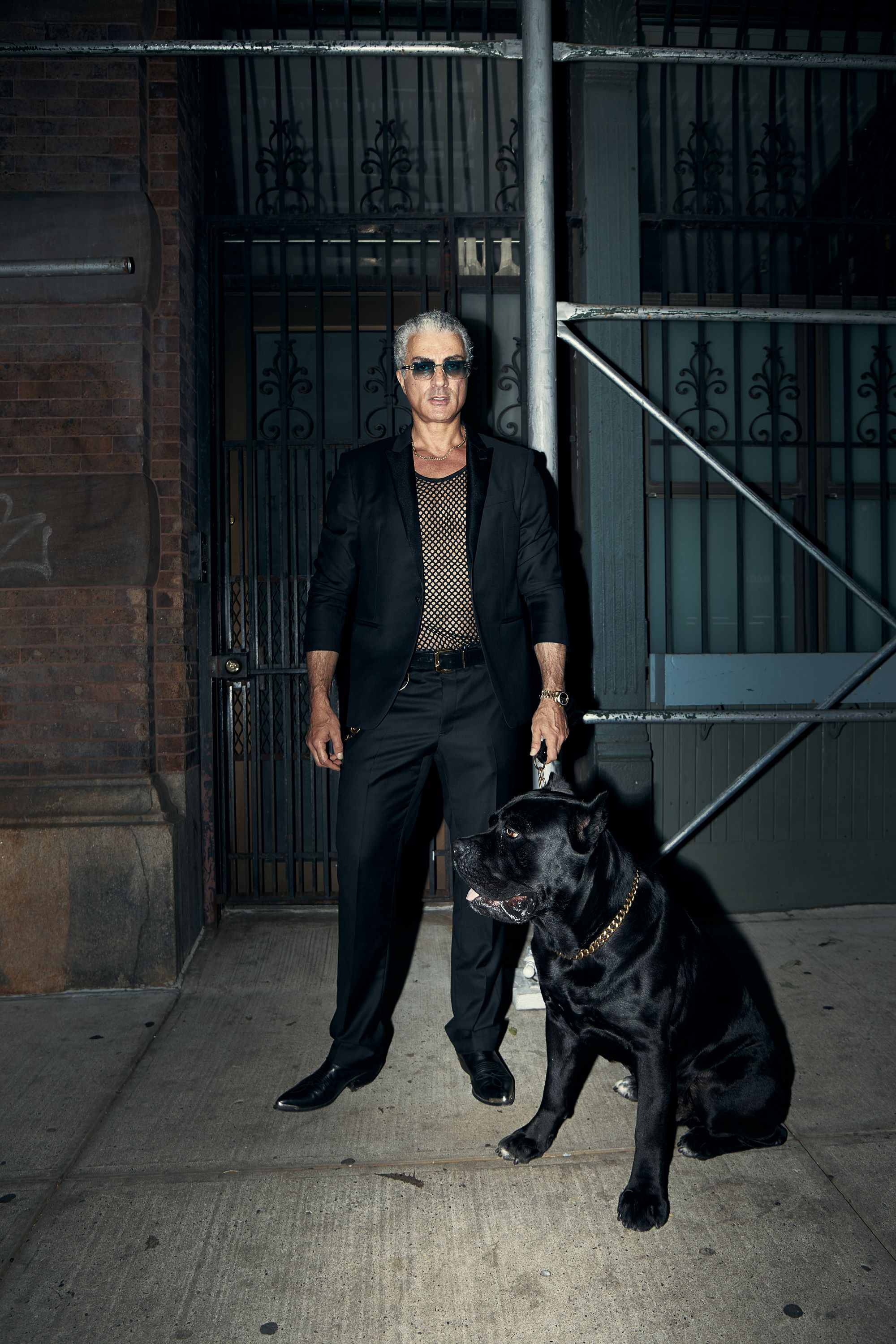
At first I didn’t want to do it. I thought it was for thirteen-year-olds doing stupid dances. Then during Covid I shot that video. Governor Cuomo had said you could only eat outside. There was a full blizzard. It was nine-thirty at night and I was already in my pajamas. A friend called: “Fabrizio, look outside.” I said forget it. Then I said OK. I put on the fur coat, we set a table outside the restaurant, the pizza guy made a pizza, I’m drinking a beer in the middle of a snowstorm: “Thank you, Mr. Governor, this idea of dining outside is just fantastic.” Thirty million views in three days. From that day on, I went viral multiple times. Social media is the best shop window in the world. They pay me to be myself. What’s the best job in the world? That’s it.
What would you tell yourself — the guy who arrived with $300 in his pocket?
I should have come to New York sooner instead of staying in Miami for seven, eight years. I had the best time of my life there, don’t get me wrong. But when HBO cast me in that film with Andy Garcia and the producers said “come to Los Angeles, we want to help you” — I didn’t go. I stayed in Miami, doing the clubs, the parties, having fun. That’s the one regret. But then again, I don’t really regret anything, because you only learn from mistakes. If I tell you don’t do that, you’ll do it anyway. You have to go through it. It’s all life experience — and as an actor, it makes you richer. It refines you.
What are you working on right now?
I just finished Zips, a short film with Australian producers — mob story, going to all the festivals. And I’m on Godfather of Harlem on MGM+ — Forrest Whitaker, Vincent D’Onofrio, Giancarlo Esposito, Chazz Palminteri. I play his underboss. It’s the story of the sixties and seventies, the Italian mob and the Black community fighting for control of Harlem. I was just featured in the Louis Vuitton City Guide for New York, I was on the cover of The New York Times, and I’m possibly doing something with John Turturro. A lot of things are cooking. I’m very excited.