
Our chat ends with a totally unexpected coda: “What would I like to add? I am Neapolitan, so: forza Napoli, always.”
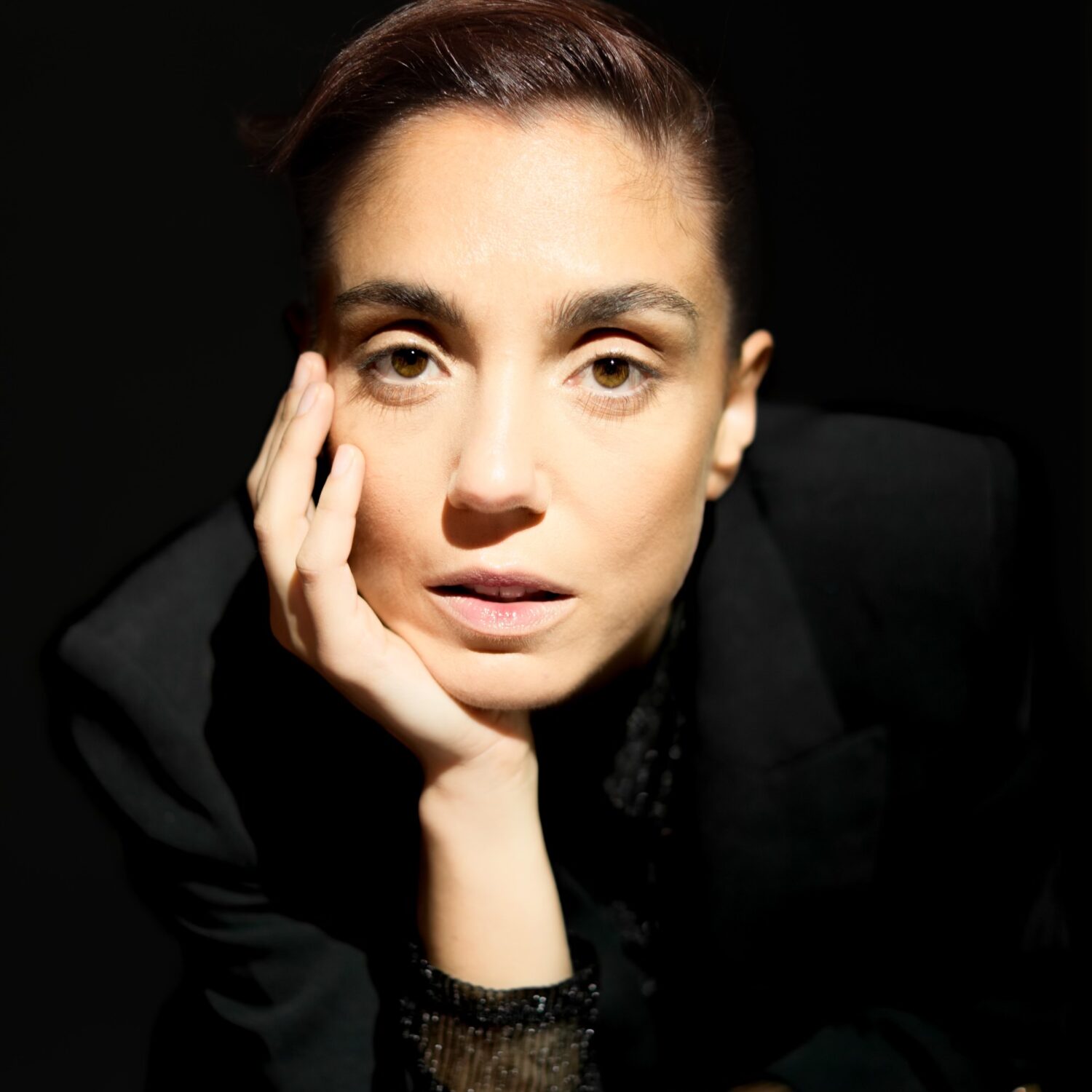
Cristiana Dell’Anna is the actress who made Italian-Americans (and not only) fall in love with Alejandro Monteverde’s film in which she is Francesca Cabrini, the missionary who in the late 19th century gave assistance to Italians who landed in the States and later became a saint and patron saint of emigrants. Cristiana is an extraordinary performer and a most profound woman, as you will discover as you read this interview. And evidently, she does not lack the irony and great lightness of Neapolitans.
Born in 1985, Cristiana became well known in Italy in the soap Un posto al sole (a highly followed TV appointment) and then became the camorrista Patrizia in the cult series Gomorra, which is also very popular in the U.S., and was directed by great directors such as Mario Martone and Oscar winner Paolo Sorrentino.
– Questa intervista fa parte del quarto numero cartaceo de IlNewyorkese: ACQUISTALO QUI
Today she divides her time between America and Italy, where she lives in the Tuscan countryside with her husband Emanuele Scamardella and her three dogs. “I love nature very much and I am totally vegan,” she tells me. “Not only do I not eat animal products, but I no longer buy leather shoes and bags or sweaters that are not made of recycled wool-in short, anything that is not certified cruelty-free to avoid industrial exploitation of animals. It’s an ethical issue: if it were up to me, I would eat cheese every day.”
This year alone, in addition to playing Francesca Cabrini, she was among the leads in three other Italian films: Leonardo D’Agostini’s Una storia nera, Marco Gianfreda’s Tre regole infallibili, and the action movie La coda del diavolo, which aired in November on the Sky platform. Then his new American production, The Panic, filmed in New York City itself and directed by Daniel Adams, which recounts the panic triggered by the 1907 financial crisis later foiled by J. Pierpont Morgan, in which he is alongside Cary Elwes and Malcolm McDowell, will be released soon.
I would start by telling how her passion for acting came about.
So many things led me to acting, maybe it was already written somewhere that I would do this craft, but I would like to emphasize that I consider it a path that never ends, because I am always there waiting for the next character. I think it all started because as a young girl I was very lonely, sometimes even a little bullied at school, and I would take refuge in stories. I used to read a lot, I started very early, and my mother used to tell me a lot of fairy tales, she knew versions of Little Red Riding Hood handed down from her great-grandmother that also had singing parts. Then as a teenager I felt that cinema and theater made me feel a great freedom to express myself. At 13, after seeing Titanic I wanted to be Kate Winslet to pretend to be on that ship and tell that story. And as I grew older still, I realized that it could actually become my profession.
So then it was.
With all the difficulties created by a middle-class family that certainly did not see it as something reliable. Nevertheless, I packed my bags and with little money in my pocket I left for London to study drama. Without a plan B or a clear idea: I entered the academy, graduated and slowly sailed against the wind to find my way.
What do you remember from those times?
I was studying a lot, doing theater, short films. The entertainment world in London is very rich, I made my first short film with Rose Glass, who is now a prominent director. But I was also trying to stay true to the motivations that had driven me: to expand my existence and to create a dialogue with each other.
Then she was called to do A Place in the Sun.
(laughs, ed.) Yes, and I never watched it because I was always busy on other things, however, it was a great opportunity. To give confidence to an actress coming to Italy for the first time is no small thing, and working on that set was very pleasant, like being in a big family.
There she even played twins, then she became a camorrist, a prosecutor, a tormented mother, a saint. What did all these characters leave her with?
Actually what happens to me is the opposite. The characters I play take a little piece of me from them, which lives on in their stories, and so what’s left is the void they leave behind. I see that as the price to pay for people in this business, and I feel in some ways like a crumbling shooting star.
And aren’t you afraid that they will eventually take everything away from you?
They did a little bit, and that is the reason why I cling very strongly to my private life today.
What does it mean?
I take refuge in my home, with my dogs and the man I married six years ago. He is the one who always reminds me not to get anchored in the lives of characters by forgetting to live my own, who brings me back to the reality of the world and drags me to travel and see more. He fills my voids, without his love I would be like a watering can without water.
Going back to Francesca Cabrini, did she expect the great American success and the reception she received from the Italian community?
Honestly, no: I was terrified of what might happen, also because it was a role in which I really put my whole self, with a very long preparation and a lot of work. The reception of the Italian Americans, then, moved me. I was surprised to realize that my face had become recognizable, and also to find out how many people had dealt with the welfare institutions founded by Cabrini, and how many stories there were. Telling people’s hardships has always been of enormous importance to me, and as an actress I always want to flesh out the stories of the dispossessed, the losers, rather than those of the winners.
Did confronting this great figure of a woman teach you anything?
It taught me a lot, although I didn’t realize it initially. It made me realize the great power of resilience. There is something Francesca says at one point in the film: let’s start the mission, then we will find the means to carry it out. Most people usually act the other way around; she, on the other hand, knew that the ideal that drives us, if it is good, is somehow already the tool for things to work. It was a lesson I probably needed; it took Francesca Cabrini to remind me of the absolute importance of being positive and not being defeated by difficulties.
Article Interview with Cristiana Dell’Anna, the Italian actress who conquered America comes from TheNewyorker.
