
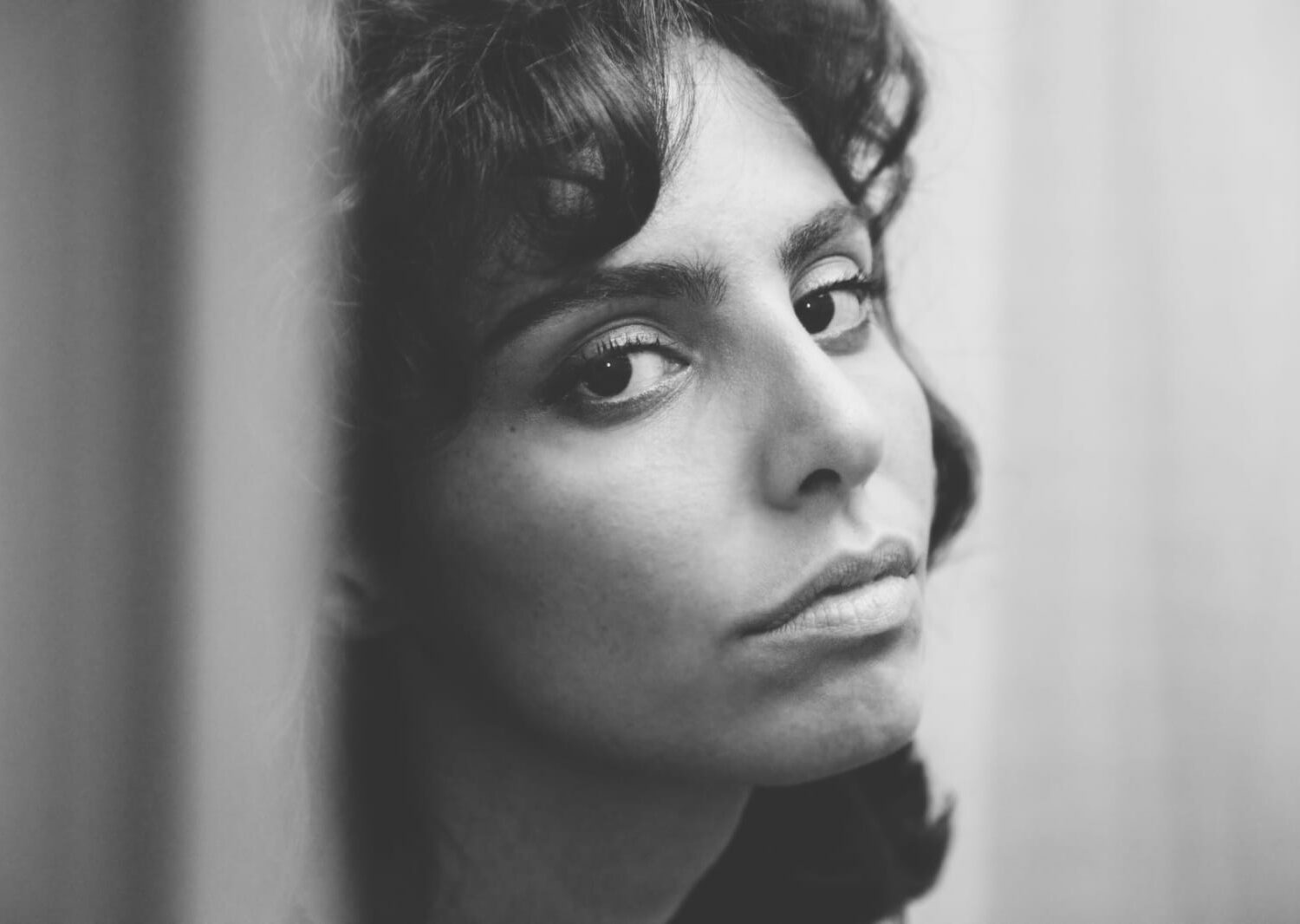
A year after her last time, Irene Maiorino is back in town. Things have changed-as they always do in New York-and she, too, has changed in the meantime. It is a return that brings many things with it. Starting with Lila, the character from Amica Geniale that has stayed with her more than any other.
The impact was strong as soon as she landed. “They picked me up in a pickup truck at the airport and I got very excited. Going through the city, recognizing buildings that are still there… In one week New York changes everything, and yet those buildings endure. It struck me.” Then she smiles, talking about the moment she received what she calls a “shot of joy.” A shot that woke her up from an “emotional anesthesia”-her word-due to what’s going on outside. “Anesthesia, sometimes, is a form of defense. When what is happening in the world is so strong, the rest seems to lose meaning. And at that point you protect yourself, you numb yourself. But then a moment happens – and The Brilliant Friend was just ‘that’ moment – that reactivates you, wakes you up.”
“Lila continues to expand reflections. About the feminine, about communities, about how to look at things. It’s still necessary, but it’s also beautiful. “It’s been a year of transition,” she says. She knew she would be returning to New York, but she did not imagine she would still be doing so “in the wake of Amica Geniale.” A wake, she says, that she is honored to carry with her, “She’s a thoroughbred, and all thoroughbreds are seen over the long haul.”
Shortly before, she had received news that made her happy: two Silver Ribbon nominations. One for the series, and one for her as best lead actress. The conversation then slides naturally to that character that brought her so far. This is not the first time she has been asked what Lila left her. But this time there is more time to reason about it. “I sewed it on myself. I studied her for a long time, translated, read. Three years. She changed me. In a way I left her my youth. She gave me an adulthood.”
“It repositioned me with respect to how to be in life. It made me realize what really matters,” she explains. And she clarifies that Lila gave her back an image of the woman she already wanted to be. “It reconnected me to an instinctive part that, growing up, you risk losing. I have a determined nature, with a strong work ethic, and this is not always understood. Sometimes it’s really ostracized.”
Maiorino says that before L’Amica Geniale she noticed how her personality was being “tamed.” “With Lila I recovered the wild part, the scratchy part. The less complacent one. It’s a very serious game, like that of children: they really believe in it.” When we ask if it had ever happened to her before to immerse herself in a role like this, she replies without hesitation, “No, never.” Although her method has always been immersive. She recounts how she worked on the Neapolitan language of the time, avoiding the blatant stereotype. “The moment of the audition is the most interesting: you’re alone, exploring, creating. It’s the playroom.”
Then he recalls those months of auditions, the waiting, the silence. “I didn’t know if they would call me back, but I felt there was something there. It wasn’t one of those auditions you do and then you forget about it. It really changed me. If I look at the photos from that time, I see that I’m only now recovering my smile, my sunny disposition.” When we ask her if, in retrospect, she feels happy with what Lila left her, she has no doubts. “I don’t reject anything. On the contrary. Lila had a revenge on life, and somewhere I did too. This work is beautiful, but inside the system is not easy. It is not an equation. There are so many good actors and actresses that no one knows about. This was an opportunity. I worked hard for it, and that is why I am also grateful to those who gave me this chance. It’s important to say that.”
She adds that that awareness also gave her a sense of responsibility. The responsibility I felt was to the character: to return cinematically the image that readers already loved. Not to disappoint them. I do an exercise: if I were a friend of mine, I would say to myself “good.” But how hard is it to say that to yourself?”
At one point he makes an observation, “People often think that it is we actors who give something to the characters. But it’s actually the other way around.” We then find ourselves talking about the reality around her, the changes – political and social – that have taken place. And about her way of being in it. “I’m very empathetic to what’s going on in the world. And I’ve learned to relativize my successes, because I can’t enjoy happiness if those around me are hurting. Both in the small and in the big.”
We also talk about his land. About Campania. “Mine is an atypical Campania. I was born in Naples, but grew up in Cava de’ Tirreni. A city with sea and mountains, very poetic, melancholy, romantic.” She tells of her grandparents, of silk in Positano, of poems in folders discovered years later. “They are sensory memories, more than geographical.” When we ask her how much they influence her roots, she makes a distinction: “I don’t think about it in terms of south or north. But the things that are southern I have. The generosity, the veracity, the sense of community. And also the joie de vivre. Solving things with good humor.”
Then there is the French part. “My maternal grandmother was a Parisian. Her name was Lina. Like Lila.” The voice drops for a moment, as if to let the chill pass. “It’s like she lives on in me.”
Further on, we talk about the future. With the awareness of one who is living it without too much planning. “It is a very alive moment, I am working a lot, on different projects, and this is the only thing I decide. For the rest I don’t want to decide anything. My future, today, is made up of the present.”
Toward the end we return to a more serious, inevitably political tone. Irene says she does not feel in agreement with what is happening in Italy, or even with what is happening in the United States. “What is happening in Palestine transcends everything. When I was a child and I read about the Holocaust, I used to ask my mother: but where was the world? Now I ask myself, ‘World, where are we?’ How is it possible that there is this indifference and that history repeats itself and does not serve us to become better human beings?”
And while saying this, he does not raise the tone. He doesn’t need to. The echo is already there.
The article Irene Maiorino recounts her Amica Geniale: “With Lila I got my scratchy side back” comes from TheNewyorker.
