
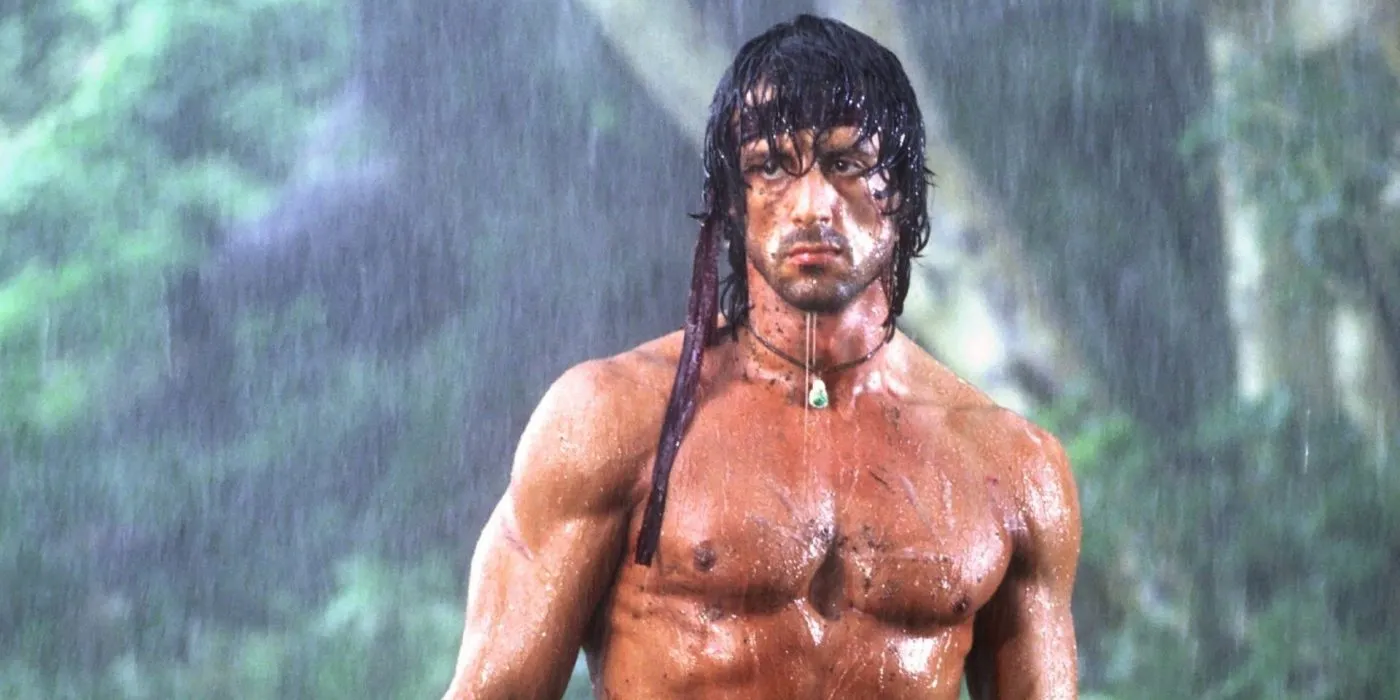
The news rebounded a few weeks ago, around the middle of May, displacing the entire film world and beyond. From the first announcements, reactions were not long in coming: from the classic “there are no more ideas,” to “but … if developed well it may be that …” We are talking about the incredible return of John Rambo. Yes, that’s right: you read that right, the most famous Vietnam veteran in movie history is coming back with an all-new movie or chapter or episode, as you prefer.
Will many of you, at this point, logically think that his historical face, that of Sylvester Stallone, from 1982 onward, will, in turn, be back in the game after the disastrous fifth chapter that, in fact, ruined the finale of the fourth episode made in 2008?
Instead, this time the answer is no. Sly himself, partly for obvious age reasons, will never return in what is his second role that further confirmed and enshrined him in the eyes of audiences around the world after, of course, the character of Rocky Balboa, from the saga of the same name that he conceived in 1976.
In fact, the plot will be centered not so much on some new adventure or in his jargon, a new war to face; if anything, it will go back in time again, in which a never-before-seen Rambo is told and, at the same time, shown. To be precise, never seen since that historic and legendary inaugural episode based on David Morrel’s novel, in which the veteran of the ill-fated Vietnam conflict was seen being harassed by some sheriffs of a small American county. It will be a very young John Rambo grappling with the very dramas that traumatized him, a Rambo moving within the Vietnam War.
So, not already scarred by that epochal tragedy, but, perhaps, also totally carefree initially who will see his own hopes, like all those young people of that period, shattered against the grim reality of those 1960s, albeit mythologized and crystallized in a particular positive and, at times, all too sweetened aura.
Ultimately, this is not a sequel but a prequel, and so why not also speculate on this crazy and crazy idea: perhaps the prequel itself also hides a reboot of the whole saga?
The question arises, paraphrasing the great and never forgotten Antonio Lubrano, and for a simple reason: if Stallone, now seventy-nine years old, can no longer appear with a young and wrinkle-free physique, logically there will be another performer to whom this hot potato will fall. That is, not to make the original actor regret it, and certainly not for one film, but for multiple episodes to be offered on the big screen
For the time being, the only seemingly meager news would be this: it is already known not only who the director, Finland’s Jalmari Helander, is, and that the screenplay will be a four-hander between Rory Haines and Sohrab Noshirvani; it is also expected to start shooting as early as next October in Thailand. What about Stallone? Has he been involved? The answer is positive.
His participation in the project will, according to what has emerged in previous weeks, most likely be as producer, although financing what seems, in hard facts, to be a real impossible challenge will be the film production company Millennium Media.
The point, however, is a different one, and we hinted at it in the opening of the article with the two types of reactions. It is true that on the one hand the return of Rambo is very but very tempting. Just uttering his name is enough to attract, even today, quite a number of curious people to movie theaters. Precisely, however, there is a ‘but’ that shows, on the other hand, a good deal of puzzlement.
Perplexity not entirely negative, if anything a little attentive to a detail that emerged early on in the saga precisely because of that legendary chapter dated 1982. A single moment, a single scene that, perhaps more than any of the others that have tried to explain the Viet-Nam conflict veteran’s traumas in subsequent episodes, was quite clear, not to say very direct, and admitted of no other explanation or further elaboration.
We are referring to the famous monologue/outburst in the final scene of the feature film directed by Ted Kotcheff, in which Rambo shows, through and through, his emotional fragility, detaching himself from being the perfect war machine to reclaim his essence: that of the wounded man, representing a wounded nation.
So, the question that arises is this, after remembering that legendary moment in the first film, beyond whether or not the prequel may be successful is it really necessary?
The article The “Rambo” prequel without Stallone: did we need it? comes from TheNewyorker.
