
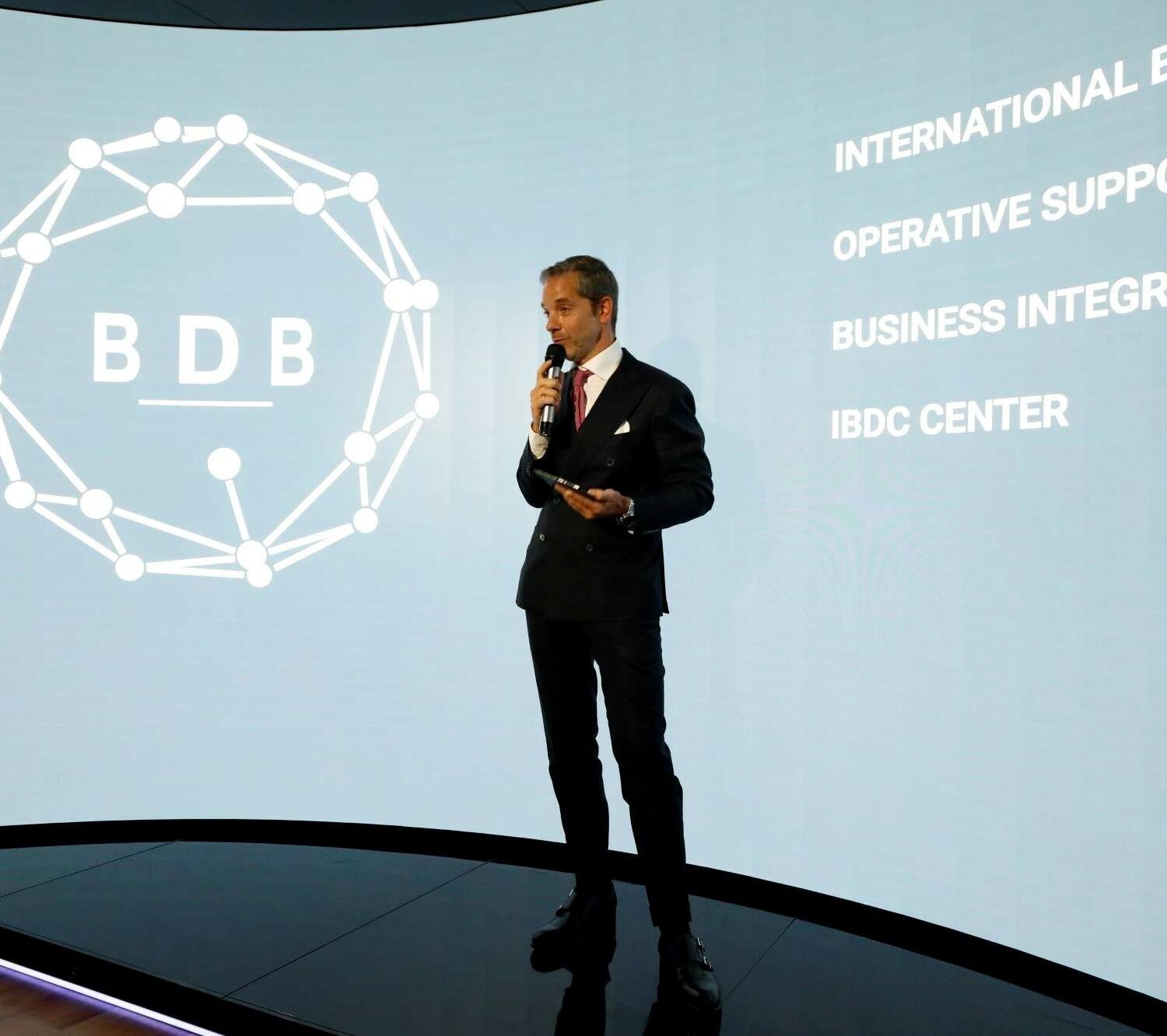
In the new episode of the Portraits podcast, from ilNewyorkese spoke Fulvio Italiano: a multifaceted figure, able to move naturally between music and business, between existential reflection and global strategy. A conversation that crosses countries and paradigms, and returns the portrait of a man who rejects labels and claims the right to a complex and imperfect identity.
“When people ask me today what I do for a living, I stop at the first answer: musician. Frankly, now almost at the age of 52, I have realized that taking myself too seriously is a mistake. Really serious people almost never take themselves too seriously.”
Although his entrepreneurial activity is very high profile, Italiano likes to call himself first and foremost an artist: “I am a musician and an artist who is also an entrepreneur. And I try to do it with the same spirit: curiosity. I think this is the only talent that is really necessary in life.”
Curiosity led him to found the BDB Network, present in 63 countries with 250 partners: “BDB stands for Business Development Bureau. It is a project born 12 years ago with Riccardo Maria Monti. At first it seemed like a crazy idea, today it is a structured reality that helps companies operate internationally.” Italiano claims the concrete usefulness of this network, which was created to fill gaps left by institutions: “During Covid we assisted more than 300 companies. We showed that it was not just a matter of ‘opening doors,’ but of offering real, daily support.”
Another key entity on his path is Khansaheb Sustainability, in the United Arab Emirates, of which Italiano has been CEO for the past four months: “Khansaheb is the oldest general contractor in the country, with more than 19,000 employees. The division I lead was created with the goal of becoming a leader in sustainability for the entire Gulf region.” But these are not just statements of principle: “In the Emirates, the decision-making chain is short and it works. In eight months they have passed more than 30 measures on air quality, energy efficiency, and much more. It’s serious business here.”
However, Italiano urges caution toward the language of sustainability, which is too often reduced to slogans: “Today some words, misused, become empty tokens. An example? ESG. Everyone talks about it, but 90 percent do not know what it really means. In many cases it translates only into costs and bureaucracy. In the Emirates, on the other hand, sustainability is approached pragmatically, without labels, but with concrete results.” A lesson from which he believes Europe should also learn.
The link with the Emirates is also cultural. Fulvio Italiano recounts a fascinating anecdote that links Italy and the Middle East: “The first road in the Emirates was built thanks to an Italian who brought the asphalt machine. The Emir said, ‘Follow me on foot. When I stop, you will stop your road.” Thus Sheikh Zayed Road was born. A beautiful story that shows how, even in the most unlikely places, Italians manage to make their mark.”
Finally, speaking about his book Imperfect, Italiano expresses an almost philosophical view of the role of human beings in the age of artificial intelligence: “In a world where artificial intelligence is preparing to replace all forms of perfection, the only thing that can save us is imperfection. The emotions, the insights, the flaws: everything that makes experience human.” A reflection also matured through a long personal journey: “Fourteen years of psychoanalysis helped me free myself from guilt and fear of judgment. They are soap bubbles that block us. If we can recognize them as such, we can live better.”
America remains, for Italiano, a key platform for those who want to measure themselves against the world: “The U.S. is no longer the postcard it once was; it is a selective and competitive market. But for those who are prepared, they remain a huge opportunity. I say this as a proud father: my daughter has just become a journalist for Forbes International.” But there is no lack of warning for the Italian system: “We have excellent universities, but we continue to look at America with an inferiority complex. We should have more confidence in ourselves.”
Fulvio Italiano bids farewell with good wishes and thanks, “Thank you and congratulations to the New Yorker for the wonderful work he does.” A greeting that closes a conversation full of vision, irony and depth, just like him.
The article Fulvio Italiano: “Imperfection will save us” comes from TheNewyorker.
