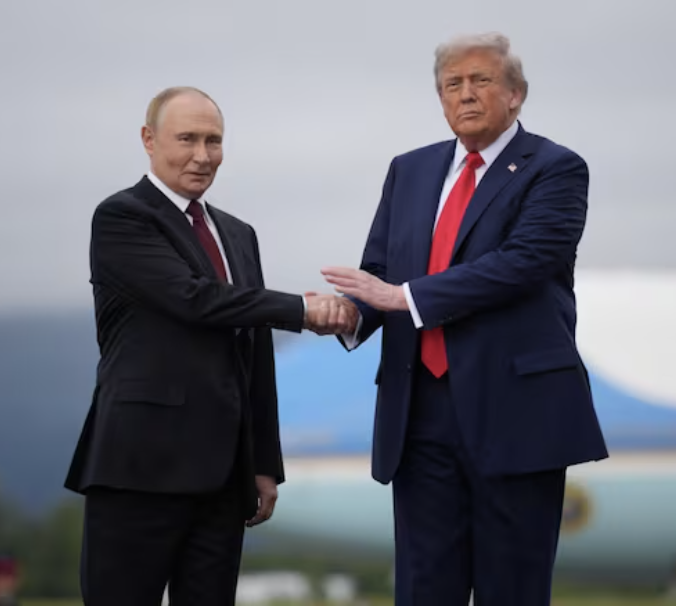
The day after the Trump–Putin summit in Alaska, much of the global press seemed to echo Shakespeare: much ado about nothing. No dramatic announcement, no breakthrough peace deal. Anyone expecting a sudden ceasefire or a roadmap to peace was left disappointed.
But was it ever realistic to expect that? Diplomacy rarely moves at the speed of headlines. While journalism demands clarity, immediacy, and soundbites, geopolitics works in shadows, stages, and symbols.
The simple fact that Trump and Putin spoke face-to-face was already significant. Some commentators saw a symbolic win for Moscow – in the protocol, the posturing, the evasive answers. Others, particularly among Republican-leaning media, framed it as Trump’s victory: the host who forced the “Tsar” out of his bunker.
The truth is more nuanced. For Trump, it was a success: he managed to bring Putin into a diplomatic arena rather than a purely military one. For Putin, the strategy remains rigid. He buys time, refuses to concede on occupied territories, and leaves the path forward uncertain – to be played out in second and third rounds, including with Zelensky.
Yet one thing is clear: Putin cannot back away from this process without risking total isolation in a new global order and locking Russia into an unsustainable war economy. This alone makes the summit a turning point, however subtle.
There are still enormous knots to untie: rare earths in Donbass, Zelensky’s future, Ukraine’s status – buffer state, Russian satellite, or integrated into the EU and maybe even NATO. No single meeting could ever resolve this. The U.S. is in a hurry; Russia, which until yesterday was not, now feels the urgency too.
From a journalistic standpoint, the press conference fell flat: Putin’s silence – or arrogance – on key issues left little to headline. But these matters aren’t resolved in the language of political correctness or media cycles. They belong to the slow, opaque rhythm of international diplomacy.
And the ultimate goal, stripped of spin, remains the same: to stop people from dying and bring an end to the war. The sooner, the better. Otherwise, this “Alaskan Ferragosto” will remain nothing more than a good title for a film.