
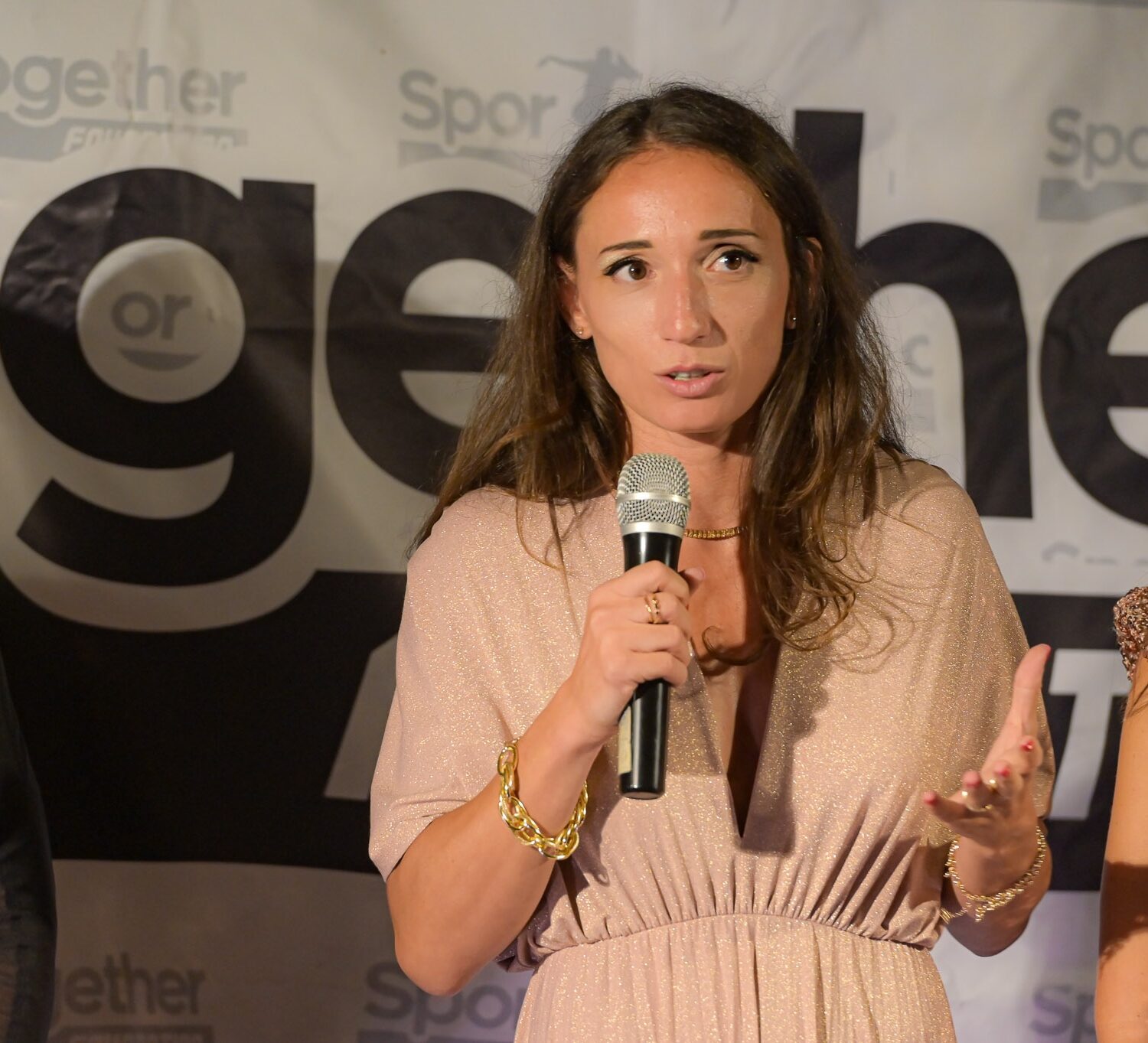
Gloria Peritore is a kickboxing and boxing champion, but not only that: she is an activist who has also brought her project and her story to America. A story that deserves to be told.
Gloria, you are one of the rare cases of a working athlete specializing in coaching
I specialized in neurolinguistic programming, becoming an internationally recognized life coach.
I apply these skills to the sports context, and it is something I have also used a lot in my competitive career. I was a three-time world kickboxing champion and, in October, I won my first title in boxing: an EBU Silver. That was the first important step toward the European title, which I won last May-I am still the reigning EBU European champion.
Your nickname, The Shadow, what does it tell about you?
The nickname was given to me after a match in St. Louis: during that fight they called me impregnable, like a shadow.
I have always liked it because it also reflects my character. I am an introverted person who has learned to be in the spotlight. But I don’t mind being in the shadows as often as I can.
There is a phrase I particularly love: a shadow always tells about a light. It is a thought that represents me deeply. I think people who don’t like to be the center of attention can still do great things.
In my case, I have done great things in sports, and I hope this can be an inspiration to others
Does a woman in combat sports still face so much prejudice?
Yes, it is difficult for several reasons: first, we are in a clear minority.
As I often say, a woman who fights does so twice: once in the ring and once against the stereotypes and labels attached to her. If you are not focused on your goals, you risk being crushed by these judgments.
This is a difficult sport in itself: stepping into the ring is scary, requires honing important skills and continually working on oneself. In moments of vulnerability, words can hurt, even those said lightly. Certain prejudices challenge you, even when you try your hardest and get results: it’s as if your commitment is a flaw.
Fortunately, however, this does not happen in the gymnasium. Combat sports put men and women on the same level. We train together, we share the same values.
Combat is an expression of self. Some people express themselves by singing, some in the ring, some on the tatami or in the pool. The key is to stay focused on oneself, and this is a lesson that applies not only in sports, but also in life.
It really seems that you are not afraid of anything….
I get scared of a lot of things, even now at 36. But the ring is something else, it’s a different fear. And it’s really the sport that helps you face those fears. Imagine stepping into the ring with the knowledge that whether you win or lose, somehow you’re going to get hurt. It’s not easy.
What is your relationship with your family?
My family is my safe haven. My mother is my role model. A former sportswoman and physical education teacher, it was she who passed on to me the idea of sports as therapy: something healthy and fundamental for well-being. I have a wonderful relationship with my father: it was from him that I learned self-respect and the values of forgiveness, understood in the deepest sense, and compassion.
Then there is my sister, Giorgia, who is a designer. She, too, is a beacon in the dark for me. I can travel the world, go anywhere, but when I feel the need to really open up, I always come back to them.
The Shadow Project is an initiative that spreads important social content, such as raising awareness against violence against women. How did you become a fighter spokesperson for anti-violence projects?
After publicly recounting my own toxic relationship, I was invited to several schools and organizations to speak about my experience, but a message was getting through that I didn’t like: that of the “victim survivor” or, even worse, of teacher of self-defense against the male gender. So I founded The Shadow Project together with the listening desk and the #FIGHTTHEVIOLENCE anti-violence campaign. We want to show that violence is not what happens in the ring. When two boxers step onto the square, they see a goal, a contest, a technique to be applied, points to be won.
True violence is that which denies the freedom of others, and this happens outside the ring. We fighters freely accept the risk of going down, just as there are those who accept the risk of jumping out of a plane with a parachute. It is just a matter of perspective.
The athletes’ embrace at the end of the meeting sums it all up. Rarely do you see improprieties or unsportsmanlike gestures.
Understanding this difference is crucial, and when you get there, everything changes. It happens in schools, too, when parents are afraid to let their children participate in sports like kickboxing or boxing. Then they discover that these disciplines teach kids to channel aggression constructively, to manage it. I think conveying that message is one of the most important aspects of what we do.
The ring is a bit of a metaphor for life, so …
Definitely. This kind of sport puts you in front of strong emotions, like anxiety, but it also teaches you how to manage them.
With The Shadow Project, I do not carry forward the message that we all have to become champions to be fulfilled in life. On the contrary: I invite people to try a sport that involves direct confrontation with others, even without excessive physical contact, precisely to begin to discover and learn about the deeper aspects of themselves.
She took The Shadow Project to Philadelphia and Detroit. Has she been to New York?
Yes. My dream was to see New York. In two months I was there twice, so it was more than exceeded.
I saw a very imaginative New York. The first time I spent 2 out of 3 days in the gym sparring with a super champion, the second time I experienced it better.
It offers you everything, so if you have a period in life where you are a little confused, you don’t know what to do, go there and clear your mind.
Are the rhythms of the city as hectic as they say?
Depending on how you experience it. I experienced it very well. It is true that, as my partner says, “you in America are a little doped up.”
I can’t sit still for a moment, I like to see so many things, I experienced it great. I didn’t feel any frenzy, even on the streets. On TV they show you people running with briefcases. It’s not really like that.
Is there a place that has remained in your heart?
Definitely Central Park because I love nature so much-it’s really an atmospheric place in the midst of a thousand skyscrapers. If I were to live in New York, I would go there two or three times a week to write and meditate. It gives me a lot of serenity.
Do you think there could be a The Shadow Project in New York as well?
I hope so in the future. I hope this project can expand as much as possible. The United States in general is also the home of boxing.
Combat sports are very heartfelt, so I think if we work well, we can land there in the future. I reveal a dream in the drawer: I would like to have a match in the United States again, to sanction this love of mine. The first important match was there. Who knows, maybe I will close my career in America. I am working right now for a match in the US.
The article Gloria Peritore: the fighter who pummels violence with The Shadow Project comes from TheNewyorker.
