
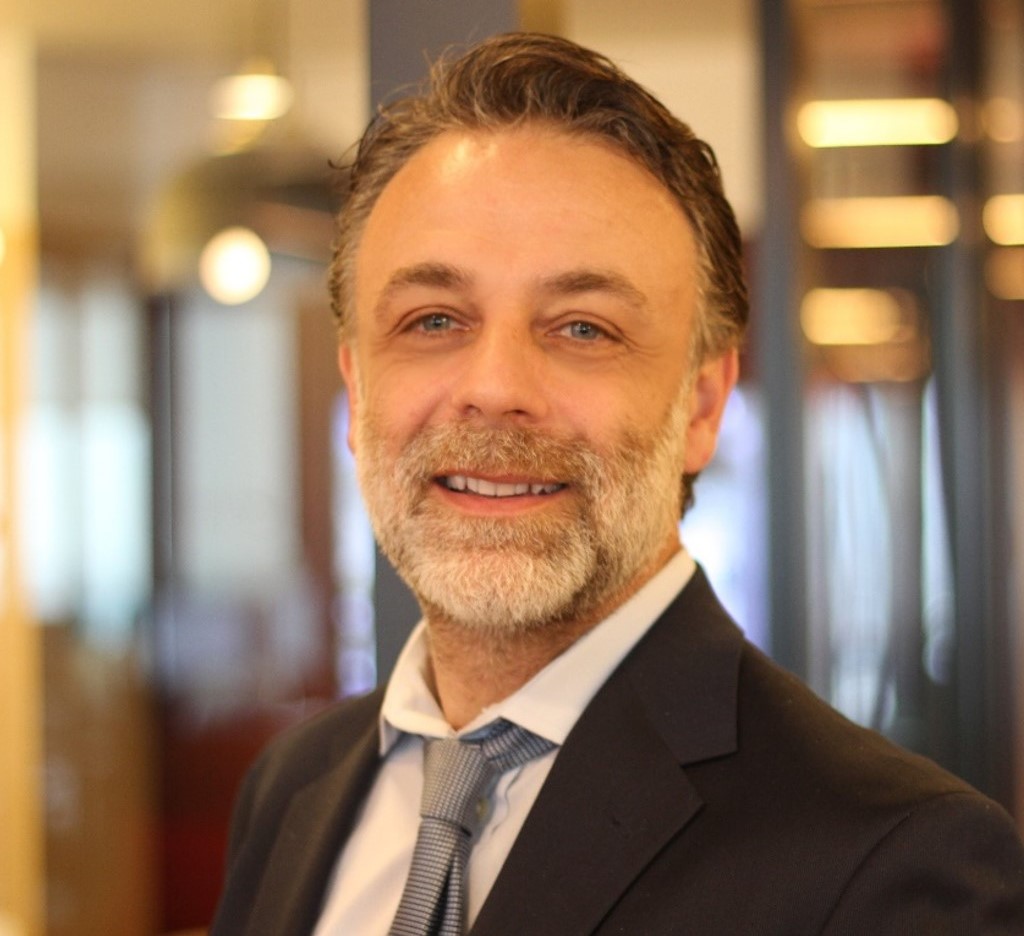
Alpine officer, then analyst and banker between California and Manhattan, today a professor associated with Tennessee State University, professor at the New York Institute of Finance and founder of a broker-dealer registered in the United States. Chris Manfre tells a path made of radical turns: service in the Balkans, the chance to start from zero, to thirty years, in Los Angeles, the entry to Standard & Poor’s in New York. Then the 2008 crisis that opens the door of the academy to Bardi Co, the society that created over twelve years ago. In this interview Chris Manfre traces the stages, doubts and his idea of finance as a trade in contact with the real world.
Let’s start today: where does he live and what is he doing? I’m in Nashville, Tennessee today, where I do a few things. I am a professor associated with Tennessee State University and I teach finance, in particular corporate finance and investments, so different subjects but always in the hive of finance. As part of corporate finance, I also teach mergers and acquisitions at the New York Institute of Finance, through which I had the opportunity to teach M&A to major international groups such as Itaú, Industrial and Commercial Bank of China and Saudi Agricultural and Livestock Investment Company. At the same time we have expanded the presence of the company I created over twelve years ago, Bardi Co: is a broker-dealer registered to the SEC and member FINRA/SIPC, i.e. bodies that regulate the financial sector in the United States, the equivalent of our CONSOB, to understand us. An exceptional customer of the company was Monika Bacardi, of Bacardi Ltd, although not for the liquor industry but for the world of cinema and Hollywood. In summary I always say that I study finance, teach finance and practice finance. After being official of the Alpini my true love became the financial sector.
Since he opened the topic, what is the link between a professor of finance and the world of the Alps? They look like separate universes. They are actually two separate universes. Sometimes I talk about “parallel universes” because what we do is often the result of the possibilities offered by the environment at a given time. As a boy, I thought military was the most special thing I could aspire to, and it was my first love. The two things – Alpini and finance in the United States – are diametrically opposed: I often say, not from the Alps to the Indian Ocean, but from the Alps to Wall Street. It was my battle and my personal revolution.
We return to the “first Chris”: how does it enter the Alps, how long does adventure last and why does it close? I had the passion for uniform from the top: a schoolmate had the father lieutenant colonel of infantry who looked with admiration, and that idea remained on me. With the mandatory lever I wanted to try as complement officer: I do the AUC contest, I am accepted and I am very happy. I attend the school of the Genio alla Cecchignola for five months and I am destined to the Genio Ferrovieri in Turin: the Alpini, for now, are far away, but being Piedmontese and having done the Alpine setting course the idea remains in my head. I spend almost three years with the Railways, with the advantage of being at home and being able to study for the competition in actual permanent service, very selective for number of candidates and places. Study, study, study and superimpose: I am finally sent to the 2nd Regiment Genio Guastatori Alpini of Trento. There begins my alpine experience as a stinker: Trento, Cortina, Bolzano, the Alpine Truppe Command… beautiful history, dream realized. There is also a funny twist: I had a girlfriend in Tuscany who said “it was good for the Alpini, but I want to be a lawyer and I stay in Florence”, and I understand that our story creaks. A family friend gives me an interview with a general in Verona: I, with my English and a bit of French, throw there that there is an interforze command in Florence and I would gladly offer myself. The general dismisses me with a “I will let you know” and a month later comes the letter: destination Sarajevo for six months. I’ll call him. “But I asked Florence.” Answer: “Tenent, first you experience: go to Sarajevo and then we see Florence.” During the Bosnian mission, my fiancée leaves me. I stay six months in a complex theater, almost finished war but with still ongoing clashes: very interesting experience, psychologically hard. Back to Trento, new destination: Albania, between Durazzo and Tirana, another six months, with the question of Kosovo and Passo Morini. I live on a military base that was actually a summer colony built by Italians in the 1930s: looking at the Mediterranean I begin to want more. A year in war zones weighs. I had always had the capital markets – Wall Street, the Stock Exchange – for stories of my father, but remained dreams. I buy a red book on financial instruments – stocks, bonds, derivatives – and, between training at 2,000 meters, skis, shots with rifle and machine gun, hand bomb launch, after a small page I collapsed from sleep. In Bosnia and Albania I have a relationship with American officers: English improves, we stay in touch by email and friends tell me: “Why don’t you try to come to the United States?” I ask for two years of expectation: my colonel, old alpine, tries to hinder me, asks the question in the drawer, blooms with colored “hold, you must stay here”, but in the end is obliged to forward it and the expectation comes. I applied for an economic master’s degree at Claremont Graduate University in Los Angeles: I am accepted with great surprise and joy. Thirty years of school in California: between the Balkans, backs and practices, the years had passed. English, which on a mission seemed decent, for advanced studies it was not enough: I try to land the lunar and think about how “comoda” the career in the Armed Forces was. The two years are over: the regiment calls me back. I spend a week without sleeping. Everyone says, “In Los Angeles? It is assumed that you remain.” In fact it was not: economic difficulties, language, a totally new world. I decide to leave, I return to Italy for the practices and return to the USA. Finished the master proseguo with PhD, also to gain integration time: Meanwhile I do internships, and there opens the way to finance.
How do you transform your career in the United States? I find work in an investment bank in Orange County: career begins. At 34 years time has passed, but after a couple of years I can be hired by Standard & Poor’s, who for me was an almost inaccessible dream, known even when I was alpine. First L.A., then I move to New York and work near Rockefeller Center. It is the dream of Wall Street that comes true after imagining it from the Tonale Pass, where there was the training base of the 2nd Genius Earners.
Listening to his story, it seems the proof that “it is never too late”. Was New York the turning point? Thank you. It was a struggle against windmills: things that seemed impossible became reality with constancy, work, desire and the ability to continue dreaming and believing. Arriving in New York changed things and gave me a certainty that I had not, even for the insecurity on language, the Italian being, the way I proposed. I came from a closed world like the army: I lacked cultural references, many things “of corporate America” that I did not know. Proposing me from “typical Italian” the stereotype came up immediately, but the fault was also mine: If I had put myself differently, maybe things would have been different. New York was a real snout.
Twenty-five years of America: has the social fabric changed and the look on Italians? Yes, American society has changed a lot, and I too. At first the stereotype was strong: Italian equal pizza, Berlusconi, the usual clichés. Today there is more openness and curiosity: when you say you are Italian often ask what it means to you, what your experience is, what you do, what you eat. No one leaves in New York or Los Angeles for granted my origin: Maybe they get an accent and ask “Where are you?”, but without prejudice. Sometimes it’s nice not to always tell where you come from or give yourself to a non-truth idea. Twenty-five years ago they said to me “Americans like Italians”: Then I didn’t feel that way. I would not talk about racism, but a certain distrust. Today I see much more openness towards Italians.
When is the passage to the academy, which today is its core business? Paradoxically, I have to thank the 2008 crisis. We’re half the 2000s: between 2005 and 2007 are in New York, then the winds of crisis arrive. In the meantime, I married, we have a daughter, my wife – American – loses the job and decides to return to California: return to Orange County with the investment bank I had been with (now D.A. Davidson). The activity fell and in 2008, in full crisis, I take an opportunity as director to Marshall & Stevens, historical company of corporate evaluations of Los Angeles. An analyst at Loyola Marymount University says: “I spoke to the vice-dean, they would be interested in some valuation lesson.” The evaluation was my specialty – Standard & Poor’s, D.A. Davidson, Marshall & Stevens – I accept the invitation, I hold seminars, then they offer me to regularly teach the MBA course. I become a professor visiting with a three-year contract. Teach me exciting: I was out of class electrified. He was taking me back to the Alpini, when at the training base I taught mines, minefields, explosives, radio communications: I was already an instructor, only on very different subjects. After three years at Loyola I stepped as a clinical professor at Pepperdine University: wonderful campus on the Pacific Ocean, prestigious school. There remain eight years teaching capital markets, corporate finance, investments. “Drugged”: teaching I learned a lot, my knowledge exploded. I started researching: some articles were published, I continued. The most exciting thing is that I have experienced the financial world: I always carry real life in the classroom, and this also likes colleagues. It became my style.
In light of all this, what is the dream in the drawer today? Careful, because then it happens… My wish is to influence my students in a positive way: excite them, make them believe that there is a different possibility than they live. That’s also why I came to Nashville. At Pepperdine I had wealthy students, with high straights: It was not rare to see someone coming to Maserati, Lamborghini or Ferrari. Today at Tennessee State University – a public university – I have a completely different audience, in a different reality from California. I find a huge satisfaction in trying to convey that dream that was mine: to remove you from a reality that you think inextricable. Saying it is exciting, because it is really a great satisfaction.
Is there something that has not emerged and that wants to add? Perhaps only the birth of Bardi Co, the broker-dealer. My approach to finance, even in the academy, is that it is primarily a job: you study and learn, but you have to confront the real world, otherwise it is not finance. When I was a professor visiting Loyola, two students – already in possession of FINRA licenses – told me: “Why don’t we create a broker-dealer so we keep the licenses active?” Smiles: creating a broker-dealer is not a joke, American regulation is complex and creates entrance barriers. But, speaking with them and with a couple of ex-workers fired after the 2008 crisis, we’re going to head to it. In the offices of Loyola Marymount, in a year and a half we prepare everything: cards, questions, requirements. The FINRA approval comes and Bardi Co LLC is born. I said: “I give everything, but the name Bardi for me is essential: either it’s called Bardi or I don’t participate.” It was the sine condition here not. At first I almost regret: people did not understand “Bardi Co”, I had to syllable B-A-R-D-I C-O and I thought “so we will never do business”. Strangely, after a while, no one has had any difficulties: today the brand is registered in the federal sector in the United States. “Bardi” comes from the Italian tradition: the Compagnia dei Bardi, the first great Florentine merchant bank of the fourteenth century. I studied Political Science in Florence, my girlfriend was from Florence: That bond remained. And there is a detail that closes the circle: the Bardi contributed to the financing of Christopher Columbus’ journey to the Americas. For me, that I crossed the Atlantic to change my life, there could be no better symbol.
The article From the Alps to Nashville, passing through Wall Street: Chris Manfre’s second life comes from IlNewyorkese.
