
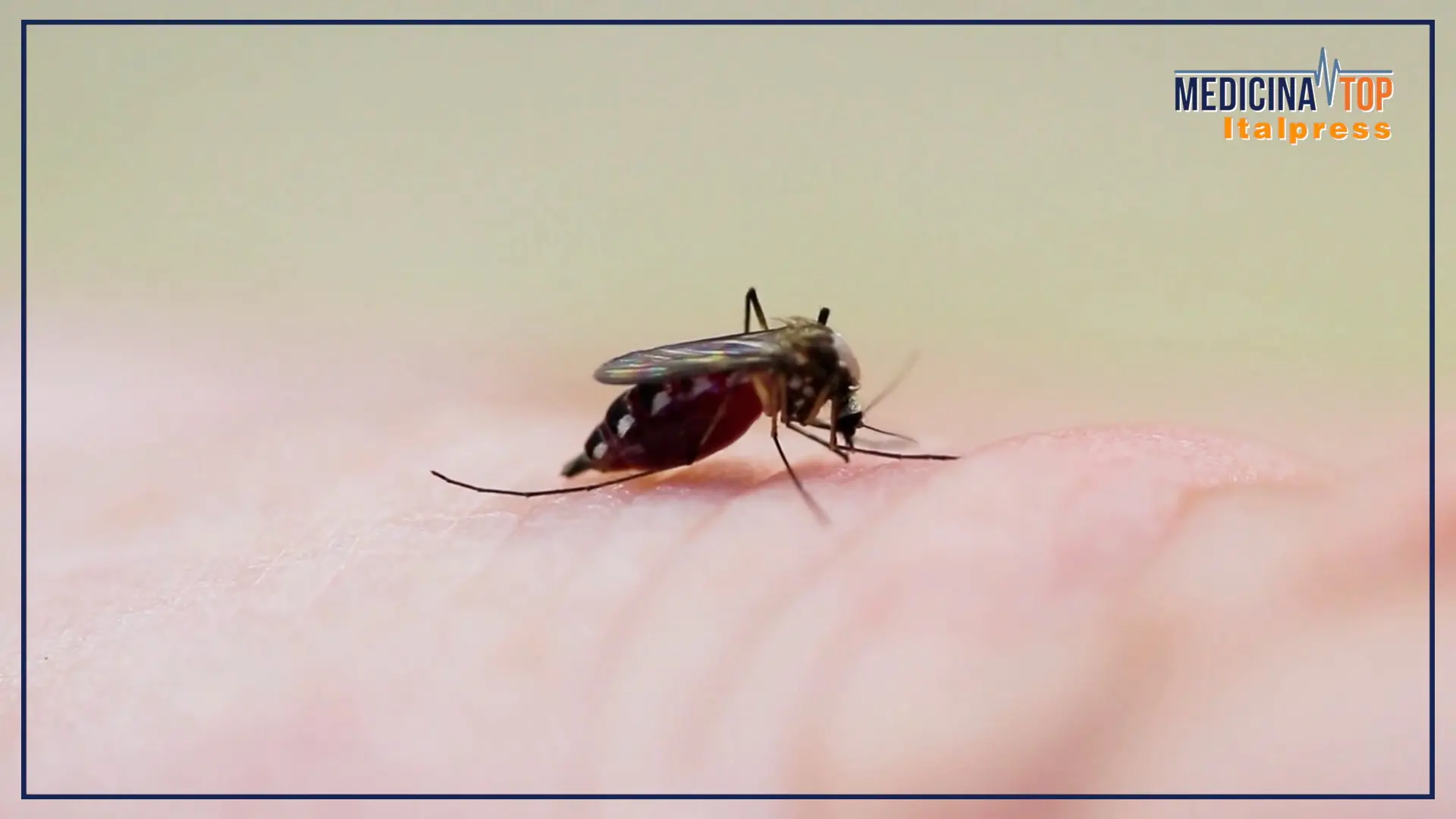
ROMA (ITALPRESS) – In recent years, and in particular in the last summer, in Italy there has been growing attention to tropical infectious diseases, until recently considered rare or restricted to specific areas of the world. The growth of international travel and migration flows have contributed to the increase in our country of pathologies typical of other continents; Moreover, climate change and the spread of some types of mosquitoes have favoured the possibility of transmission also in Mediterranean areas of so-called tropical diseases from carriers such as Deng, Cicongunia and Zica.
“Climate change and resumption of travel after pandemic are factors that, in some way, may have favoured an increase of pathologies from carriers that are normally not present in our country,” said Emanuele Nicastri, director of the Complex Operating Unit of Infectious Diseases with high intensity of care at the Spallanzani Institute of Rome and secretary of the Italian Society tropical infectious diseases (Simit), interviewed by Marco Kling.
Fundamental, in the face of the progressive increase of episodes, raise the threshold of attention: “We have about 700-800 cases of malaria imported a year and in 2025 we had hundreds of cases of Cicongunia, both imported and native, especially in Veneto and Emilia: we must adapt, especially in summer, to receive pathogens that can acclimatize very well to our latitudes. Each pathogen that can cause an infectious disease has a particular predilection for a certain mosquito: some species may vehicular again malaria, while other pathologies may come from the tiger mosquito that has adapted perfectly to our latitudes.”.
In this sense, Nicastri adds, “Deng, Cicongunia and Zica are all diseases that recognize in the tiger mosquito the main carrier. Many of the peaks of autochthonous cases occurred on Ferragosto, as a result of frequent summer rains: attention must be paid to episodes of fever related to skin rashes or joint pain, especially if in aggregate or family cases; in that case it is not a trivial influence, but it can be identified with a pathology from a tiger mosquito.”.
Indispensable, for the secretary of Simit, the synergy between institutions to face the phenomenon: “At Spallanzani we have a plan to combat infections transmitted by mosquitoes, which lasts five years and provides a series of components related to both human and veterinary health: We must put together all the professionals and make small regional plans, which can go to compose a large one at national level. When there was the West Nile outbreak in Lazio, which recognizes a different type of mosquito, we made several meetings with mayors, pediatricians and family doctors to have a surveillance data that worked.”.
Equally important to insist on research, because “especially Deng is blowing up in all countries including tropics: At this moment we have two vaccines, but one is out of production. Those who must leave for tropical areas must always assess the possibility of vaccination: for Cicongunia we are coming to an effective vaccine and they are evaluating a couple, for Zica we are still far unfortunately. There are still no effective antiviral therapies for any of the three diseases, while for malaria the vaccine is there but it is not the case for those traveling”.
-Photos from video ‘Medicina Top’-
(ITALPRESS).
