
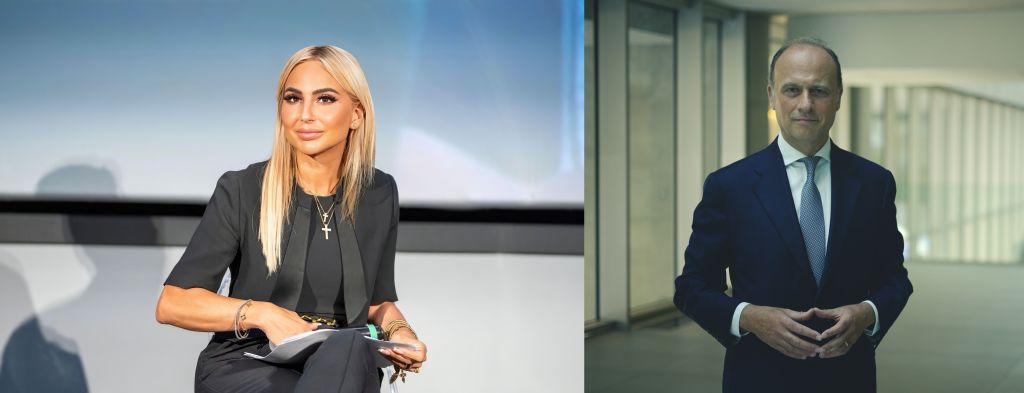
MILANO (ITALPRESS) – The blue natural capital and sustainable mobility are at the heart of the two researches of the Blue Economy Monitor of Intesa Sanpaolo and SDA Bocconi School of Management presented today in Milan. The Observatory promoted by the Group led by Carlo Messina was born with the aim of analyzing the different aspects of the sea economy and monitoring the dynamics of development, in order to spread a greater knowledge of the opportunities related to a strong growth sector worldwide that can see our country protagonist. To generate concrete opportunities for growth, innovation and sustainable development, while at the same time accompanying young people in understanding the transformations and strengthening the necessary skills, an increasingly synergistic collaboration between institutions, universities and enterprises is essential. The two analyses offer an updated picture of the economic and environmental opportunities related to sustainable management of the sea and the challenges that the Italian production system is called to face in the transition to more resilient and decarbonized development models. The first study is dedicated to the “Blue Natural Capital”, with an analysis focused on the role of business strategies in mitigation of the effects of anthropic activities on the oceans, highlighting opportunities related to the conservation and sustainable use of marine resources. Globally, the value of the stock of Natural Blue Capital is estimated at over $24,000 billion, of which 5,600 billion in the Mediterranean. These ecosystems produce economic flows between 1,500 and 2,600 billion dollars a year, with an expected growth of up to 3,000 billion by 2030. In Italy, the economy of the sea generated in 2022 a gross added value of 64.6 billion euros, for a total impact on the GDP of 178.3 billion and over 1 million people. The country is among the first five EU Member States for contribution to the economy of the sea, with a position of leadership in the fields of coastal tourism, shipbuilding, maritime transport and fisheries and aquaculture. Among the emerging sectors, the greatest potential is marine renewable energies (especially offshore wind), blue biotechnology, digital solutions for marine ecosystem management and sustainable infrastructure. Experiences in Marine Protected Areas show that conservation can generate economic benefits higher than costs, promoting sustainable tourism and new employment. To fully grasp these opportunities, research highlights the need for an integrated approach that combines a long-term strategic vision, a stable regulatory framework, and innovative financial instruments, including blue bonds, sustainable investment funds and payment mechanisms for ecosystem services. The second research of the Observatory analyses the role of maritime transport, a crucial sector for the Italian and global economy, today at the heart of a profound transformation towards decarbonization. The sector, which represents the most energy efficient mode, is responsible for approximately 2.9% of global greenhouse gas emissions, with projections up to 130% by 2050 in the absence of corrective measures. In Italy, maritime transport is fundamental for economic and social cohesion: 52.7% of freight traffic and more than 90% of passengers take place on domestic routes, in support of the more than 80 inhabited islands. Italy holds leadership positions in Europe in the Ro-Ro segments and cruises and important in containers, but the energy transition requires large investments and more effective coordination between public and private. The main barriers identified include high infrastructure costs, decision-making, complex authorisation procedures and slow fleet renewal, as well as low social acceptance of certain decarbonization investments. The current national policies, based on GNL, bio-GNL and cold ironing, can reduce emissions only by a limited share (less than 5% by 2030), if not integrated with more incisive measures. The study recommendations include: the strengthening of green public procurement in public service competitions; the creation of green runners on the main national routes (e.g. Naples-Palermo, Livorno-Olbia); the coordinated development of port infrastructures for alternative fuels; support for carbon capture on board and energy efficiency technologies; a targeted use of the funds deriving from the European ETF, which could generate for Italy between 333 and 419 million euros starting from 2026.“Between emerging trends, the blue economy and seabeds offer extraordinary growth potential for our Country – commented Elisa Z scope Marsala, Head of Education Ecosystem and Global Value Programs Intesa Sanpaolo -. To support research in this area means to foster competitiveness, Italian diversity and build virtuous ecosystems, in which institutions, enterprises and universities collaborate to prepare new generations for global challenges and ever more rapid and constant transformations.” “The blue economy expands the concept of the sea economy, integrating the principles of environmental and social sustainability – explained Stefano Caselli, Dean SDA Bocconi School of Management –. It focuses on the responsible use of ocean resources to promote economic growth, improve the means of subsistence and create employment while guaranteeing the health of marine ecosystems. We are grateful to Intesa Sanpaolo that, with its collaboration, allows us to address such a fundamental theme for the economy and the environment”. The Blue Economy Monitor is part of a broader Ecosystem dedicated to the Blue Economy and the Marine Foundations, involving national and international partners such as the PSL University of Paris, SRM Center for Research and Research, One Ocean Foundation and leading business realities. In this context, Intesa Sanpaolo “confirms its commitment to supporting schools and universities, promoting educational initiatives and educational projects that foster knowledge of the Blue Economy and the development of multidisciplinary skills.”.
– press office photos Intesa Sanpaolo – (ITALPRESS).
