
by Stefano Vaccara
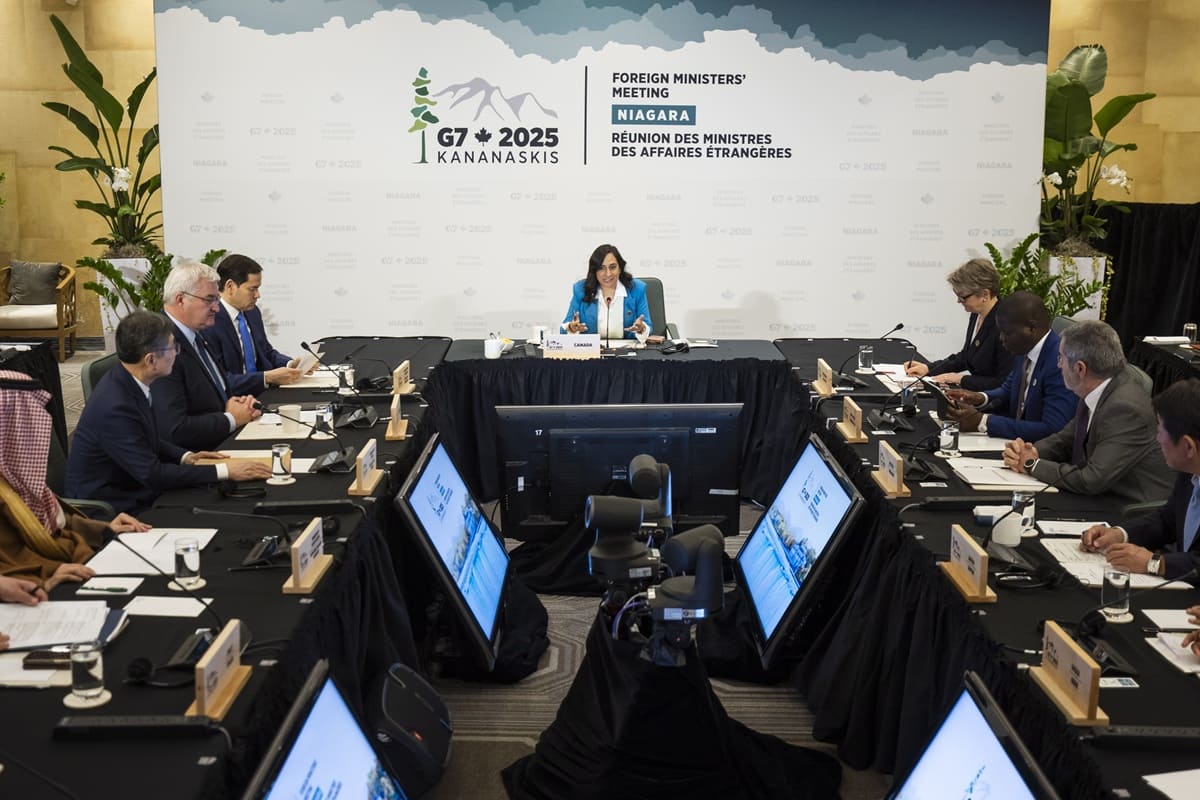
NIAGARA-ON-THE-LAKE (CANADA) – The meeting of foreign ministers of the G7 ended in the Niagara region in Ontario, last under the Canadian presidency of Anita Anand. In addition to the leaders of the diplomacy of the United States, Canada, United Kingdom, France, Germany, Italy and Japan, the ministers of Brazil, India, Saudi Arabia, Mexico, South Korea, South Africa and Ukraine also participated, as a sign of the desire to broaden the dialogue on the main global crises and the challenges of energy, maritime and critical raw materials. In the middle of the two days, support in Kiev against the Russian offensive and new tools to increase economic pressure on Moscow. “Russia continues to attack Ukraine with long-range bombings to destroy the electricity grid and demoralize the population, but is losing about seven thousand soldiers a week,” said US Secretary of State Marco Rubio, pointing out that the conflict “remains in a stalemate situation” and that the priority is “to paint Russia to negotiate with Kiev for a just and lasting peace.”.
In the final Joint Statement, ministers reaffirmed full support for the sovereignty and territorial integrity of Ukraine, indicating as the basis of any negotiations “the current line of contact”. The G7 also condemned military support in Moscow by Iran, North Korea and China and discussed new measures to target countries and entities that finance the Russian war machine, including the coordinated use of frozen sovereign goods. The Canadian ministration Anand announced new sanctions against 13 individuals and 11 entities, including companies involved in the Russian drone program and in the liquefied natural gas sector. “Who supports the Russian aggression war will face consequences,” said the owner of Ottawa, opening the session with Ukrainian minister Andrii Sybiha, who thanked the countries of the G7 for “vital help to defense and energy reconstruction” in view of the winter.
Italy, represented by vice-premier and foreign minister Antonio Tajani, confirmed “full support in Kiev”, announcing a twelfth package of military aid and sending generators and technologies for the rehabilitation of the affected power plants. Tajani recalled that Rome has already allocated more than 100 million euros for Ukrainian energy resilience and opened to the European debate on the use of the frozen Russian funds “in compliance with the legality and stability of the euro area”. Ample space also in the Middle East, where ministers reaffirmed support for the “Comprehensive Plan” promoted by President Donald Trump for the end of the conflict in Gaza. The G7 welcomed the truce and liberation of the hostages, but expressed concern about the restrictions on humanitarian aid, calling for access to “without interference and on a large scale” under the coordination of the UN and Red Crescent. Tajani, after a bilateral interview with Rubio, reiterated “the leading role of Italy in the phase of reconstruction and stabilization of the Strip”.
An important passage of the communiqué is also dedicated to Sudan, where ministers condemned “ethnic violence and the atrocities of the Rapid Support Forces against civilians and humanitarian workers”. The G7 calls for immediate ceasefire and unhindered access to aid, supporting diplomatic efforts for peace. Tajani has announced that “in Christmas will leave an airplane and a ship with Italian aids to Port Sudan”. The document also touches other regional crises, from instability in Haiti and Eastern Congo to persecution of Christians in Nigeria, themes raised by Tajani in bilateral talks. On Venezuela, the Italian minister confirmed to journalists that he was worried about the situation of tensions with the USA (in Venezuela reside about 150 thousand Italian citizens) and confirmed the commitment to obtain the release of the Italian citizens held, “including Alberto Trentini, in prison for a year without clear accusations”. In the chapter dedicated to the Indo-Pacific, ministers expressed “serious concern” for Beijing’s coercive manoeuvres in the South China Sea and reiterated the principle of a free and open Indo-Pacific “based on international law and freedom of navigation”. Finally, ample space for the global economy and critical minerals, with the commitment to counter the “non-market” practices that distort supply chains, strengthening partnerships with Africa, Latin America and Oceania. “We can’t let China dictate the prices of raw materials: it goes of our competitiveness,” said Tajani. The G7 has been united in promoting “stability, security and prosperity” and has given an appointment to the next ministerial summit in view of the Spring Summit of Leaders under French Presidency.
– photo IPA Agency –
(ITALPRESS).
