
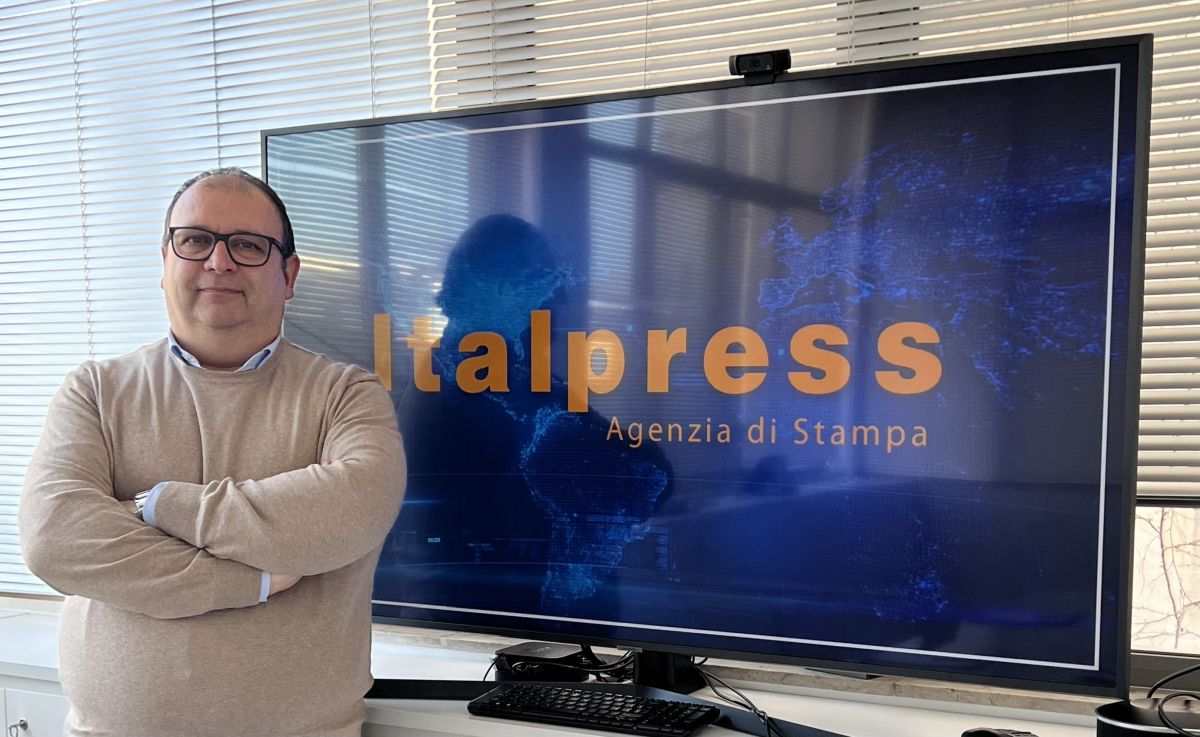
PALERMO (ITALPRESS) – Surgical digestive endoscopy is today one of the most dynamic and strategic sectors of modern medicine, thanks to a technological evolution that has deeply expanded diagnostic and therapeutic possibilities. To take stock of the state of art and the future prospects is Professor Girolamo Geraci, Head of the Unit of Endoscopy and Laparoscopy within the Unit of General Surgery and Emergency of the Policlinico “Paolo Giaccone” of Palermo, recently appointed national president of the ISSE – Società Italiana di Endoscopia Digestiva, Area Chirurgica. A nomination that comes at a crucial time for discipline and opens a phase of consolidation and relaunch of the scientific and formative activities of society. “The ISSE that I have the pleasure of presiding over is a scientific society that aims above all to spread information, techniques and procedures of operational endoscopy,” explains Professor Geraci in an interview with Italpress. “Let’s talk about everything that is not only diagnostic, but that brings endoscopy to a next step, both for the upper digestive tract, and for the lower one, up to the endoscopy of biliopancreatics.” An evolution that allows today to face complex pathologies with increasingly less invasive approaches: “Operating endoscopy is an extra weapon for the doctor – Geraci continues – to solve obstructive pathologies, for example through the use of prosthetics, but also to treat tumor pathologies in the initial phase, already correctly studied, reaching completely thick removals. In these cases the injury is removed by creating an opening in the stomach or in the intestine, which is then endoscopically closed. All this allows, today, to offer the patient a definitive surgical treatment or, unfortunately inoperable, a palliative treatment that guarantees the best quality of life possible”. On the front of research and technological innovation, surgical digestive endoscopy has made giant steps in recent years: “Thanks to enormous investments and technological advancement – Geraci emphasizes – much of this innovation has been rapidly absorbed by endoscopy. Today we are able to perform real surgical interventions by triangulating the instruments through the endoscopic tube directly on the site of the pathology”. Procedures that until a few years ago were unthinkable and that today are part of advanced clinical practice: “We can dilate stenosis, perform bypass and other complex procedures. It is evident that all this goes hand in hand with the increase in costs, but it must not be seen as a separate science: the operational endoscopy is an extra arrow in the course of treatments that a modern hospital structure must guarantee to its patients.” A central chapter, inevitably, concerns education and the university world: “Didactics is strategic,” says Professor Geraci. “Not only the ISSE, but also the SIED and other scientific societies dealing with digestive endoscopy have the goal of spreading the culture of operational endoscopy.” The focus is on new generations of professionals: “It is essential to create structured training paths for young specialists and young doctors, also wishing the birth of masters and joint paths among the different scientific societies, able to guarantee a solid and homogeneous formation throughout the national territory”. An inclusive vision that does not forget the role of non-medical health personnel: “We talked about the doctor – Geraci concludes – but we must not forget the formation of the nurse. In the operational digestive endoscopy, nursing staff is fundamental for the successful outcome of the procedures and represents a strategic resource that should be valued with dedicated training paths.”.
– Photo Italpress –
(ITALPRESS).
