
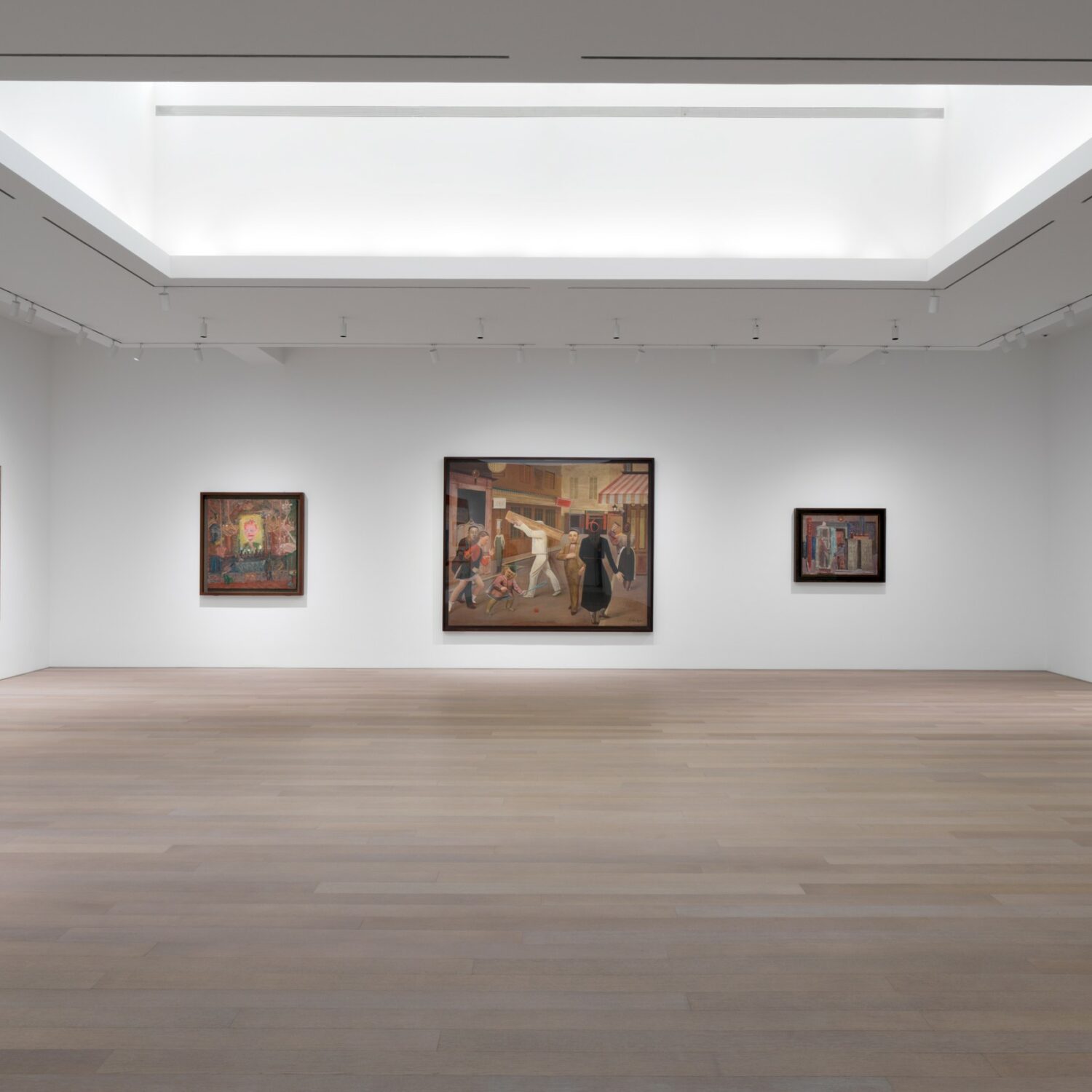
On April 10th at the Casa Italiana Zerilli-Marimò is the presentation of Trading Beauty, a book that systematically reconstructs the history of the Western art market. The author, Valentina Castellani, has worked for years between Sotheby’s and Gagosian, two of the main actors in the sector, and uses this experience to read how the mechanisms that today regulate sales, collecting and circulation of works have been formed. The meeting will have a bit of the taste of the public lesson and will follow a comparison with Michael Cary, one of the leaders of Gagosian.
The volume follows a wide temporal arc, starting from the Middle Ages and coming to the contemporary, focusing on the moments when the relationship between artistic production and market changes form. In the early stages, the circulation of the works is mainly linked to religious and aristocratic clients; with time emerge intermediate figures — merchants, collectors, gallery owners — who transform the work into a exchangeable good, with a value that no longer depends on function or context, but also on demand and reputation. It is on this passage that the book insists, showing how the very idea of “art market” is the result of a progressive construction.
The presentation is built around a lecture by the author, entitled “Shaking Up the System: How Impressionism Uprooted Established Models of Taste, Market, and Consumption”, which takes Impressionism as a case of study. From the second half of the 19th century, artists such as Monet, Degas or Renoir begin to expose outside the official Salon channels, bypassing a system that selects and legitimizes the works according to academic criteria. This shift is not only about style, but also how to sell: alternative networks are born, the role of merchants is strengthened and the relationship between artist and public, with effects that are still reflected in the dynamics of the sector.
There is a comparison with Michael Cary, director of Gagosian, who over the years has organized exhibitions dedicated to central figures of the twentieth century, from Pablo Picasso to Francis Bacon, also collaborating with scholars and members of the artists’ families. The dialogue relates to the historical reconstruction proposed in the book with the current functioning of the market, today dominated by large international galleries and auction houses, in a system that continues to redefine criteria of value, visibility and access.
L’articolo A book on the art market, from religious commission to large galleries proviene da IlNewyorkese.
