
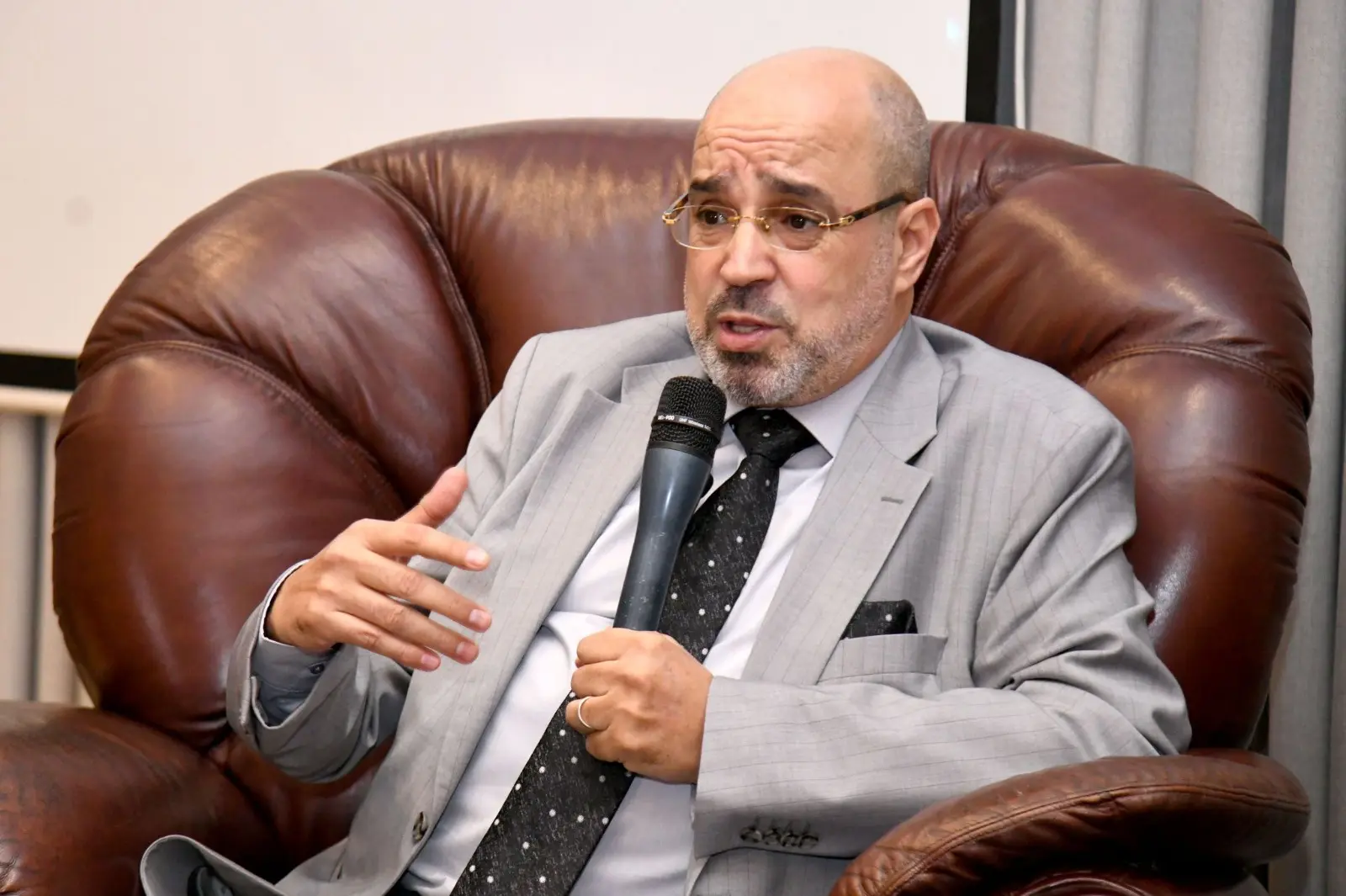
ROMA (ITALPRESS) – The Algerian expert Anwar Malek offered a 360-degree analysis of the perspectives of Italian-Algerian cooperation, underlining that despite the consolidated role of Algeria as the main natural gas supplier of Italy – with exports passed from 9,7 billion cubic meters in 2019 to 21,2 billion in 2024 – there is a margin for further increases, albeit limited by technical and economic constraints rather than by simple political statements.
In an interview with Italpress the expert explained that any substantial increase in Algerian exports to Italy would first require the resolution of the infrastructural bottlenecks of the Transmed pipeline, that the same Italian companies already consider to operate close to the maximum capacity, as well as a strengthening of the Algerian production exportable and the ability of the Italian market to absorb additional quantities through commercially valid contracts, since the national consumption has been attested around 24 billion cubic meters in the.
Looking beyond natural gas, Malek evaluated the project of the Green Hydrogen Corridor (SouthH2) as a highly strategic medium and long term, but still in the planning and study phase. Included by the European Commission among the projects of common interest, the corridor aims to connect North Africa to Italy and then to Central Europe through 3300 kilometers of network, with the first sections planned in operation around 2030. However, it has specified that success will depend on the competitiveness of the price of Algerian hydrogen, the availability of renewable energies on a large scale, treated or desalinized water, transmission networks and European certification standards, making necessary a significant financial commitment that starts from the electrolyzers ( estimated cost between 2.000 and 2.450 dollars per kilowatt) to arrive to solar and wind plants, desalination infrastructure and underground storage solutions.
On the Mattei Plan summit, Malek highlighted the need to move from political rhetoric to concrete projects, suggesting an articulated approach on three levels: joint training centers in renewable energies and sustainable agriculture, industrial partnerships focused on the transfer of knowledge and evaluation mechanisms based on employment results and local integration, in line with the initial budget of 5.5-6 billion euros announced by the Italian government in 2024 and already translated.
In the field of regional security, the expert identified Algerian priorities in the stability of the Sahel, in the prevention of Libyan collapse and in the management of irregular migration without turning Algeria into a simple “frontier look” for Europe, underlining that any Italian contribution should respect four principles to avoid neo-colonialist perceptions: to operate on Algerian demand, to focus on training and technology rather than direct presence on the field, to favour delicate contexts.
Finally, in addition to energy, Malek has indicated in the fields of information and communications technologies (quoted the Sparkle-Algeria Telecom agreement for a submarine cable), the mechanical and automotive components industry, smart agriculture and technical textile oriented to regional export the most promising fields for Italian-Algenia cooperation, specifying that the decisive incentives are not only tax exemptions but legal certainty.
Malek concluded by reasserting that the true future of the Italian-Algerian partnership lies in the digitization of the economy, in the mechanical industry, in the intelligent agriculture and in the vocational training, always respecting a model of “parallel partnership” that enhances Algerian sovereignty and points on concrete projects, supported by long-term financing and guarantees of European purchase, especially for strategic initiatives such as the corridor of green hydrogen.
– Anwar Malek press office photos –
(ITALPRESS).
