
ROMA (ITALPRESS) – Seventy-five years of history looking to the future. UNRAE relaunches its role in a “complex” phase for automotive, between energy transition, European rules, global competition and an Italian market that is struggling to share.
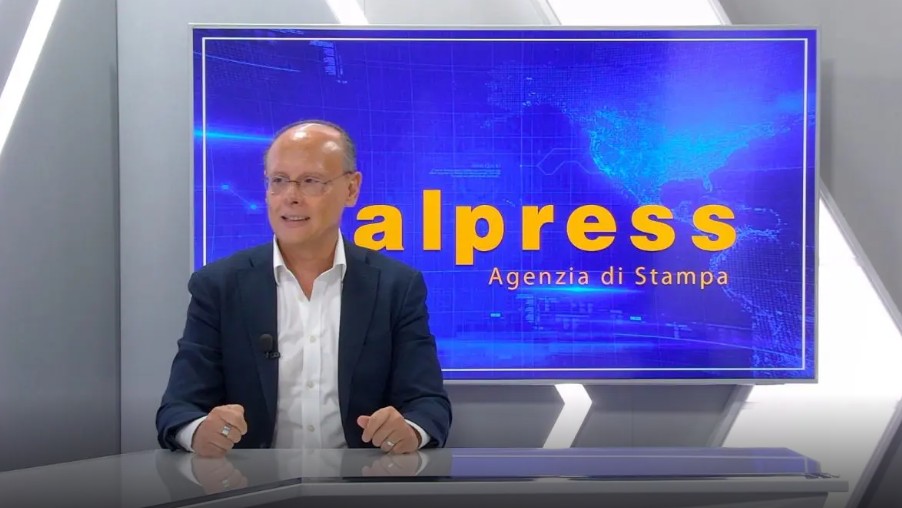
To point out, in an interview with Italpress, he is the president of UNRAE Roberto Pietrantonio, who describes an Association engaged not only in representing the interests of foreign manufacturers, but also in producing analysis and concrete proposals to accompany the evolution of the sector.
“Seventy-five years ago a group of visionaries had imagined that the Houses that were then defined foreign, so something strange or foreign, could instead favor the development of the market and that the opening could become stimulus to the improvement. Those visionaries have seen us a long time, because today UNRAE counts 46 associate companies that represent 64 brands from 15 different countries, so a wide representation that, in this first phase of my experience in this prestigious role, makes you feel pressure, importance, sense of responsibility towards the sector,” says UNRAE President. And again: “This is not only a category Association, it is also a technical, institutional interlocutor, an interlocutor who produces analysis, data, regulatory proposals, even positioning on the big issues that concern the market, such as taxation, energy transition, road safety, industrial competitiveness.”
The most delicate chapter remains that of registrations. Pietrantonio talks about a market that, although stable on 2024, has a heavy gap on 2019: “The data is quite disturbing, because if we compare with 2024 we remain stable, but if we look at 2019 we detect an Italian market now in chronic suffering, which has lost compared to that year about 400,000 registrations of new cars: with a metaphor, it would be as if two medium European markets had suddenly disappeared, Greece and Sweden put together…”.
Among the causes of the crisis, the president indicates the loss of purchasing power and the increase in prices of new cars, also reflected in the contraction of the offer in the entry segments. The result is a consumer who seeks above all “accessibility”: “If we go to look at the used one and we think that in 2025 more than two used cars have been purchased for each new one, this means that it is not true that the consumer does not need cars, but certainly seeks economic accessibility even before innovation.”
To push the market, UNRAE insists on the need for structural reforms and stable rules. “We are talking a lot with the legislator, pointing out to the institutions which should be the priorities, one on all is the structural reform of the taxation of the corporate cars: the channel of the company cars is in fact a fundamental channel that could give an important impetus to the Italian market, we are very backward compared to the major markets just because the Italian tax is penalizing”. And warns about the limit of the incentives “to switch”: multiannual and predictable measures are needed, not “click day” and “on-off” interventions, he points out.
On the European front, Pietrantonio positively recognizes the first signs of revision of the Green Deal, but calls for more pragmatism: “On the one hand we have judged positively the fact that the European Commission has opened up to review this set of rules… on the other, the first indications emerged from the automotive package of December still seem not enough.”
For UNRAE the revision of the rules should not however be read as “flight of the electric”, indeed: “Electric, in a framework of technological neutrality, must play a role.” However, many nodes remain, including the “limited role given to renewable fuels” and targets on company fleets, as well as perplexities on the bond of “Made in Europe”.
Guby blinding the Italian market, the electric remains a critical point. “In spite of the last few months there has been a small sign of growth, we know that this is related to the registrations daughters of the MASE incentives of the second part of 2025… while today, without new measures and structural plans on the horizon, expectations are not very positive.”
The risk is that Italy remains behind: “more or less to 7 percentage points of penetration against the European average of 20%”.
Among the necessary enabling factors, energy cost, charging infrastructure and a clearer and transparent communication: “it is not at all secondary the narrative that in Italy was made… that was often a polarizing narrative.”
On the new Chinese manufacturers, UNRAE President invites us to look at the competition as a market lever and says: “The key word must certainly be reciprocity, the competition for UNRAE is positive when it happens in a framework of balanced, transparent and comparable rules on the industrial level.”
Finally, the global scenario: geopolitical duties and instability increase uncertainty and costs along the supply chain. “To be in a global headquarters of an automotive brand means working on uncertain scenarios… where you need to diversify the supply chain, you have to pay attention to the rules of origin, to the management of logistic costs, to make continuous revisions of the plans of sourcing”. In this context, it concludes, it is necessary to strengthen the European industrial base and build confidence: “We hope for a pragmatic approach where European competitiveness is defended in the context of openness to trade at a time when the market needs confidence and accessibility.”.
– Photo Italpress –
(ITALPRESS).
