
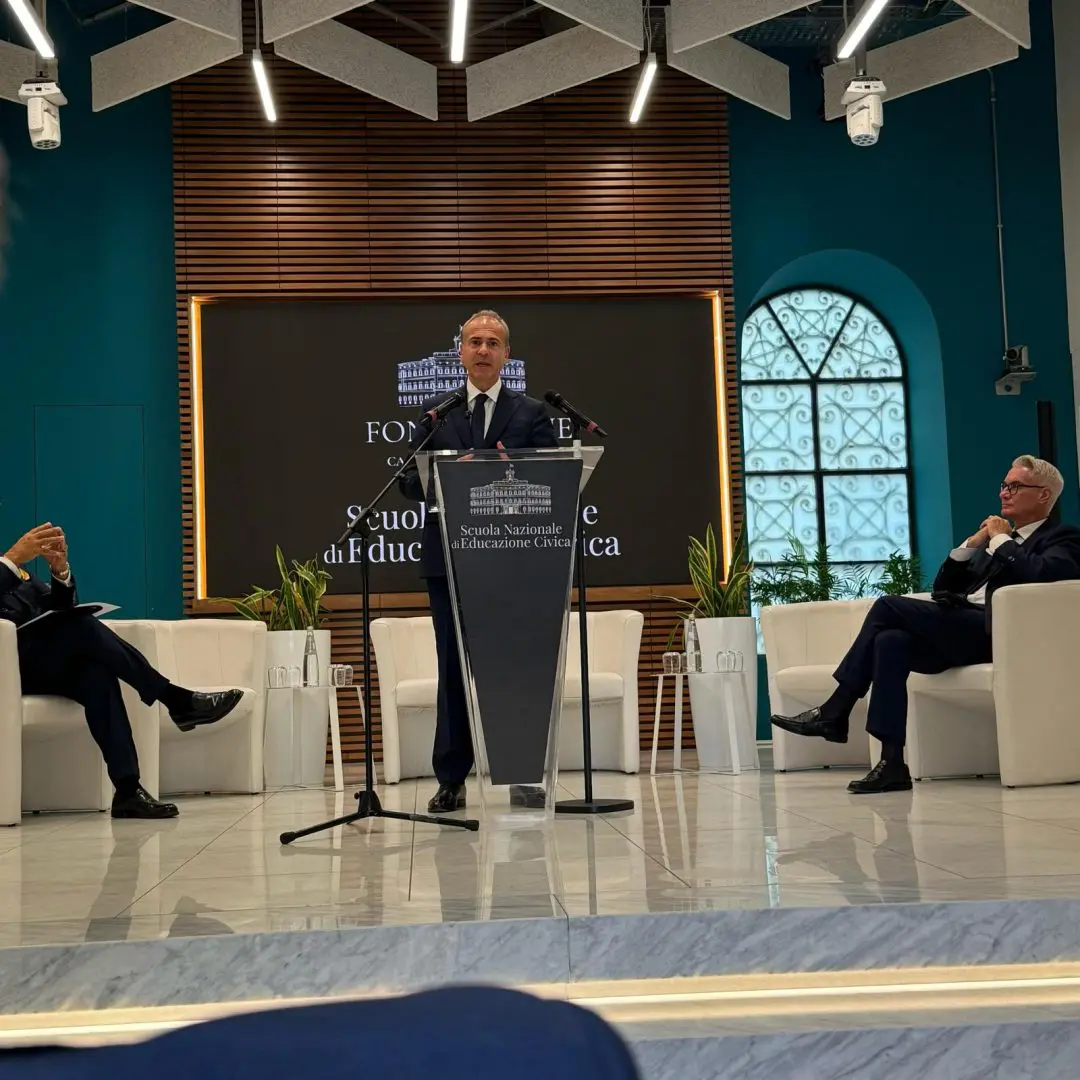
ROMA (ITALPRESS) – “The challenge of Italian tourism is not only to increase flows, but to transform the extraordinary attraction of our country into greater economic value, quality and development of the territories. And this challenge begins with accessibility and international connectivity.” This is what Gianfranco Battisti, Managing Director of GESAP ( Palermo Airport) said, speaking today in Rome, in Montecitorio, at the meeting “Welcome and valorization how to transform beauty into development”, promoted by the National School of Civic Education – Fondazione Campus Montecitorio. Battisti intervened in the panel dedicated to “Destinations, infrastructures, associations and wellness longevity”.
At the centre of the intervention a vision that exceeds the traditional role of transport infrastructure, the airport is no longer only the place through which you reach a destination, but becomes an integral part of the destination itself. Connectivity, quality of services and accessibility contribute to determining the markets that a territory can reach, the ability to attract international tourism, the seasonalization of flows and the competitive positioning of destinations. “We must move from volume to value has emphasized Battisti A new route is not simply a new flight is the opening of a new market for the territory. For this reason we cannot measure success only through the number of passengers or arrivals, but we must also consider permanence, spending capacity, seasonalization and value generated on the local economy.” According to Battisti, the tourist competitiveness requires today to overcome the fragmentation between the different actors of the supply chain. Airports, airlines, institutions, hotel system, terrestrial mobility, culture, events, food & wine and territorial promotion must be considered parts of a single ecosystem.
“Every operator tends to look at its segment, but the traveler lives only one experience. It is on that overall experience that a destination is judged and on which it builds its international reputation”.
In this scenario, intermodality also plays a central role. The journey does not end in fact to the airport terminal, railway, public transport, ports, mobility services and connections with the main destinations of the territory must gradually become components of an integrated, simple and accessible system for the visitor. Particular attention was paid to the quality of the reception. “The journey begins before arrival at the hotel. Start from the ease with which you reach a destination, continue in the airport experience and continues in the mobility on the territory. The airport must stop being a non-place and become the first place of destination.”.
For Battisti, this setting assumes an even greater value for the Mezzogiorno and for the island, where connectivity is an essential condition for economic and tourist development. The prospect, however, must go beyond the traditional representation of the infrastructural gap, the increasing centrality of the Mediterranean can transform the geographical position of the South into a competitive advantage, strengthening its role in international tourist and economic flows. “Italy has an extraordinary cultural, landscape and tourism heritage. But in the global market beauty alone is not enough, we must make it accessible, connected and capable of generating development. This means building a strategy in which infrastructure, tourism, innovation, sustainability and quality of hospitality proceed together.”.
The experience of Palermo airport is part of this perspective as a laboratory of a wider transformation, from traffic to connectivity, from volume to value, from terminal to destination experience, from isolated airport to territorial ecosystem and from European periphery to Mediterranean gateway. “The international competition of tourism – Battisti has concluded – will be increasingly played on the ability to build integrated ecosystems. We must move from transporting people to generating value, from managing infrastructure to building experiences. The destinations able to integrate airports, mobility, hospitality and territory will be those able to win the global competition for quality tourism”.
– Gesap press office photos –
(ITALPRESS).
