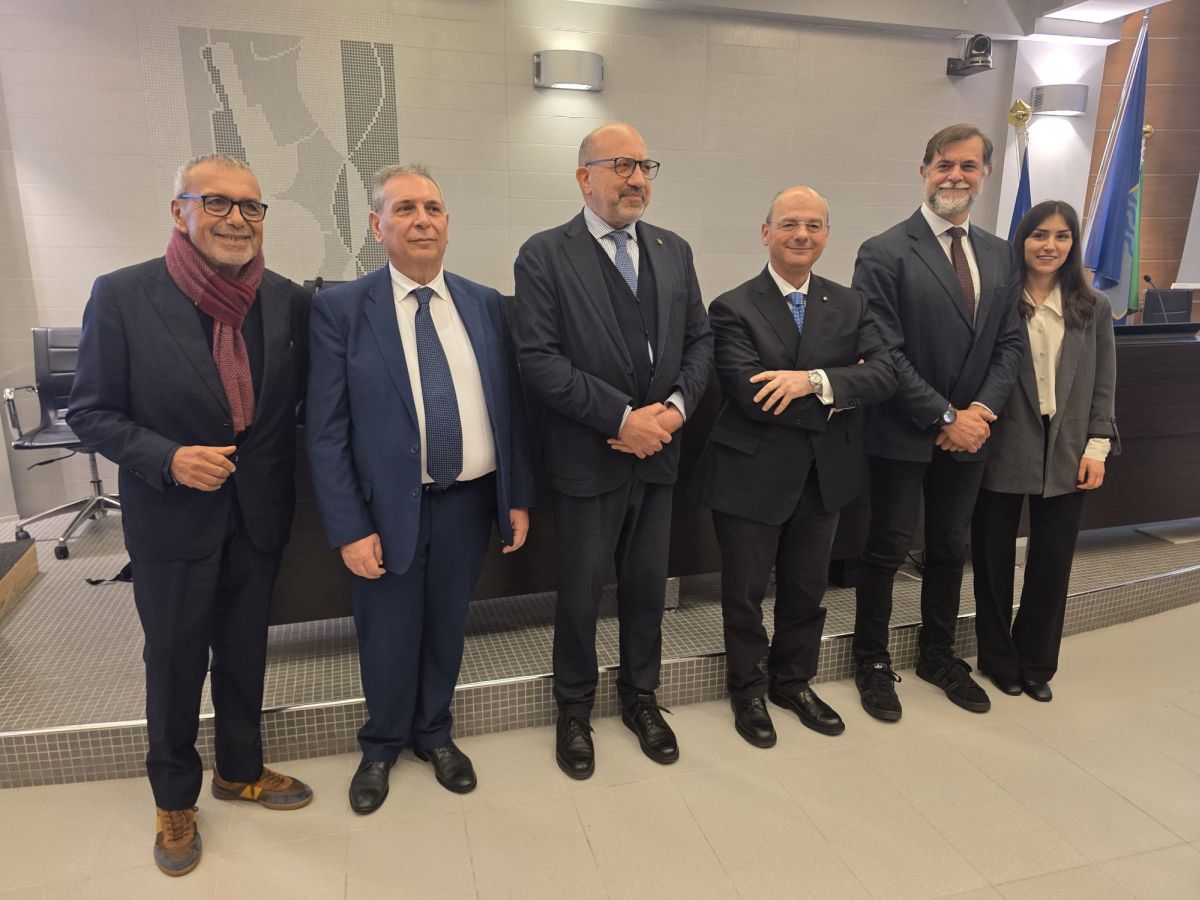
POWER (ITALPRESS) – Care without leaving your region. For thousands of South women with breast cancer may soon become a reality. From Basilicata, Campania and Puglia, in fact, a new model of health collaboration that aims to reduce territorial inequalities and health migration, guaranteeing more equitable and close treatment paths to patients. The project is called BEACON (Breast Cancer Enhanced Assessment and Care with Outcome-Driven Navigation) and originates from a protocol of understanding between the Oncological Mediterranean Alliance on the Net (A.M.O.Re.) which involves three poles of oncological excellence of the Mezzogiorno – the IRCS CROB of Rionero in Vulture, the National Institute of Tumori Fondazione Pascale of Naples and the Institute of IQ The goal is to improve the taking of people with oncoematological pathologies, including breast cancer, through an innovative model oriented to the outcomes. The initiative is part of Novartis’ commitment to work alongside all actors in the country system to contribute to the evolution of the National Health Service, promoting equity and timeliness of access to innovation. “We are faced with an important step forward to strengthen the quality of the oncological paths in the Mezzogiorno, in a perspective of fair access to the care – explains Roberta Rondena, Country Value & Access Head of Novartis Italia. The new BEACON model is an innovative example of value-based medicine and we hope its introduction within the A.M.O. network. King can offer a replicable example also in other healthcare companies throughout the country.” The aim is to address one of the most critical aspects of Italian health: health mobility. Every year, more than 67 thousand oncologic hospitalizations 1 are carried out outside the region of patient residence, a phenomenon that reflects significant territorial disparities and forces many people to face long and often burdensome shifts. The new model aims instead to strengthen collaboration between centers, share expertise and clinical data and use digital and telemedicine tools to ensure smoother and more integrated therapeutic paths. “The structured collaboration between treatment centers is the first pillar of the BEACON model and allows the sharing of medical and health skills to benefit patients. – commented Massimo De Fino, Director General of the CROB of Rionero – This collaboration requires, in order to realize itself fully, the creation of multidisciplinary groups intraospedalieri and the timely and secure sharing of data, reports and clinical documentation through digital platforms. The three IRCCS have already launched telemedicine and data sharing initiatives, which represent models applicable to support the collaboration between Centres.” The change also concerns the way diagnostic-therapeutic paths are evaluated. Inspired by the principles of Value Based Healthcare, BEACON introduces indicators that do not only measure time and volumes of health, but also clinical outcomes, quality of life and experience of patients throughout the treatment path. A decisive challenge when considering the impact of the disease: in Italy more than 925 thousand women live with a diagnosis of breast cancer and every year more than 53 thousand new cases are recorded. “The evaluation of the results achieved by the oncological paths, so far, is based on parameters such as the times and volumes of health activity – explains Alessandro Delle Donne, Extraordinary Commissioner of the Istituto Tumori di Bari (IRCCS) – The BEACON model introduces a change of perspective, putting the perspective of patients at the center of the measurement, their quality of life, their human experience of patients. Measuring these elements will require effective monitoring, rafforcing information systems and also an update of the internal organization but, I’m sure, it will allow us to have a more effective measurement of therapeutic outcomes.” The model is based on four pillars: structured collaboration between the centers, multidisciplinaryity, digital innovation and the figure of the case manager, which will accompany the patients by coordinating visits, therapies and specialists. A reference point able to make the treatment path easier and more continuous. The next stage will be operational testing in the A.M.O.Re network. If the model proves its effectiveness, it can become a reference for other Italian regions. “Curating breast cancer today means much more than choosing the right therapy: it means accompanying the patient along a complex path, measuring not only clinical results but also quality of life. It is a model that integrates different skills and digital tools, and that can really change the lives of many women. The BEACON project is born on these assumptions with a fundamental objective: the quality of care cannot depend on geography. Networking three centers of excellence in the Mezzogiorno means building a system in which patients receive high-level treatments close to home, without having to face the human and economic costs of travel of hope,” says Michelino De Laurentiis, Director Department of Senology of the Pascale in Naples. -photo press office Novartis –(ITALPRESS).