
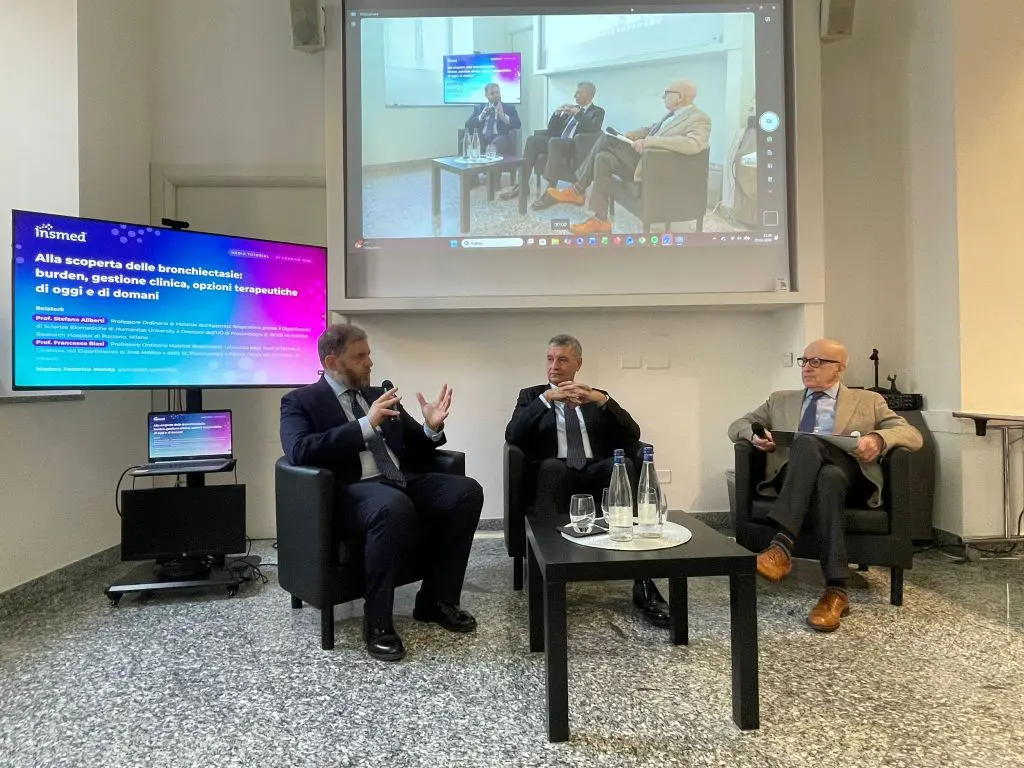
MILAN (ITALPRESS) – bronchiectasia are a serious chronic and progressive inflammatory lung disease. Despite being the third most common chronic airway disease after asthma and BPCO, they remain a often neglected pathology. The disease involves a permanent dilation and a thickening of the airways, with accumulation of dense mucus that tends to stagnate and favor a vicious circle of infections, inflammation and irreversible damage to the lung tissue. To focus on the clinical and social impact of bronchiectasies not associated with cystic fibrosis and therapeutic perspectives, Insmed promoted the media tutorial in Milan “To the discovery of bronchiectasia: burden, clinical management, today’s and tomorrow’s therapeutic options”, which saw the participation of internationally renowned experts. During the meeting, specialists have deepened the evolution of clinical management of bronchiectasia, up to the new therapeutic options in the development phase. In recent years, the number of diagnosis of bronchiectasia not associated with cystic fibrosis has increased by counting about 680 cases every 100,000 globally, with higher rates among women than men, and about 130 every 100,000 in Italy. However, diagnosis usually takes years, often more than a decade, after the onset of symptoms, which can lead to a progression of the disease and worsening of the prognosis of patients. “Cropochhiectasias today represent a chronic respiratory pathology much more frequent than it has been thought for years, even in our country. One of the main problems remains the diagnostic delay, with times that can exceed 5-7 years and that expose patients to misdiagnosis, inappropriate treatments and a progression of lung damage”, said Stefano Aliberti, Professor of Diseases of the Respiratory Apostolate at the Department of Biomedical Sciences of Humanitas University and Director of the UO of Pneumology Research of IRCCS. Non FC bronchiectasias have a huge impact on the patient’s life due to symptoms such as persistent cough, expectorate production, short breath and repeated infections, which can compromise their ability to work and interact socially. Patients also often manifest repeated reacuttions, unpredictable worsenings of symptoms requiring changes in treatment, whose duration – which may vary from 2 to 4 weeks – is associated with significant physical and psychological discomfort, with a reduction in quality of life and an increase in the risk of hospitalization and mortality. “Cropochhiectase causes a significant clinical load, made of chronic coughing and expectation, recurrent infections and frequent reacutizations, often associated with chronic bacterial infection and neutrophilic inflammation – added Aliberti –. In this context, the role of the dedicated multidisciplinary team is central as it allows you to overcome the fragmentation of care, improve the therapeutic appropriateness and ensure a continuous and personalized takeover of the patient.” So far, there has not been a cure or a drug specifically designed or approved for the treatment of non-FC bronchiectasia, as the available treatments aim to relieve symptoms, treat infections and contain the consequences of structural damage to the lungs. In addition, many patients encounter difficulties in accessing both treatments and specialists, and often have insufficient multidisciplinary support, which should include respiratory physiotherapy and psychological support. During treatment, repeated and prolonged use of antibiotics is essential, but at the same time a constant antibiotic pressure promotes the selection of resistant bacterial strains. Resistance to antibiotics is not herein an episodic phenomenon, but the result of a structured physiopathological process, in which chronic infection, persistent inflammation and repeated use of antimicrobial therapies feed each other. “The continuous exposure to antibiotics exerts a selective pressure that, over time, promotes the appearance of resistant bacterial strains and progressively reduces the effectiveness of the therapeutic options available as structural alterations of the airways and the persistence of the infection create the conditions for a chronicization of the inflammatory and infectious process – said Francesco Blasi, Professor of Ordinary Respiratory Diseases, University of Milan, Director Therapies currently available mainly aim to contain symptoms, reduce reacuttions and slow down the progression of damage, but have clear limits related to both antibiotic resistance and side effects and the sustainability of treatment over the long term.” The ongoing therapeutic innovations introduce a paradigm shift, intervening directly on the biological mechanisms that support chronic inflammation, instead of limiting itself to the control of symptoms. This new model allows to reduce reacuttions and prevent the progressive worsening of pulmonary function, making the treatment path more sustainable and accompanying patients with bronchiectasias not associated with cystic fibrosis towards better quality and life expectancy. “ Scientific research is analyzing more personalized strategies based on phenotypes, endotypes and microbiomes, and predictive biomarkers of reacutization. This paradigm shift could be a significant step in trying to reduce the progression of the disease and limit repeated recourse to antibiotics in the long term,” Blasi concluded. In Italy non FC bronchiectasia are not yet considered a real public health priority. This lack of recognition limits its visibility in medical training, clinical practice and health policies, favouring subdiagnosis and therapeutic delays. To improve early diagnosis and assistance, it is essential to promote their national recognition as relevant chronic respiratory diseases, adopt guidelines based on evidence and ensure more effective coordination of care and integration in public health strategies.
– photo f12/Italpress –(ITALPRESS).
