
PECHINO (CINA) (ITALPRESS) – China remains the global automotive market growth engine, and Bosch Mobility is the leading technology partner in the country. In the last financial year, the company’s Mobility sector increased its turnover in China by about 5%, from 116,6 to 122,3 billion yuan (about 15,1 billion euros). Bosch Mobility has achieved more than half of its sales with Chinese vehicle manufacturers, confirming the company’s leading position in this highly innovation-oriented market. In 2025 China represented over a third of global automotive production, with 34,5 million heavy-duty cars and commercial vehicles produced. “The mobility sector in China is on the move and Bosch wants to be at the forefront of its development,” said Stefan Hartung, Chairman of the Board of Directors of Bosch, at Auto China 2026, in Beijing. “Bosch collaborates with national and international automotive manufacturers in China. We are a technological partner that is highly demanded in mobility, increasingly characterized by software and artificial intelligence, because we can develop and deliver excellent solutions with great speed.” An example is the Autonomous Emergency Steering, an autonomous steering function to avoid obstacles. Bosch has collaborated with a Chinese automotive manufacturer to make this function ready for series production in just six months. The function combines guidance and vehicle control systems to greatly increase safety. If, in case of unexpected obstacles such as a vehicle that suddenly deviates or a pedestrian crossing the road unexpectedly, the braking space is no longer enough, the Autonomous Emergency Steering is activated to avoid collision. Bosch’s Vehicle Motion Management system coordinates brakes, steering and propulsion system with such rapidity and precision that the vehicle performs a manoeuvre without losing stability, even under low road conditions.
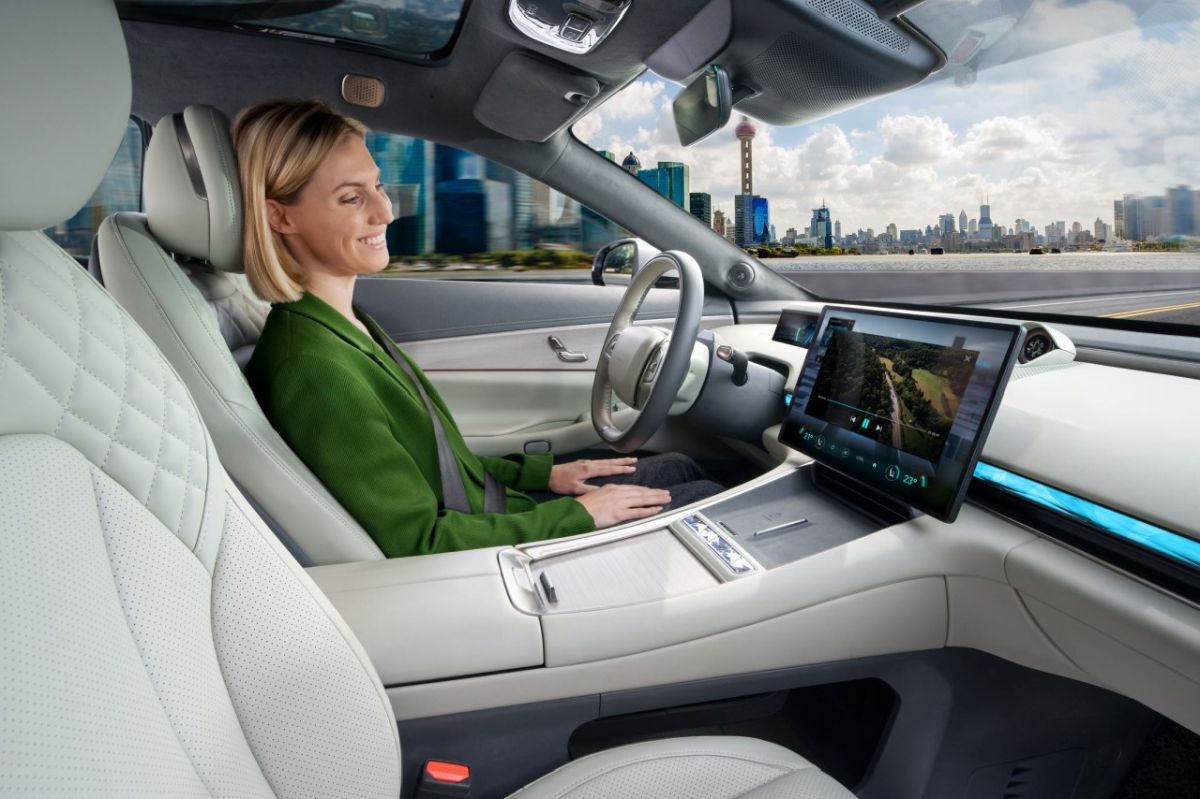
In China, Bosch is recording a particularly strong growth in the areas of electric drive systems, on-board computers, new braking systems, semiconductors and advanced driving assistance systems (ADAS) for autonomous driving. Last year, about two thirds of the new cars sold in the country were equipped with a Level 2 driving assistance system. “Bosch is one of the leading suppliers for the fast-growing Chinese market,” said Markus Heyn, member of the Bosch Board of Directors and Chairman of Bosch Mobility. The company has obtained orders for its service functions in all segments of vehicles, from entry-level to premium ones, not only in China, but in all major regions of the world. The Chinese market is aiming at increasingly higher levels of automation. The demand for Level 3 driving functions is growing among automotive manufacturers, confirming this trend. At the same time, China is working on the completion of its legislation for private vehicles. In this context, Bosch Mobility takes the next step in developing autonomous driving, from Level 2 to Level 3. Since March 2026, the company has been authorised to test vehicles with Level 3 driving functions under real conditions in Wuxi, China. Bosch relies on a refined version of an ADAS system that passed a series of tests on the Chery Exeed ES model. While the system allows the vehicle to brake, dirt and accelerate independently, the driver must still keep the maximum attention to traffic. This changes with Level 3, in which the responsibility of the guide passes to the vehicle in specific cases of use, allowing the driver to remove the hands from the steering wheel and divert the look from the road.In an increasingly fast world, Bosch technology returns the precious time spent by car, allowing you to relax on highways and urban highways in China. The Bosch system is able to operate at speeds up to 120 km/h, it works in weather conditions with visibility up to 300 meters and automatically manages lane changes.
With Bosch technology, Level 3 provides real added value for drivers. This is possible thanks to the advances of artificial intelligence. “We use AI in every software component and combine it with redundant security architecture. Our skills cover all domains of the vehicle, and this makes us the ideal partner for manufacturers who want to bring Level 3 on a large scale,” explained Heyn.
Bosch values its strengths in the development of assisted and autonomous driving. The company has expertise in all key areas of a vehicle, including propulsion systems, steering, brakes, sensors, high-performance computers, onboard electronics, software and artificial intelligence. Bosch provides both hardware manufacturers, such as the powerful seventh-generation radar, and algorithms, allowing them to benefit from global presence, economies of scale and a high level of security. “We can transfer knowledge from one market to another. Our goal is to be the preferred partner for Chinese and Western manufacturers,” said Heyn. A Level 3 system for private vehicles, which lifts the driver from the task of driving for prolonged periods, is also interesting for large countries like the United States, with their large highways, as well as for Europe. “The future belongs to those who, like us, can adapt portfolios and supply chains to regional conditions, while at the same time ensuring a worldwide presence,” added Hartung.
By-wire brake and steering systems are a key technology for software-defined vehicles, a very important area for Bosch. In these systems, signal lines transmit the driver’s request to the braking and steering system. For the brake-by-wire, Bosch offers a solution consisting of two independent braking devices: a new concept brake actuator and a traditional ESP® system. “With our brake-by-wire hydraulic system we have developed an interesting product for all major regions. It is based on proven and convenient components and is easy to integrate, which simplifies the transition to new technology,” explained Heyn. Bosch has already signed supply contracts with five manufacturers for this system and plans to start production in cars destined for private transport from the middle of 2026. The system will also be integrated into several robotaxi platforms, whose production should start in 2027. In addition to the hydraulic solution, Bosch also offers a purely electromechanical system. In this way, the company has in its portfolio the braking system suitable for each automotive manufacturer.
With Bosch brake-by-wire and steer-by-wire systems, the driving sensation remains unchanged compared to traditional mechanical systems. The advantages emerge on the functional level: among them, the continuous regulation of the steering ratio, which ensures maximum comfort in parking manoeuvres, greater precision and readiness on winding roads and a performance-oriented setting on the track. The system developed by Bosch stands out for the high level of performance, as cars were able to see directly during recent winter tests in Sweden. On that occasion they appreciated the immediate response of the system, the rapidity of intervention and the accuracy of feedback transmitted from the road. In the Chinese market, Bosch has already conquered diverslocal manufacturers and the company plans to start the standard production of the steer-by-wire system throughout the year on different platforms.
Bosch is also a pioneer in the 48 volt low voltage electric system. This system meets the increasing energy requirements of modern technologies and meets the highest safety requirements, with weight optimization and costs. At Auto China 2026, Bosch and the Chinese automotive manufacturer Chery announce strategic cooperation for the development of a 48 volt electric system.
Bosch has already produced over 25 million electrified mobility components. Only in 2026, the company will provide more than 7 million components and systems for electric and hybrid vehicles worldwide. Bosch supplies over 30 car manufacturers worldwide in the Chinese market.
Bosch is constantly improving its electric motors. The company offers electric propulsion solutions suitable for every type of vehicle, from utilities to sports cars. Its engineers managed to reduce the efficiency losses of electric motors up to 30%, significantly optimizing electric plates, coils and especially the cooling system. For small and compact electric cars, the aluminum stator coils are more suitable than those in copper, allowing you to reduce costs and weight. For sports vehicles, however, Bosch is able to increase the power density of the electric motor up to 50% (up to 16 kW/kg). In 2025 Bosch introduced an e-axle made with a magnesium alloy, which reduces the weight of the housing by about a fifth. The trend towards increasingly integrated solutions, which combine more functions in a single housing, aims to optimize space, weight and costs. For this reason, Bosch offers different modular solutions that manufacturers can seamlessly integrate into their models. The e-axle 6-in-1 combines electric motor, transmission, inverter, onboard charger, DC/DC converter and energy distribution unit. This system will enter serial production with Chinese customers during the year.
photo: Bosch Italiaù press office
(ITALPRESS).
