
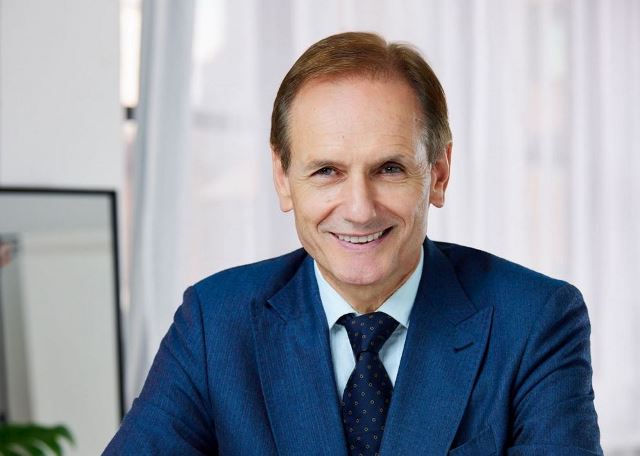
The director of the Italian Cultural Institute in New York tells his vision: from dialogue with the great American institutions to the promotion of the Italian language, to the soft power and the role of contemporary creativity. With the determination of a journalist who today interprets cultural diplomacy as a mission.
Director Pagliara, the Italian Institute of Culture, in his vision, what role should he play?
The Institute must dialogue with the great cultural institutions of this city. From the Metro to the Opera, from MoMA to Carnegie Hall, and of course with the whole Italy system abroad. Our goal is to approach more and more those who live in this city to Italian culture in a broad sense, also because our skills extend to the entire eastern coast of the United States. This means turning not only to Italians and Italians, but also and especially to Americans who love Italy. We see it clearly in the growing demand for Italian language courses: It’s so high that we can’t even satisfy it completely. We have waiting lists and not enough spaces. It is a very strong signal of how Italy and its culture continue to fascinate.
How many “voglia d’Italia” is there among the Americans?
There is a lot of desire in Italy. It shows that every year, the great American cultural institutions organize something extraordinary related to our country. The Met, for example, announced that in spring it will host the largest exhibition of works by Raffaello never realized outside Italy. It is an exceptional event. The interest in Italian culture is enormous, and is also reflected in tourism: the number of Americans who choose Italy continues to grow. But it’s not just about culture or holidays. The interest of American entrepreneurs towards our country is also increasing. At the NIAF this year, during the Gala, will be present all the captains of the main Italian public and private industries — one thing never happened before. It is a sign of the great moment that Italy is living here.
During the week of the United Nations General Assembly, Foreign Minister Antonio Tajani visited the Institute. What impact did your visit have?
Minister Tajani has long held, he already knew the Institute and visited it with great interest. He focused on the exhibition “Cortina 1956–2026”, dedicated to the Winter Olympics that Milan and Cortina will host in just over a year. He was hit by a Rai archive footage showing how in 1956 the broadcaster prepared to broadcast the first live sporting event in his story, through a film of kilometers of tape. Then, during his speech to the Italian community, Tajani expressed a strong interest because Italian culture, broadly speaking, becomes one of the main vehicles of our soft power in the United States. He recalled how the friendship between Italy and America has deep roots. It is worth remembering that among the founding American fathers there was also an Italian, Filippo Mazzei, who contributed to the drafting of the Constitution. For this reason, in 2026 we will tell the story of this long friendship: many of the events of next year will be collected under a single umbrella, that of the 250 years of friendship between Italy and the United States.
She has a long career as a foreign correspondent. How much does the journalistic experience count in its current role?
It matters a lot. It makes you understand that we Italians, while sometimes having the tendency to be a little self-celebrative, can say it with certainty: we are a cultural superpower. This is demonstrated by our UNESCO sites, our artistic and architectural heritage, our creativity. Italians know it well, but maybe we can’t always communicate it in the right way.
Here, I think this is one of the fundamental missions of the Institute: promote and communicate to the world our biggest competitive advantage, the cultural one. Not by chance, the Farnesina chose two journalists — one in London and one here in New York — to direct the Cultural Institutes: because he realized that today is not enough to do beautiful things, you must know how to tell them.
Who are you gonna tell her?
The Americans, first of all. They are the ones we want to involve and raise awareness, showing here what extraordinary Italy continues to create and invite them to discover it in person in our country. There is another point I care about: Italian creativity does not belong only to the past. There are not only Rome, the Renaissance or the great masters of art. Our excellence is alive today, in science, technology, design, innovation. The International Space Station, for example, would not exist without Italian technology. And we want to tell this, too. A series of conferences will take place in October The courage to dream, in which we will invite great Italian scientists who have succeeded here in the United States to share their experience, especially with young people, so that they learn to dream big. The first guest will be Luciano Floridi, director of the Department of Artificial Intelligence of Yale. This is the level of excellence we want to look at.
He lived in many cities of the world. This is his professional “second life”: What’s the third?
As correspondent I had a life in Paris, one in Jerusalem for the Middle East, one in Beijing for China, Japan and Southeast Asia, and one here, between New York and Washington. Now this new phase, I really consider it a great opportunity. I don’t think about the next. This assignment is very challenging and I want to devote all my energies. It is a mission I live with gratitude to those who have entrusted me with this responsibility, and with the determination to achieve it in the best possible way. I have great passion for what I am doing, and I hope to make a concrete contribution to the promotion of Italy and its culture in the United States.
L’articolo Claudio Pagliara tells how to promote Italian culture in New York proviene da IlNewyorkese.
