
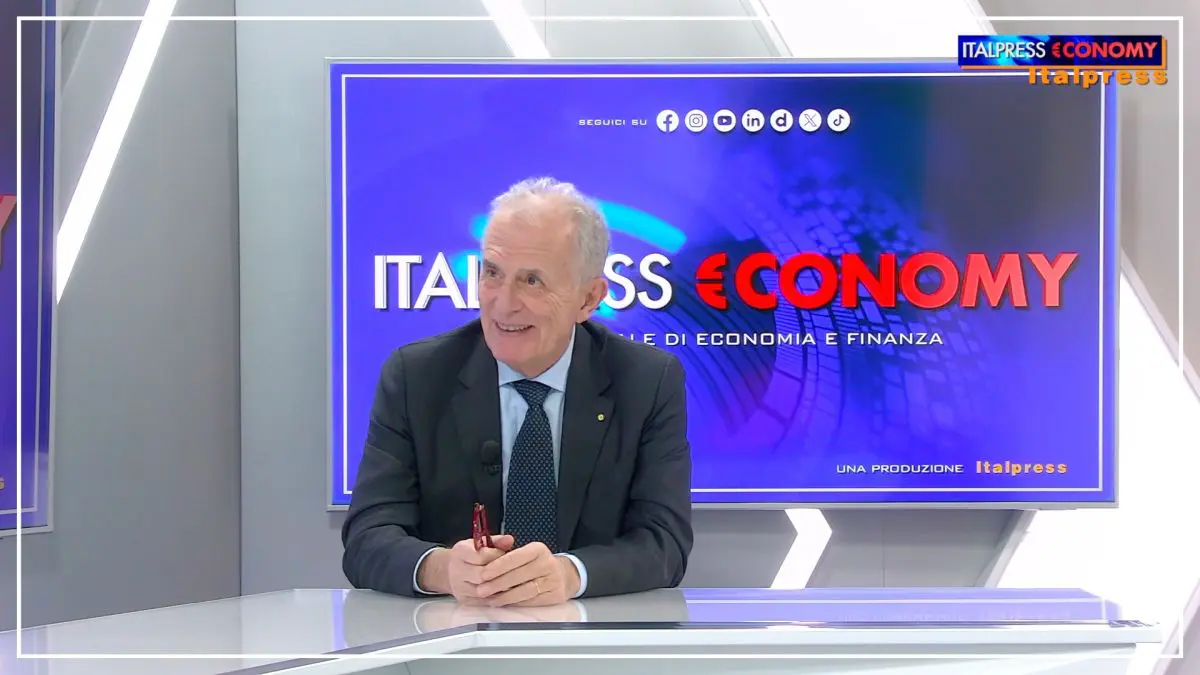
MILAN (ITALPRESS) – Turn a dangerous waste into a valuable resource, saving 120 million euros a year on imports and reducing CO2 emissions of 100 thousand tons. To make it possible is the Conou, the National Consortium for the management, collection and treatment of mineral oils used.“The consortium is a virtuous example of cooperation between companies operating in the supply chain of mineral oils”, explains Riccardo Piunti, president of the Conou, in an interview with Claudio Brachino for the television magazine Italpress Economy. “There are 60 companies involved: two take care of the regeneration and the other 58 of the collection in all the Italian regions, operating in 103 thousand different points between mechanics, factories and workshops”, continues Piunti. The system gives work to about 2 thousand people and generates a turnover that flows the billion euros. In 2024 190 thousand tonnes of used mineral oil were collected, a highly dangerous, toxic and carcinogenic substance which, if not treated correctly, would represent a serious environmental problem. “Through careful selection and differentiation, we bring this oil to the regeneration plants – three plants in Italy of two companies – where it is retransformed into new lubricant oil – continues Piunti -. The quality of regenerated oils is identical to that of virgin oils, so that on the market they have the same international quotations. Approximately one third of the lubricants used in Italy come from regeneration, although consumers are often not aware of it.” The regeneration process entails enormous environmental and economic benefits. Avoid importing oil from Russia, Saudi Arabia or the Middle East to produce new lubricants, you save the entire extraction cycle, ship transport, refining and distribution. This results in a significant reduction in CO2 emissions, in the lower use of millions of cubic meters of water and in the decrease of other pollutants released in the atmosphere. Regenerated lubricants are used in many production sectors. “They are used in engines and in many manufacturing processes,” the president explains. “For example, in aluminium processing, they serve as a fluid protective layer between the mold and the molten metal, preventing the mold from breaking for heat shock.” The flagship of the Italian system is the rate of regeneration: 98% of the harvested oil is transformed into a new resource, against a European average of 61%. “Other European countries know that regeneration is a priority according to EU directives, but cannot achieve these results because they do not have a proper organizational model,” says Piunti. The secret of Italian success lies in the consortium model, born 41 years ago and then replicated in other sectors such as aluminum, paper and glass. “At the heart of the system there is an independent, unique and unending arbitrator, who does not participate in the economic game but directs businesses in the environmental direction,” the president explains. “This model works because the circular economy is not spontaneous: need incentives and coordination to move businesses in the right direction.” Countries such as Greece and Spain, which have adopted similar systems, achieve better results than central and northern Europe, where this type of organization is missing. “We must think of rejection as a resource from the beginning,” says Piunti, who cites the economist Kenneth Boulding and his metaphor of the “Astronave Earth”: “We are 8 billion astronauts on a spaceship from which we cannot descend. Our way of consuming and treating waste must take account of it.”.
– Photo Italpress –
(ITALPRESS).
