
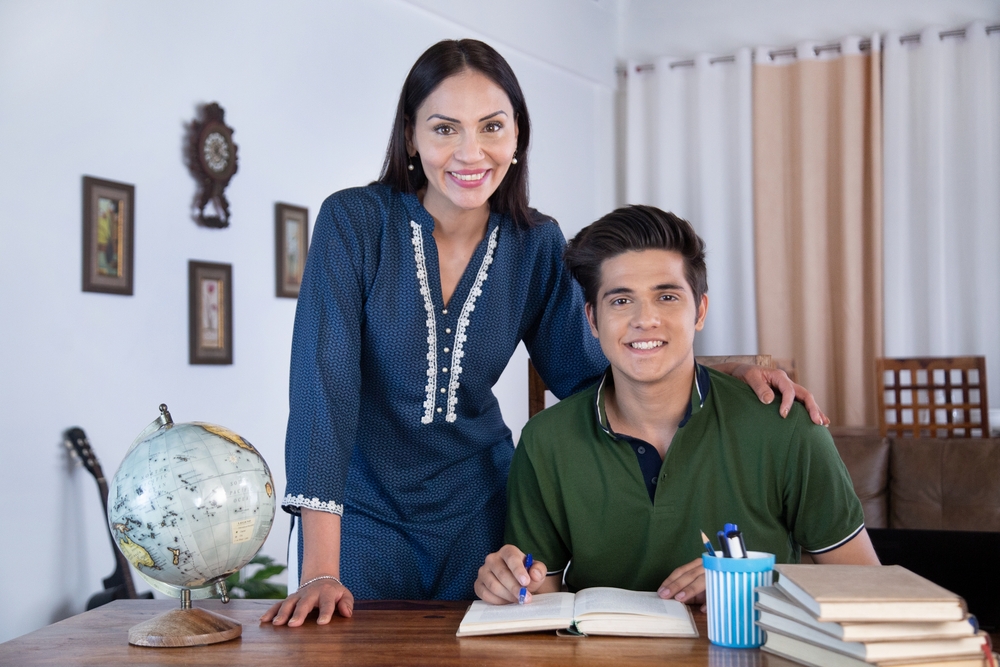
Parenting today is a complex and often confusing challenge. In a society that is increasingly frenetic, performative and dominated by the cult of success, parenting risks becoming a terrain of constant contradictions: on the one hand, the desire to protect children, guide them and guarantee their future; on the other, the need to recognize them as individuals with rights and needs of their own. It is in this scenario that an interesting article by Niccolò De Rosa, published on Fanpage.it, entitled “Children of Tiger Moms get good grades but are less good at relationships and managing emotions,” fits. The proposed analysis offers much food for thought for those who, like me, are involved in studying how parenting has changed – and is changing – in an era when old educational models are colliding with new needs and sensitivities.
The focus of the article revolves around a style of education that is as well-known as it is controversial, that of the so-called “tiger moms,” or “that parent-which in Asian societies is often identified with the mother-demanding and strict, who focuses everything on the academic success of their children, even at the cost of their happiness.”
As De Rosa points out, “the term ‘tiger mother’ became famous thanks to Amy Chua’s 2011 book, Battle Hymn of the Tiger Mother. It refers to a strict parenting style characterized by iron discipline, high expectations and rigorous study schedules, with little room for play and relaxation.” A model that, while intended to develop determination and a sense of duty in children, can also undermine their serenity and interpersonal skills.
A recent study led by researcher Chengkui Liu, reported in the article, examined the effects of this approach. “The team thus found that about 49 percent of the mothers surveyed claimed ultimate authority over their children’s education. The data, published in Economics and Human Biology, then showed that the children of these mothers tended to score better on tests of cognitive skills — such as word memory or math — but lower scores on indicators of noncognitive skills related to personality traits such as conscientiousness, openness or emotional stability.”
Family time, the research points out, is heavily skewed in favor of studying, at the expense of emotional and social experiences: “Mothers who are in control of educational choices tend to spend more hours supervising homework, daily care and purchasing educational resources, such as extra courses or study materials. In return, however, time spent on recreational or social activities is drastically reduced.”
The picture that emerges, while offering satisfactory academic results, has major limitations in terms of character formation and emotional harmony: “On the other hand, there is no observed increased focus on activities that foster emotional development, creativity, the pursuit of new friendships or parent-child bonding.”
The role of parents has been profoundly transformed. The authority figure of the past has given way to an often uncertain parenting that oscillates between overprotection and permissiveness. In many cases, parents try to make up for the loss of authority through dysfunctional behavior: wanting to be “friends” with their children or adopting overly rigid educational models. In reality, the educational task requires firmness, but also empathy, listening and the ability to transmit values. A parent who poses as “adultescent,” who blends in with the peer group, risks further disorienting children in search of solid reference points.
My research on preadolescents and families shows an increase in emotional fragility in boys, who often lack authoritative but reassuring guidance. Society has outgrown the traditional educational model, and languages, codes and tools have changed with it. Parents cannot face these challenges alone: we need a widespread educational network, a concrete alliance between school and family.
Despite the difficulties, educating well is still possible. It needs awareness, training and support. This is why I continue to promote the need for a “School for Parents,” a shared path with experts to learn about the new needs of children and accompany them consistently, without giving up the educational role. It is only through listening, confrontation and responsibility that we can return to being significant figures in the growth of our children.
The “tiger moms” model works on the performance level, but it leaves uncovered many of the aspects that make a balanced individual capable of coping with the world. A conscious parent knows how to accompany firmly, love with balance and support the growth of children with confidence. And today, in a time when relationships are more complex and young people more vulnerable, the real educational task is precisely to regain a secure orientation.
The article Dad and Mom between authority and affection: the difficult balance of contemporary parenting comes from TheNewyorker.
