
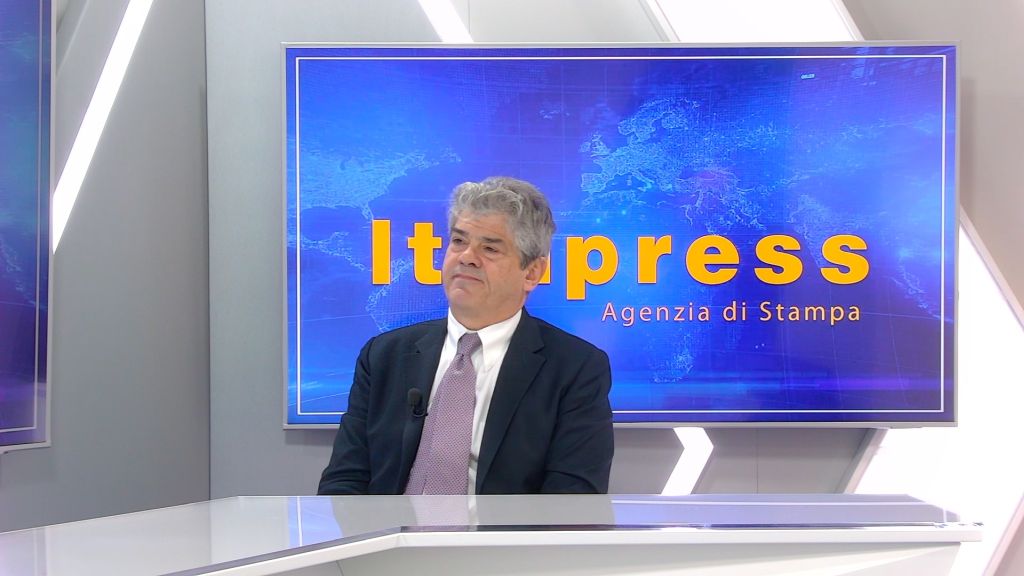
MILAN (ITALPRESS) – The DL Fiscale published in the Official Journal, which at the end of Transition 5.0, introduces a cut of 65% of the required tax credit and excludes investments in renewable energy sources, in particular high efficiency photovoltaic plants, which companies had been encouraged to buy, “is a damage to our enterprises and to the whole country”. The president of Confindustria Piemonte, Andrea Amalberto, who interviewed by the Italpress Press Agency has failed to criticize the government. “My judgment is very negative, simply because if one takes an agreement it must maintain it, even if there are problems of other kind – he said -. It’s a bit like we take an agreement with an employee and then decide not to pay it because we have another problem. That would be a mistake. As regards renewable sources, for example, all that has been removed is clearly a harm that is being done to our companies and more generally to our country.” “It is necessary that all of us realize that renewable is fundamental, as nuclear is fundamental, hoping to be able to install it as soon as possible – Amalberto added. So we have to go ahead with the investments and basically carry out the suitable areas, the plants, which are the only way to reduce the cost of energy”. According to Andrea Amalberto, the Piedmontese industry is particularly exposed to expensive bills “because it comes from a difficult time, where the automotive is under pressure in an important way, where you do not know which machine to buy because we do not understand what happens next day. The models we like do not find them and an imposition of a change of product is putting us strongly in difficulty and our enterprises need to turn to new markets, make investments, develop. Our companies are energetic and therefore we need to also give the multinationals who are present in Piedmont, a certain tranquility of being able to stay within our region happy and happy. This situation is certainly putting us in trouble and when it puts us in trouble, it also puts in crisis an entire system of subcontractors, employees, families”. The Piedmontese industry is experiencing a period of gradual transition, from a vocation markedly linked to the automotive, to a diversification that is investing different sectors, able to push especially export. The number one of the industrial Piedmontese clarifies what these sectors are: “Agri-food is undoubtedly an area on which we are strong and when I mean agri-food, I mean the transformation of all-round products, so also companies that do mechanical processing, that is, they build the machines for processing and also the whole part of the bottling and packaging lines. I believe that our companies can still say a lot about the automotive speech, so all that is the sector of suppliers of big brands. We are also very good in chemistry, which is struggling, but has a great potential. Then there is all the topic of services, which is working very well. However, in Piedmont we are hard to die and so we will put it all together.” “It is clear that this situation of American duties creates difficulties, simply because our customer, in the uncertainty of not knowing how much he will have to pay additionally, does not make the order – Chiosa Amalberto –. We are on the other hand committed and have, thanks to the European Union, closed two important agreements with Mercosur, with Australia and we are going ahead with India, so the prospects for development are, although at this moment, obviously, the difficulties to travel, the costs of transport and the global geopolitical situation are not helping us”. Finally, the President of Confindustria Piemonte wanted to say its on the Industrial Accelerator Act, introduced by the EU with the aim of bringing the manufacturing to 20% of GDP by 2035, introducing ‘Made in EU’ criteria for contracts and subsidies, and conditions for foreign investments. “Finally, even if for now only in words, we read a correct address. I don’t express myself because I don’t want to say that it’s okay before I even saw, read, and then brought into the final acts. It should definitely be an interesting thing, but then if when you write the norm you forget about the pieces, add some others that we have not seen, it could change everything. We are the first contributors of the country and we are contributors to everything round, so when we pay a salary, we pay records, we pay snacks, clothes, transport, we pay many things and when we do not pay it goes into crisis all another series of other sectors, so this is to be taken into consideration.” (ITALPRESS).
Photos: Italpress
