
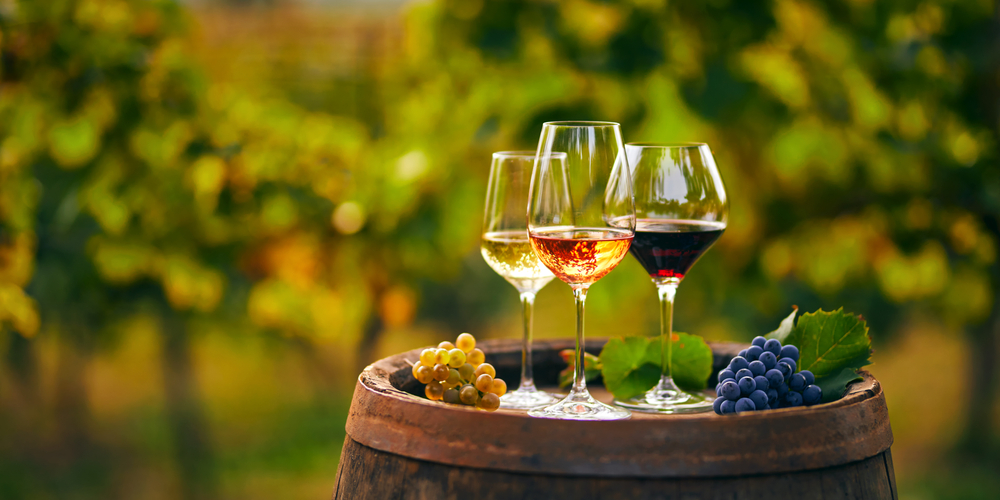
With the arrival of summer, I feel a bit like a mix between a living Pantone and Rossella Migliaccio on a color mission. The sun, the sea, light clothes… everything entices the search for the perfect color. So today I decided to talk to you about a topic that combines art, beauty and drum roll, wine: armocromy! Yes, that very discipline that helps us choose the colors best suited to our complexion, hair and eyes. But of course, we don’t do makeup or dress up here. Today let’s raise a glass to the enoic version of armochromia: wine armochromia. But first, let’s understand what is really armochromia?
Armochromy is a theory developed in the early twentieth century by Johannes Itten, an artist and lecturer at the famous Bauhaus School of Art. In his book The Art of Color (1961), Itten introduced a new way of interpreting color, based on two basic parameters: Temperature (warm/cold) and Value (light/dark). According to this theory, colors are divided into: warm, yellow-based and cool, blue-based. From here we start with the three primary colors yellow, blue and red (magenta), which, combined, give rise to the entire color spectrum. Adding white and black gives brightness and depth, respectively.
Now, you may ask, “All very interesting…but what does it have to do with wine?” Well, even wine has its own palette! We can’t wear it (barring any mishaps along the way) or hang it on a wall like a painting, but the color of the wine provides us with a wealth of invaluable information: age, acidity, structure, type of winemaking, and even the grape variety. After all, it is well known, we drink first with our eyes, and a glance at the goblet can tell us a lot, in fact a great deal, even before the nose and palate enter the picture.
Traditionally, wines are divided into three major color categories: white, red and rosé. In recent years, a fourth category has been added, that of orange wines, the real stars of the trendiest tables. The color of wine depends mainly on polyphenols, substances found in the grape skins, remember, not in the pulp! With red or rosé winemaking, the skins of black grapes release color during maceration. In white wines, on the other hand, white berry grapes (or black grapes, but without skins) are generally used, and fermentation takes place in the absence of skins.
Let us look in detail at the typical color shades of each type.
We can say that the palette of white wines could be divided as follows:
– Greenish yellow: a light shade with green highlights. Typical of young, fresh wines characterized by high acidity.
– Straw yellow: recalls the color of dry straw. Indicates a young but well-balanced wine with good compromise between acidity and smoothness.
– Golden yellow: warm, enveloping nuance. This is a sign of a more mature wine, often barrel-aged, with greater smoothness and less acidity.
– Amber yellow (amber or topaz): typical of dessert or fortified wines made from very ripe grapes or late harvests. The wine will be distinctly sweet and enveloping.
The rosé wine palette:
– Soft pink: very clear, almost transparent. If it has purplish highlights, it is a very young wine with short maceration. If it turns coppery, it means the grapes used were poorly pigmented.
– Cherry pink: reminiscent of cherry skin. Shades range from purplish to orangey, depending on the degree of evolution.
– Pink claret: more intense, close to red but very discharge. Purplish color when young, tends to orange with aging.
And finally, the red wines:
– Red-purple: intense hue, with violet hues. Typical of young, acidic and tannic wines.
– Ruby red: more balanced, indicative of a young but already harmonious wine.
– Garnet red: deep, blood-like color. Reveals wines where softness prevails over acidity and tannin.
– Orange-red: “brick-like” hue, signaling an evolved wine, often with long bottle aging.
And beyond color? Intensity, hue and vibrancy!
Once the chromatic hue has been identified, three other aspects must be observed:
– Intensity: indicates the concentration of color; it can be “loaded,” “unloaded,” “pale,” or “deep.” It depends on both grape variety and winemaking technique.
– Hue: varies according to the age of the wine, the type of grape and the presence of oxidation.
– Vivacity: tells us whether the color is “bright” or “dull” and gives us clues about the health of the grapes and the quality of storage.
The next time you find yourself with a goblet in your hand, remember: wine also has its own armor. Observe the color, play with the shades, let it tell you its story. Cheers and … may your goblet always be in palette!
The article Drinking in Color comes from TheNewyorker.
