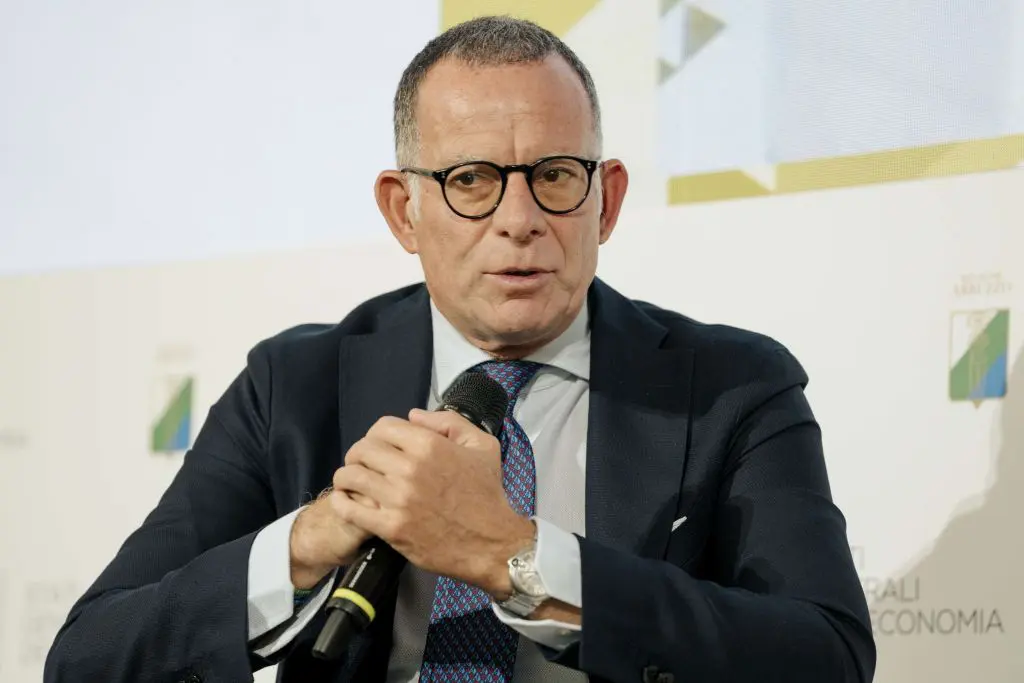
BERLIN (GERMANY) (ITALPRESS) – “The sustainability of European social security systems no longer depends on pension rules. It depends on the balance between work, demographics and innovation, the quality of employment, the capacity of economies to generate growth and the presence of adequate wages that feed over time the contribution system. For this reason, it is necessary to start a European reflection on a real plan for the welfare of young people.” This was stated by the President of the INPS Gabriele Fava, speaking in Berlin at the meeting of the presidents and general directors of social security institutions of the European Union countries in the workshop “Pensions and Active Ageing in Europe” organized by ESIP, which also took part in the Director General Valeria Vittimberga and the Director of International Relations, Giuseppe Conte.
According to Fava, European social security systems are entering a new historical phase. Demographic, economic and social transformations across the continent require a paradigm shift in the capacity of institutions to read and govern the relationship between work, population and welfare.
“Cooperation between European countries and constant exchange between social security institutions is one of the key to facing challenges that no longer belong to individual national systems but to the whole of Europe. The sustainability of pension systems concerns all of us. We live in societies that age quickly and precisely for this reason the dialogue between institutes, the sharing of experiences and the analysis of data become essential tools to build forward-looking policies,” said Fava, who then stressed the structural link between employment and social sustainability.
For Fava “If we want to strengthen the estate of pension systems we must look at the basis on which those systems are founded. The real social balance arises from the solidity of the contribution base. And the contribution base grows only if young people enter the labour market and find stable and quality jobs. The decisive issue is not only the retirement age. The real point is the relationship between active population and elderly people. Pensions are not born from an abstract mechanism. They are born from the real economy. It is the work that generates pensions. Hence the need to strengthen cooperation between European social security institutions. It is necessary to build a more ambitious European social agenda based on an even more intense collaboration between social institutions. We need to share data, analysis and strategies on the major issues of work, demographics and welfare. Only through a common vision will it be possible to address effectively the transformations that are redesigning the future of our social systems”.
According to Director-General Valeria Vittimberga “we are today in the middle of an unprecedented demographic and technological transformation: the ageing of the population, the growing longevity, the increase of the retirement age and the demographic decline are profoundly changing the social and economic structure of the country. The response to pressure investing pension systems and the labour market requires integrated policies, continuous training, updating of staff management models, targeted incentives and enhancement of senior workers. In Italy, policies of age management are being consolidated, programmes of requalification of mature workers and measures to promote active stay and reintegration of senior profiles. The real challenge is to build long-lived and flexible organizations, able to integrate the digital skills of young people with the institutional memory and the systemic vision of seniors.”.
“Smart working, continuous training, mentoring, age management and restraint in service of critical professionalism. These are the levers on which the country is investing.” According to the Director-General, “agile work, evolved from the emerging phase, is today a structural element of the organization because it helps to improve organizational well-being and attractiveness of the Institute, while continuing training remains decisive in a context marked by evolving regulations, interconnected digital systems and high-responsibility functions. Seniors transfer knowledge of institutional processes, young people accelerate the adoption of technologies and new organizational languages: this integration strengthens the Institute as a professional community.”.
For Vittimberga, the guiding principle remains the one indicated by the management: “age is a heritage, not a limit, and the challenge of INPS is to transform this approach into a stable organizational culture, able to guarantee continuity, quality of service and internal sustainability”.
-Photo IPA Agency-
(ITALPRESS).
