
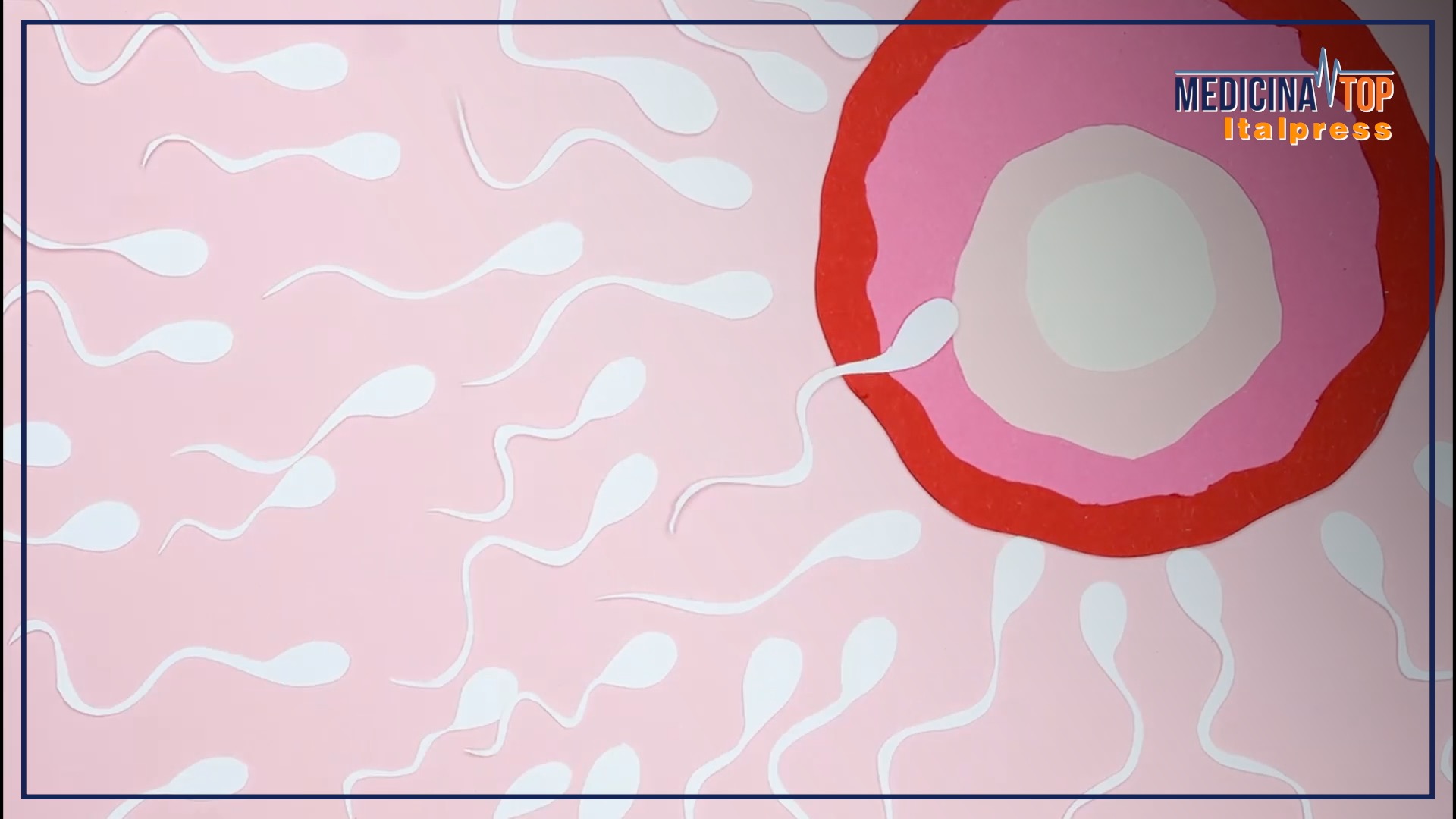
ROMA (ITALPRESS) – Female fertility is closely linked to the quantity and quality of ovocytes, the sex cells produced by ovaries: unlike men, who produce sperm throughout the lifetime, women are born with a limited reserve of ovocytes. Over the years this heritage is reduced in numerical terms and worsens in terms of biological quality, especially after 35 years: a series of medical techniques allow today to preserve fertility, when it can be compromised by diseases and care and when maternity is postponed.
“The woman has 2 million follicles when she is halfway through her gestational life, that is twenty weeks of pregnancy: at birth she has 700 thousand. If he devoted his whole life to fertility he could have 30-40 children and in this case he would have a giant platoon of ovocytes: most will never reach a fertile phase, but they will go into spontaneous atrophy and then the menopause survives. In 100 years, which now represents a life expectancy that the woman of Western countries can expect, is something completely new: it is understandable that today you want to preserve fertility, in the face of a spontaneous decay of its fertile potential”, said Enrico Semprini, specialist in Gynaecology, Immunology and Infectious Diseases in Milan, interviewed by Marco Klinger for Top Medicine, agency TV format.
At the heart of each decision there must be the woman who, according to Semprini, “can resort to this method for mainly clinical reasons, such as diseases that require a chemotherapy such as to damage its ovary: when you put away an ovocy you can not know if you will develop in an embryo. The possibilities of achieving conception with in vitro fertilization are a success in the world ranging from 25% to 60%”.
With regard to freezing techniques, he adds, “in reproductive technology the methods used are such as to zero any difference: there is indeed a greater welfare possibility. The freezing of the ovarian tissue provides a laparoscopy, then a 12 mm engraving from the navel, and the passage of a small strip of tissue that revitalises, allowing the woman to ovulate and recover mature ovocytes”.
The conservation of ovocytes, explains Semprini, must be done within a certain age: “If a woman realizes that with the progress of time her possibilities of conceiving become smaller, that increase the risk of conceiving a child with Down syndrome or that pregnancy may interrupt, she can decide to keep ovocytes: ideally the period within which to proceed with this method is before the 34 years, while a woman of 38-40 years needs to put away more eggs.”.
The last aspect on which the immunologist is focused is the regulations in force at national level, as well as the differences with other realities: “In Italy a single woman can freeze her eggs, but she must have a companion who assumes the responsibility of fatherhood: in other countries, like Spain, this does not happen and a woman who wants to manage a pregnancy alone just sign the documents to receive assistance in her desire.”.
– Photos from Top Medicine –
(ITALPRESS).
