
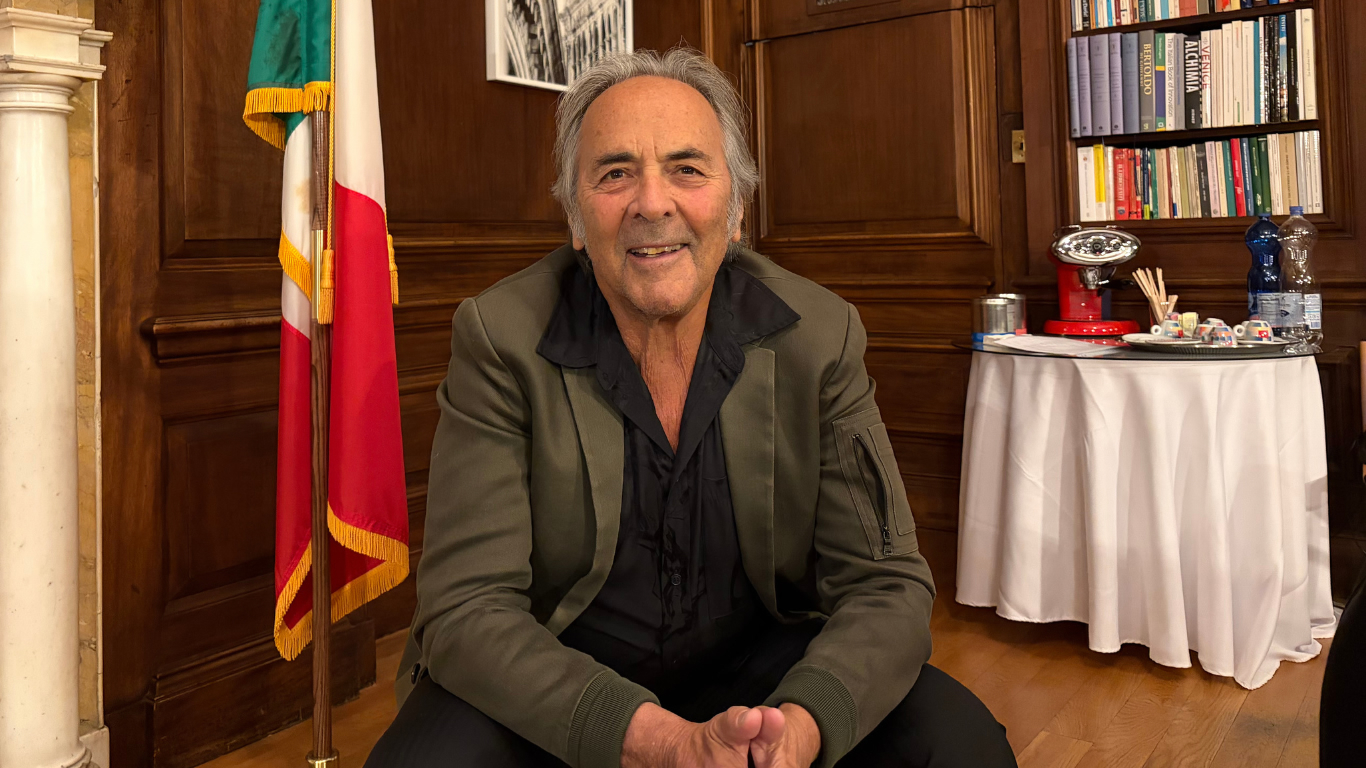
Some people talk about the music business. Steven Machat talks about life, and the music business turns out to be one of the ways he has chosen to understand it. Born in Manhattan in 1952, the son of Marty Machat, the lawyer who represented the Rolling Stones, James Brown and Sam Cooke, he grew up inside the industry and went on to become one of its most unconventional figures. Over five decades he has worked with artists such as Genesis, Peter Gabriel, Electric Light Orchestra and Ozzy Osbourne, produced the restored Leonard Cohen documentary Bird on a Wire, written books on the hidden side of the industry and played, as he likes to say, in more than a hundred countries on all six continents.
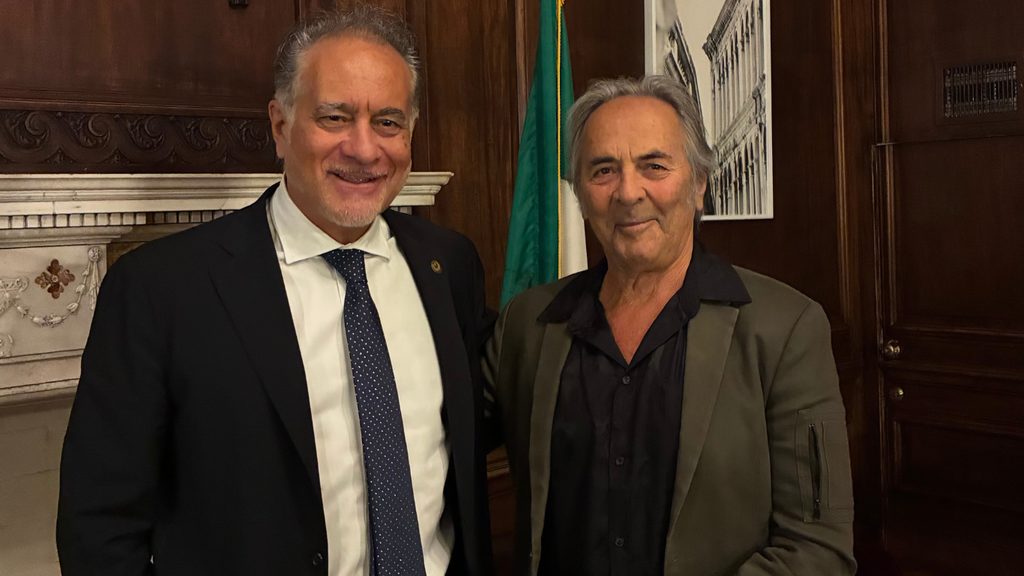
Yet listening to him, the résumé fades into the background. What remains is a man who has read Homer and Gilgamesh in search of a single answer: why people believe what they believe, and why they so often end up fighting over it. His conclusion is disarmingly simple. We are one culture and one consciousness, and the most powerful tools we have to remember it are song and dance. On the evening of November 18, at the Consulate General of Italy in New York, where he was a special guest of the ninth Business Care International Award, Machat spoke with il Newyorkese about business as a sport, about what Italy has taught him and about the young Sicilian band he is determined to bring to America.
You have worked with some of the biggest names in music. What does “business care” mean in the entertainment industry?
My goal with business is to make it a sport, because life is a sport. Life is about putting together a dream, and to live a dream you have to have a team. If you don’t have a team, you will never win your dream.
Think about any sport. You compete for a whole season, and when the season is over, you go back to the start. The game of life should work the same way. It’s not a game where you lose once and can never win again. 2026 is over? Go out there and win in 2027. You can do it.
That’s what I do in music. I can produce an album for you, and if the album loses, I may lose money. But if I believe in the act, I’ll put them back out again so we can win next year. I want to teach people that nothing is permanent, and that the job of mankind is to feed people: to give them a reason to dream and a reason to breathe. I know business, I know how to make money. But I don’t want to make money in a way that, at the end of the day, leaves me unable to play with all the people who lost. Every year I want to be able to play with everyone I meet. I want to know what you know, and I want to learn to live it. I make money, but I make money with art, and that’s not the easiest thing in the world.
What role has Italian culture played in American music and entertainment?
All of life in America is built on the model of the Roman Empire. We are taught obedience, we are taught religion. And it’s funny, because that same obedience is not what you find in Italy today.
Italy is one of my favorite places on earth. You have family, and you stay close to each other. Brothers don’t hate brothers, sisters don’t hate sisters. You respect your elders, you understand the young, you encourage them to create and you try to guide them. Here in America, too often people get kicked to the curb, and there is very little family life. We need to get back to the humbleness of life, to the understanding that we are all part of a circle and that we need to help each other. I believe we can make heaven here on earth, and I believe we can do it through song and dance.
I studied The Odyssey, Jason and the Argonauts, Gilgamesh. But books weren’t enough, because I wanted to understand why people in Australia believe one thing and people in China believe another, why nations go to war with each other. I want history. I just want to know. And I love Italy. You love art, you love culture, you write songs that touch the heart. People smile there no matter how poor they may be, and everyone dresses well. I spent a lot of time in Italy in the Seventies and early Eighties, when I was friends with Gianni Versace, and I have spent a lot of time there again this year.
What would you tell a young Italian who dreams of working in the music industry in the United States?
I’m doing it right now with a band from Sicily, Cosmo Club. They made exactly the kind of music I want. My rule with music is simple: if women like it, I know it’s worthy. And if they like it, I’m going to break that band in Italy and then bring them to the United States. They speak English very well, because they grew up listening to music, and they know what I’ve done.
As old as I am, I’m Peter Pan. I could fly away at any moment, but my Wendy, my wife, keeps me here. I have no doubt I will break these kids, because inside I’m still a twenty-year-old. I love life. They sing well, and I will put them out to prove to the world that Italy produces great music. It always has. One of the biggest songs the Gipsy Kings ever recorded is “Volare”. That’s Italian, right?
In Italy you sing from the heart. You sing from the hills. You hear the beat of nature and you live by the rhythm of the seasons. And to tell you the truth, as I see it, right now you do that more than any other country in Europe. It may not be the case next year, but today Italy is the most social country I know in Europe.
Steven Machat will be back in Italy on December 10, where he has reopened his music publishing company in Milan and is working on a new project dedicated to opera.