
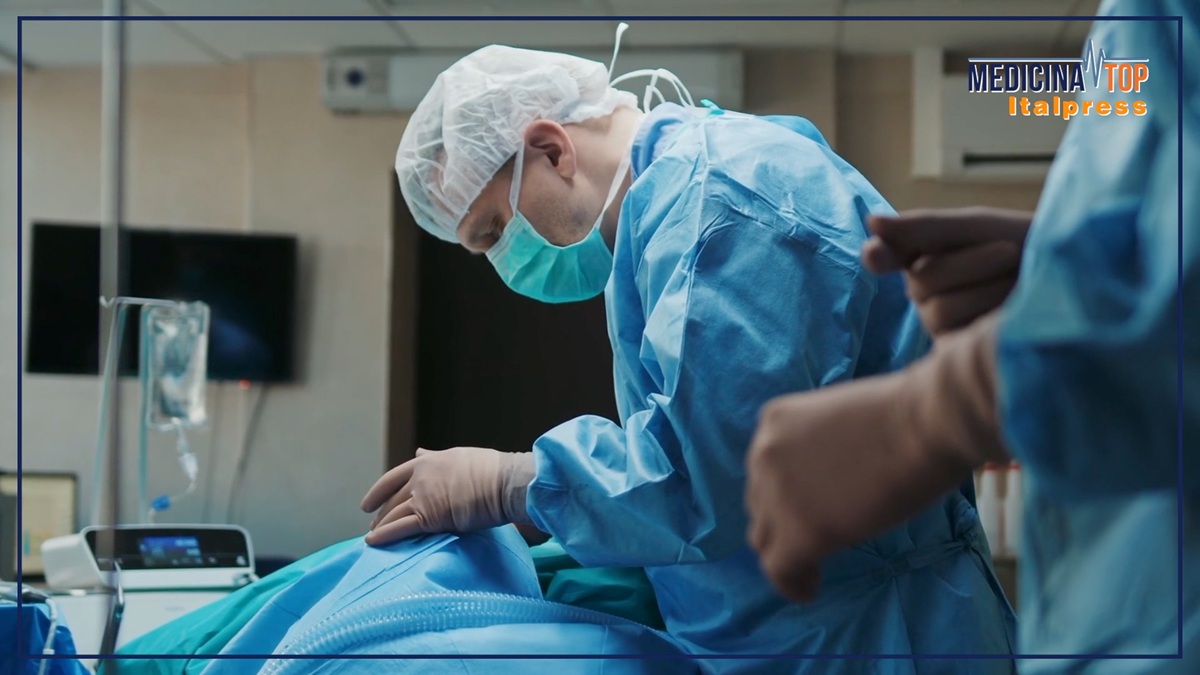
MILAN (ITALPRESS) – Medicine and regenerative surgery are frontiers of contemporary medicine in very rapid expansion: they are not limited to treating the symptoms of a disease or repairing a damaged tissue, but they stimulate biological mechanisms of self-repair and renewal of the organism, favoring a more natural, functional and lasting recovery. At the heart of this approach there is a key idea: the human body has its own and very powerful regenerative resources, until recently almost ignored. Regenerative medicine studies how to activate, guide and support them through the use of cells, biological factors and advanced technologies, with applications that potentially affect all regions of the body. “More than an intuition, starting my research was the passion for molecular biology: the idea of isolating stems from fat seemed very smart, then it actually saw how the goal was to reduce the size of fat particles to the maximum. I thought that this was taken with normal cannules, which maintain much more the structure of the fat taken, and it could be reduced to very small dimensions maintaining the structure probably this will make the stems present in the vascular network of the adipose tissue: this was my intuition agency”, said Carlo Tremolada, professor added at the Diabetes Research Institute (Dri) of the University of Miami and scientific director.
One of the peculiarities of adipose tissue, he continues, is to have “a huge network of micro-vases, which on the top have small cells that are called periciti: these are the precursors of stem cells that repair the tissue. As plastic surgeons we also had the luck that people would take it away, so we were in abundance that seemed to throw and instead could be very useful: if you really fail not to destroy these very small pieces, they attack and work for a very long time, you leave it time to regenerate naturally and the game is done.” The amount of studies carried out on the fat is of great importance since, according to Tremolada, “having a microvascular network with over the cells is as if we had a customized pharmacy in which if it is left all together no information is lost and the adipose tissue works even better: this is precisely because the pieces are so small, so easier to insert in the joints. First putting fat in the joints seemed like a blasphemy, but in maxillo-facial surgery fat is often used as an interposition in various situations: the fact that there were studies on isolated stems that were working a little bit and a little no led me to attempt an infiltration within the articulation, which is much less traumatic.”.
“The very small pieces – it points out – perfectly stick to the synovia, which is the membrane that causes the regeneration of the joint so as to strengthen it enormously: the cells are detached from the vessels and begin to throw out the anti-inflammatory and porfino-similar substances, then after six weeks they command the local stems already differentiated what to do.” Today, he adds, “it seems not yet possible to regenerate the nervous tissue, but I am convinced that instead it will be: on the nerves and peripheral muscles even years after the muscle pretreated with adipose tissue can resume functionality. Today’s regenerative medicine is still very blocked by regulatory problems: the European Society of transplants says that a tissue must be transplanted into the same fabric, I say that if there is a transplant of micro-vases these are everywhere and therefore can be transplanted everywhere; just show that the operation is safe.”.
One of the reasons for which Italy is attesting among the excellence in the matter of transplants, concludes Tremolada, is the presence of rules: these in fact “help so much research, the cages do not make sense and we surgeons know it well. Regenerative medicine is to help everything that increases the regeneration capabilities of your body: we could go beyond using regenerative medicine systems for pathologies, even on this I am doing research and in the future on the one hand we will open to halogen therapies, on the other we will push for the use of microfracted tissue like Drag Delivery System, that is a system of transport of drugs”.
– photos taken from video Medicine Top –
(ITALPRESS).
