
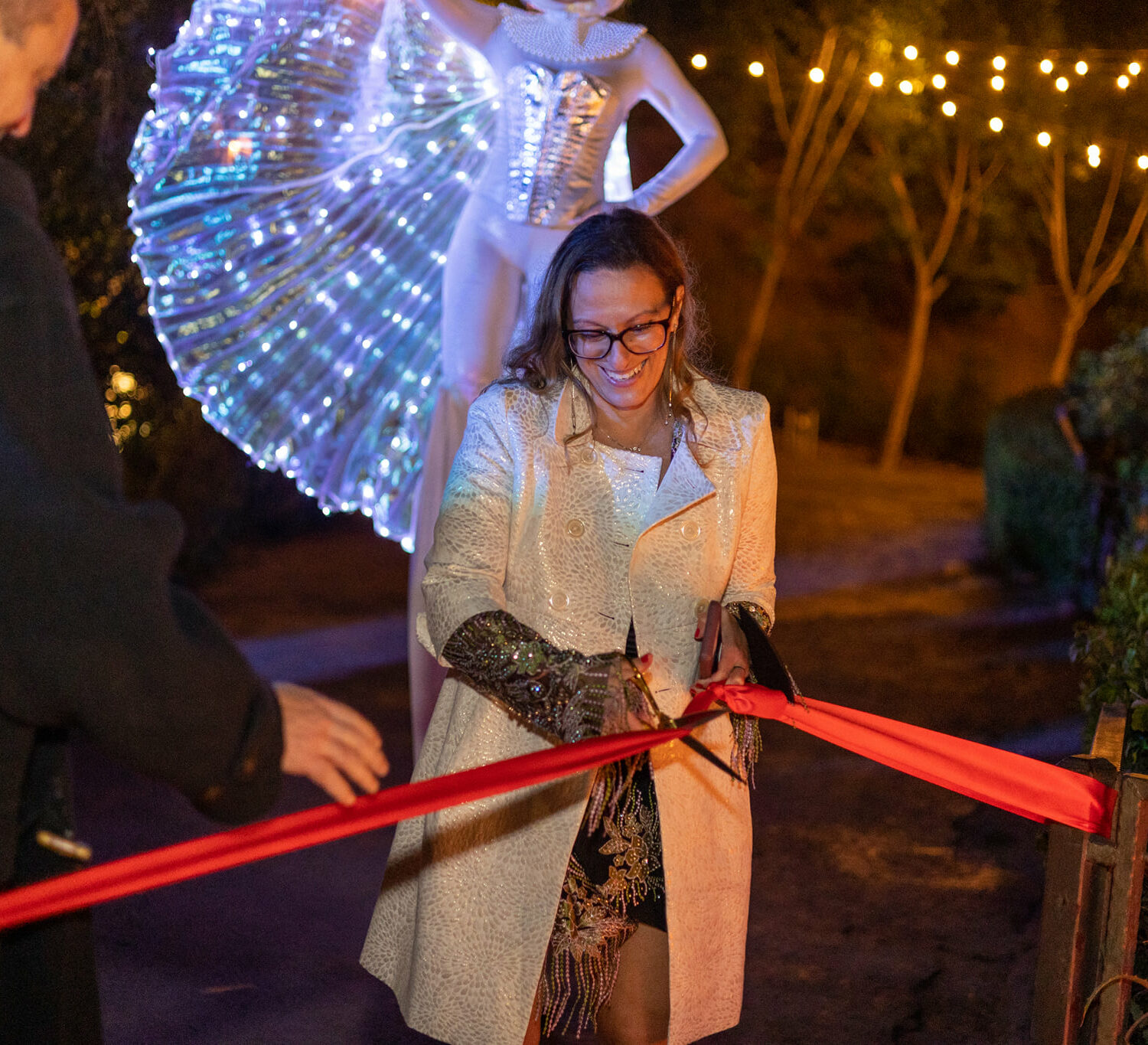
Leading a bridge between Italy and the American West Coast means measuring oneself every day against complex markets, new rules and an imagination that transforms business into experience. In Los Angeles, the beating heart of creativity and innovation, the Italian Chamber of Commerce West has for more than two decades been a garrison for businesses seeking to take their first step into the United States. At its helm is Genny Nevoso, Executive Director, who tells how it accompanies Made in Italy among opportunities, challenges and new forms of entrepreneurship.
Genny, what is the main mission of the Italian Chamber of Commerce West and how does it support Italian companies that want to enter the U.S. market, particularly in California?
The main mission of the Italy-America Chamber of Commerce West is as simple to tell as it is challenging to accomplish: to open doors. Doors of markets, of contacts, of opportunities. Our task is to act as a solid bridge between Italy and the West Coast, particularly California, which is not just a market, but a complex ecosystem, competitive and – for those who can read it – extremely rich in opportunities.
We support Italian companies with a tailor-made approach: no pre-packaged packages or events, but tailored strategies. We start from the analysis of the product or service and check its compatibility with local taste, regulations and dynamics. Then we accompany companies through the most delicate steps: finding distributors, making business deals, meeting buyers, dealing with communication and marketing in a language and cultural context that, although “Western,” is very different from ours. California, I always say, is a laboratory of the future: if a product works here, it has a good chance of working elsewhere. But it’s not enough to arrive with a good idea: you need preparation, adaptation and a constant presence. And we are here to make sure that the first step is not the last.
IACCW Italian Excellence Gala 2023
Which Made in Italy sectors are experiencing the greatest expansion in the United States today?
In the United States, and particularly in California, Made in Italy has a fascination that never goes out of style. But today there are sectors that are experiencing a noticeable acceleration.
Quality agribusiness remains our most recognizable calling card: we are not just talking about wine, pasta or extra-virgin olive oil, but protected-designation and niche products, capable of telling the story of territories and traditions. The American consumer, especially on the West Coast, seeks authenticity and traceability: they want to know not only what they are eating, but where it comes from and who produces it.
Alongside food, there is design-from furniture to lighting-that finds a market here sensitive to functional beauty and high-end manufacturing.
We also recall the chemical-pharmaceutical sector, which reached $13 billion in 2024 with 31.4 percent growth, and mechanics-machinery, historically strong, with nearly $18 billion in exports. Three different sectors, but united by innovation, quality and a narrative that convinces the U.S. market.
How has the profile of the Italian entrepreneur entering the American market changed in recent years? Is it more about startups, established brands or new generations of professionals?
In recent years, the profile of the Italian entrepreneur looking to the United States has become more varied and dynamic. Alongside established Made in Italy brands, which strengthen their presence with subsidiaries, sales offices and sometimes local production, we find a growing number of global startups, realities born already with an international strategy and the U.S. as their first target. Suffice it to say that 6 percent of Italian startups move abroad and, of these, 85 percent choose precisely the U.S. market, generating 17 percent of the total value of “migrated” companies and often adopting structures such as the Delaware Flip to attract local capital. Completing the picture is a new generation of “hybrid” entrepreneurs: professionals who start from family or sector experiences in Italy and build in the U.S. a portfolio of diversified activities – from franchising to real estate, from catering to innovation – mixing Italian roots and flexibility typical of the American market.
Los Angeles is an iconic city of creativity and innovation: how important is the cultural component in promoting Italian business?
Very much so. In Los Angeles, the cultural component is not a side dish; it is an integral part of the business strategy. Here the narrative matters as much as – and sometimes more than – the product itself. The city thrives on narratives and storytelling: Made in Italy works when it can transform itself into an experience, tying quality, aesthetics and values to a credible and fascinating story. Whether it is a wine, a dress or a designer lamp, success comes from the ability to make consumers imagine a piece of Italy in their lives. And in Los Angeles, where imagery is an industry, this ability becomes a decisive competitive advantage.
Italian cuisine is a very powerful gateway to our culture. What role does food & wine play in the activities of the Chamber of Commerce today? Do you collaborate with chefs, restaurateurs or gastronomic events?
Food & wine is one of the pillars of our promotional activities, and it is also for the entire network of Italian Chambers of Commerce Abroad, coordinated by Assocamerestero. For years, the IACCW has developed educational, promotional and knowledge-sharing events in defense of authentic Italian food and wine products, as part of projects such as The Extraordinary Italian Taste and, later, The Authentic Italian Table. In this context, over the years, we have involved local chefs, such as Gino Angelini, Barbara Pollastrini – formerly True Italian Taste Ambassador – Luigi Fineo, Steve Samson, Roberto Gerbino and created collaborations that over time have featured names such as Franco Pepe, Enzo Coccia, Nancy Silverton, Daniele Uditi, Antonia Klugman and Enrico Bartolini, along with Italian regions, consortia and producers of excellence.
Another important asset is the network of restaurants certified with the Marchio Ospitalità Italiana (Marchio Q) seal, which we intend to enhance through activations capable of telling the story of contemporary Italy at the table, avoiding the clichés that too often crystallize our culinary tradition into a still image in time.
Speaking of sustainability and new trends, how are Italian companies adapting to the demands of the U.S. market in terms of green economy and digitalization?
In California, sustainability and digital are not a plus, but the passport of entry: Italian companies win when they know how to combine ESG and innovation. On the green front, Italy is among the most sustainable economies in the G20 and the European Union, with steadily declining emissions intensity.
On the digital front, the NRP allocates some 47 billion euros-26 percent of the total-to innovation, with initiatives ranging from Industry 4.0 to healthcare and digital education. Digitization is also a driver for exports: so-called “learning by exporting” encourages the use of e-commerce, B2B platforms and advanced logistics to better serve markets such as the United States.
However, critical issues remain: only 45.8 percent of Italians aged 16-74 have basic digital skills (compared to an EU average of 55.5 percent), and many SMEs lag behind in adopting artificial intelligence and advanced technologies.
What tools does the IACCW offer to Italian SMEs that want to export products or services to California and the U.S. in general?
The IACCW is a strategic facilitator for Italian SMEs that want to export to California and the United States. We offer tailored market entry services: market analysis, feasibility studies, competitor assessment and identification of the most effective distribution channels.
We organize agendas of B2B meetings with buyers, distributors and selected partners, and promote companies through events, trade missions and study tours in collaboration with the worldwide network of Italian Chambers of Commerce, Italian institutional partners and local ones.
We complement this with support on technical and operational aspects-from regulatory compliance to certifications, logistics to local marketing-with a focus on storytelling and brand positioning to speak the language of the California consumer, who is sensitive to quality, sustainability and innovation.
Have you activated any recent projects or partnerships with Italian or American institutions to support Made in Italy?
The projects are numerous and always arise in collaboration with Italian institutional partners, benefiting specific companies and sectors. Within the framework of B2B actions and projects, we recently worked with two Confindustria chapters to organize an experiential study tour between Northern and Southern California, which involved 54 business representatives from different sectors. With the Campania Region we developed and implemented activities to support more than twenty companies in the food & beverage sector, while with the Chamber of Commerce of Umbria we launched targeted initiatives. There are also ongoing projects dedicated to the promotion of extra virgin olive oil, a strategic sector for Made in Italy in California.
What does it mean to you, personally, to represent Italy in an international context like Los Angeles?
Representing Italy in Los Angeles, for me, is much more than a professional role: it is an invisible thread that brings me home every day. I left my homeland over 20 years ago, but I never really left it. I carry with me the sound of voices, the smells of the cuisine, the beauty of art, the rhythm of the squares, and I intertwine them with the inexhaustible energy of Los Angeles, which thrives on creativity and the future.
Every project I carry out, every Italian enterprise I help to tell its story and grow here, is a way to give something back to Italy, to make it seen not as a still image in time, but as a country that is alive, contemporary, capable of innovating without losing itself. It is a mission, but also a privilege: to be that bridge between what I am and what I have learned to become.
What advice would you give today to a young Italian entrepreneur who dreams of bringing their brand to America? Where should he or she start?
Entering the U.S. market is a marathon, not a sprint: it takes patience, strategy and authenticity. It takes study, research and vision.
I suggest starting with a thorough analysis of demand, distribution channels and necessary certifications. In parallel, build a network of local contacts: here relationships matter as much as the product, and credibility is won step by step.
Finally, knowing how to localize marketing and embrace market customs: the brand must remain authentically Italian, but integrate naturally into the local cultural context and communication codes. It is a path that requires targeted investment.
Yours is an international professional success story. How did you come to serve as Executive Director of the Italian Chamber of Commerce in Los Angeles and for the West Coast? Was there a defining moment in your journey?
My story at the Chamber began over 20 years ago as a volunteer intern. From day one, I worked with the same seriousness and dedication as in paid employment, because I believed deeply in what I was doing. Later, I gained professional experience outside that enriched me with new and cross-cutting skills. When I returned to the Chamber, I brought patience, determination, and vision to the table.
The decisive moment came when the Board, having to choose a new Secretary General, decided to believe in me. In such cases, timing is important: you need patience, but also the desire to get involved, to dare and to innovate. At the time, the Chamber was going through a complex phase: accepting the position meant taking on the responsibility of addressing and solving some critical inherited issues, even before I could implement my vision.
Since then, I have worked to bring a fresh perspective, to debilitate and elevate the quality of our events and activations, and to strengthen the Chamber’s positioning as an institutional point of reference and as a laboratory of ideas and opportunities for the community. Every day for the past nine years, I have worked to honor that trust with the same passion and determination as on my first day.
Being a woman at the top of an institution like the Italian Chamber of Commerce in a competitive environment like the U.S. is not a given. What is your view on female leadership today? And what message do you feel you want to give to young Italian women who want to establish themselves abroad?
Being a woman in a top role, in a competitive environment like the U.S., is less rare today than it used to be, but it is still not taken for granted. In the network of Italian Chambers of Commerce Abroad, many of the Secretary General figures are women: a positive sign, showing that competence and leadership skills are genderless. But society, while improving, still carries subtle prejudices, unspoken expectations and sometimes cultural resistance.
My vision is that women’s leadership today must be both solid and fluid: able to have a clear direction, but also to adapt, innovate, and read change before it happens. To young Italian women who want to establish themselves abroad, I would say three very concrete things.
You need preparation and vision: study, update, and develop an international perspective: it is what will allow you to enter conversations that matter. Build your network: relationships are still strong currency, especially outside Italy. Cultivate real contacts, based on mutual trust. Authenticity and adaptation: be yourself, but learn to read and respect the cultural codes of the country in which you operate. Adaptation is not renunciation, it is strategy.
Above all, do not wait for a “permission” to take the space you deserve. Today more than ever, the power to make a difference is in the hands of those who decide to use it with courage and awareness. Do not ask for space: occupy it. Because, if you wait for them to give it to you, they will only give you what is left over.
The article Genny Nevoso’s work between Los Angeles and Italy comes from TheNewyorker.
