
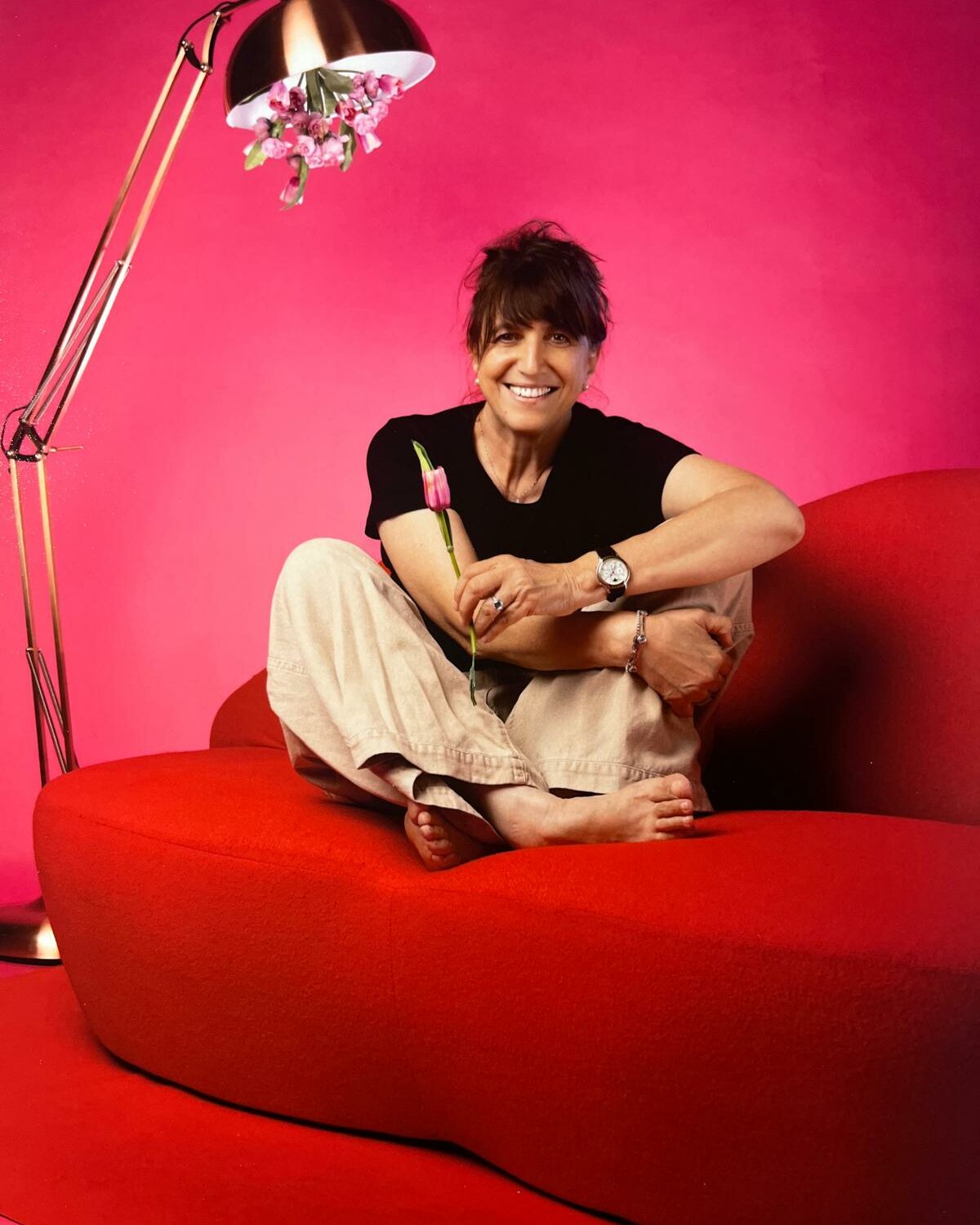
On the occasion of 25 November, an international day for the elimination of violence against women, Giusi Fasano – among the most careful signatures of the black and judicial chronicle – focuses on the limits and responsibility of information, the weight of words, the pain of families and the urgency to protect those who remain, especially the orphans of feminists.
You’ve been following the black and judicial record for many years. Is there a case of gender violence that has followed closely, which has struck you more than others?
There is a case that for me was “history” and it is that of Lucia Annibali – flared with acid by two sicari sent by her ex-girlfriend – not only for writing together with her the book “I am there. My story of non-love”, from which a film was taken, which tells his story but because his aggression has deeply shaken the country. It was a kind of violence that, until then – it was 2013 – had not found a real space in public narrative, except for cases of different type than that of Lucia. For me it is a particularly significant case because I could deepen every detail, know Lucia closely, become part of her human history.
I went very deep. I know retroscene and details that reminded me, once more, how banal and repetitive the pattern that leads to evil. The ruthlessness of the face, which is ruthless to identity, has become a very powerful symbol.
And what, according to you, is the case that has had the greatest impact on public opinion?
If we look at the last few years, it is impossible not to think about Giulia Cecchettin. His story has become central, even by the reaction he generated. The phrase of his sister Elena – “It is not a monster: he is a healthy son of the patriarchate” – referred to the boy who killed her, raised the veil on a word we put in the attic: patriarchate.
That word, in that context, put the fundamental notion of gender violence at the centre. Is it true, the patriarchate no longer exists in law, but in fact? Male predominance continues to manifest itself in families, relationships, work, and social expectations.
The Cecchettin case forced public opinion to look inside that old box we were trying not to open. Reactions, including maldictions to the Cecchettin family, are themselves an expression of a patriarchal culture that is alive among us. That is why there is a turning point in my opinion.
In the story of a feminist or case of violence/abuse immediately by a woman, what is the main criticality that journalists and journalists encounter in reconciling the need to inform with that to avoid spectacularization or stereotypical narratives?
Every case is different and every journalist is different, for sensitivity, experience, knowledge. I wouldn’t put everything in one boiler.
Of course, there are basic rules, today much more respected than ten years ago. The mistakes are still there, but they don’t just depend on journalists. Let’s think of a fact that happens at 10:00 p.m. you must collect the information quickly to close the newspaper edition coming out the next day. The risk is to rely on what is on the web and let yourself be dazzled by unexpected narratives.
The difference is the job: do not fall into trivial errors, do not get influenced by ready stereotypes. And above all remember that there are things that you should never do, never.
What are the most important changes, in the way of telling violence about women, which he observed in editorials and journalistic language?
Compared to my beginnings, a great step forward was to disassemble the idea that a woman “if she went looking”. Once it was very common to read references to the fact that “it was alone”, “it was late”, “it was in a place where it was not supposed to be”. Today it is understood, or at least hope, that violence always belongs to and only to those who commit it.
It is essential to move the attention from her to him. Saying “he left it and he killed it” is a fact, but it must be accurately told. Not with formulas like “raptus of jealousy”, which does not exist as a psychiatric category and erases all the path that precedes violence.
Signals are always there. The problem is knowing how to recognize them. And yes, it is often a problem also of women, who tend to forgive, justify, to say “I change it”. Another question we have to ask ourselves is: why does not the same frequency of men killed by women for being left? Perhaps because many women have greater ability to live with rejection and abandonment.
A bad narrative is always the sprout of a justification for men who do violence against women. Every word can turn into a second wound. We must start from the other end of the thread: ask yourself why the man reacted using violence, instead of focusing – for example – on the fact that she left it.
What are the responsibilities of newspapers and TV in contrasting culture that normalizes gender violence?
Responsibility varies greatly depending on the medium. An account is to write an article, have time to reflect on each word, weigh it, choose it; another is being in a live connection to the tg, where in no time you have to give as much information or updates as possible or in a tv talk, in the middle of a conversation or discussion; another is to publish a post on social media as an expression of a thought.
On all these plans, however, count personal sensitivity and ability to choose what to say and how to say it. The risk is to fragment a complex story like that of the relationship between people or violence, in pills, on social or on TV, that do not make enough justice.
The responsibility for the impact of all this is directly proportional to the weight of those who write or say that. I make an example: when a public figure makes a sexist joke, even if he thinks of “play”, legitimate to do the same. That’s how you feed the idea that it’s normal to say that “a girl with the miniskirt is looking for her” or that a woman only applies as desirable.
The responsibility is collective: from the media in general, from social to tv, to the advertising that still today mortifies and exploits women.
Telling these crimes involves a strong emotional impact. How do you manage the balance between personal involvement and professional distance?
My emotionality, in these cases, has nothing to do with the people involved. I try to put on a armor to work well: being professional for me means being delicate, not insisting when someone does not feel like talking, not violating a pain that does not belong to us.
I try to get to people through those who already have next door, people of trust, so that they feel more comfortable – when you can – and then, when possible, I try to understand, their point of view. It applies to the victims, but also to the authors of the crimes: understanding does not mean to justify.
Deliciousness is the most important thing: do not bring people into the shadows from which they try to stay away.
Then, of course, the emotional impact comes anyway, especially then, when there are children involved, the armor no longer serves anything. Talking to a mother who loses a son is devastating. But the wealth of people, in pain and joy, lies in what they have lived. I, what I am today, I am also thanks to the many people I have met working in the news and that they have remained, somehow, part of my life. They changed me.
The feminist orphans are often forgotten. What do you think of their condition and battles on the regulatory level?
They are children who have seen the father kill the mother, sometimes the father himself kills or ends up in prison. Their lives are forever marked, along with those of grandparents or families. The hyter waiting for them is very hard and bureaucracy does not help them enough: I think of the battle of Vanessa Mele, who opposed it so that her father – a murderer of her mother – could not inherit or benefit from anything.
One case like this is the confirmation of how much victims are then really changing things. As happened with Lucia, that from her shame a battle against “identity murder”.
The article Giusi Fasano and the difficult story of violence: “Every word can be a wound” comes from IlNewyorkese.
