
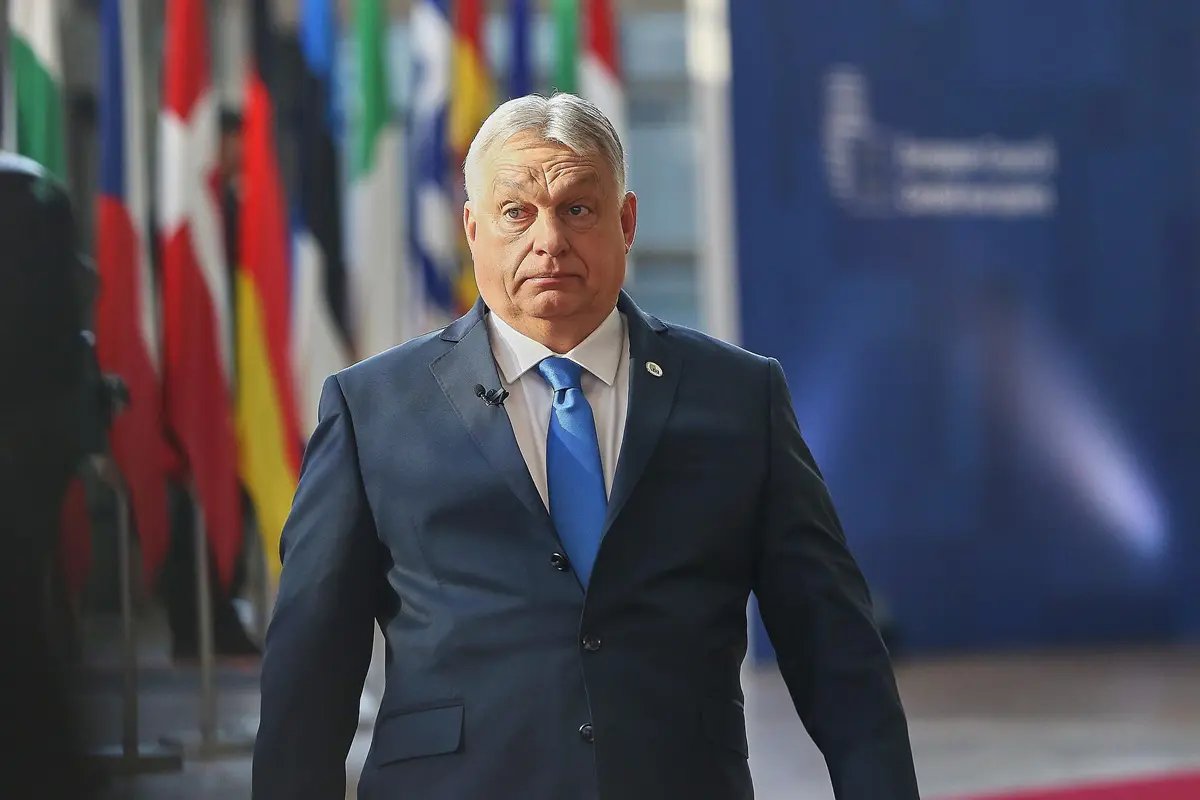
BUDAPEST (UNGHERIA) (ITALPRESS) – The parliamentary elections of 12 April in Hungary are one of the most delicate political passages in recent years for the country. After more than 16 years in power, Premier Viktor Orban faces a challenge that appears, for the first time, really open, inspired by the opposition led by Peter Magyar, leader of the Tisza party and protagonist of a rapid political rise. The vote involves an electoral body of about 8 million citizens, facing a total population of just under 10 million inhabitants. The voters are called to renew the 199 seats of the National Assembly, of which 106 are assigned by uninominal colleges and 93 with proportional system on a national list. It is an electoral mechanism that has been modified several times over the years by governments led by Fidesz and which tends to favour the party of a relative majority, allowing even with reduced margins to obtain a solid parliamentary majority. In addition to the government block formed by Fidesz-KDNP and the main opposition force represented by Tisza, the political framework includes other actors such as the Democratic Coalition, expression of the centre-left, the radical nationalist party Mi Hazßnk and the Two Code Dog Party, anti-establishment formation. However, the competition appears increasingly polarized between Orban and Magyar, turning these elections into a real referendum on the power system built by the Hungarian Prime Minister since 2010. According to the latest available polls, Tisza would be credited around 39% of consents, compared to about 30% of Fidesz. The detachment is even wider among voters who declare that they have already decided their vote, although the share of indecisation remains high. Despite these data, the final outcome remains uncertain because of the electoral system and the territorial distribution of consent, historically favorable to the government party in rural areas.
The election campaign took place in a particularly tense and polarized climate, with opposite views from the two main contenders. Viktor Orban has always built his strategy around the issues of security, sovereignty and national identity, and has now maintained the same path. Compared to the war in Ukraine, the Hungarian prime minister insisted on the need to keep the country out of any military escalation or direct commitment, at the same time accusing Brussels and Kiev to “execute pressure” in the opposite direction. The disagreements with Brussels also touch the related issue of sanctions against Russia, and even in this case the current premier called for the need to protect national interests. “Hungary first”, in short, recalculating the motto of American President Donald Trump that in fact shows a greater harmony with Hungarian politician than Brussels officials. Not by chance Trump has come the most convinced support, with words of appreciation expressed by the Truth platform a few hours from the Hungarian vote.
The election campaign took place in a particularly tense and polarized climate, with opposite views from the two main contenders. Viktor Orban has always built his strategy around the issues of security, sovereignty and national identity, and has now maintained the same path. Compared to the war in Ukraine, the Hungarian prime minister insisted on the need to keep the country out of any military escalation or direct commitment, at the same time accusing Brussels and Kiev to “execute pressure” in the opposite direction. The disagreements with Brussels also touch the related issue of sanctions against Russia, and even in this case the current premier called for the need to protect national interests. “Hungary first”, in short, recalculating the motto of American President Donald Trump that in fact shows a greater harmony with Hungarian politician than Brussels officials. Not by chance Trump has come the most convinced support, with words of appreciation expressed by the Truth platform a few hours from the Hungarian vote.
On the other hand, Peter Magyar set his campaign on internal issues such as corruption, the functioning of institutions and economic difficulties. Tisza’s leader promised to “restore the rule of law” and “report Hungary to the centre of Europe”, stating that the country would risk becoming more exposed to Russian influence, especially on the energy level, if the current government were to remain in office. The economic context is one of the main weaknesses of the government. After a long phase of moderate growth, the country has recorded a significant slowdown, accompanied by a high inflation that has affected the purchasing power of households. This has fueled widespread discontent, especially in urban areas and among younger generations. For the first time since 2010, therefore, the outcome of the elections is really uncertain. If the vote from the inside appears a test on the socio-economic results of the executive line, according to international observers it is a question of redefining, or confirming, the future direction of Hungary in an increasingly complex geopolitical context.
– photo IPA Agency –
(ITALPRESS).
