
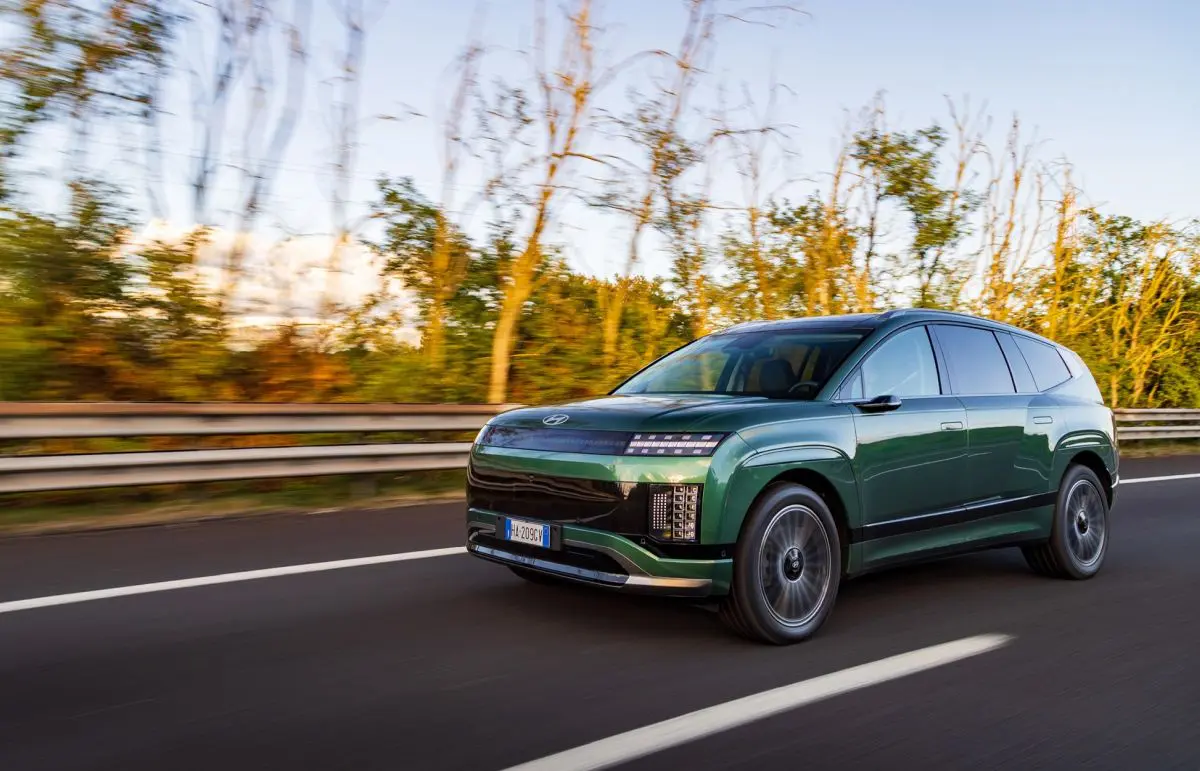
MILAN (ITALPRESS) – Hyundai Motor Group is accelerating the launch of its advanced Vehicle-to-Everything (V2X) services globally. These solutions allow electric vehicles to store, supply and share electricity with homes and electricity networks, redefining the role of electric vehicles as key components of the global energy ecosystem.
Extended services include Vehicle-to-Grid (V2G) solutions in Korea and Europe and Vehicle-to-Home (V2H) service in the United States. These initiatives confirm the commitment of Hyundai Motor Group in enhancing the role of electric vehicles well beyond mobility, contributing concretely to the development of more efficient, resilient and renewable energy systems on a global scale.
“We expect V2G services to offer customers of electric vehicles a new mobility experience, closely linked to energy management in everyday life. Through the implementation of V2G services in Korea and abroad, we aim to strengthen the competitiveness of electric vehicles while playing a central role in the development of the sustainable mobility market and the future energy market” – says Hokeun Chung, Executive Vice President of Future Strategy Division of Hyundai Motor Group.
In Korea, the Group will launch its first V2G pilot service on the island of Jeju by the end of 2025, using Kia EV9 and Hyundai IONIQ 9. The initiative addresses the problem of excess renewable energy production in Jeju, exploiting electric vehicles as flexible network resources, able to return to the network the electricity stored.
This public-private collaboration highlights the joint commitment of institutions and industry to promote the development of V2G technology in Korea. The Group, as head of the project, supervises the technological verification of V2G and manages its overall operation. The Special Autonomous Province of Jeju supports the necessary regulatory and policy adjustments, while Korea Electric Power Corporation (KEPCO) facilitates the integration of electric vehicles into the distribution network. Finally, Hyundai Engineering focuses on the analysis of charging stations operations and the identification of potential future service developments.
Thanks to the real-time energy market in Jeju, participants can recharge their electric vehicles when energy prices are lower and return electricity to the network at times of higher demand, favouring system stability and contributing to total energy costs. At the end of the pilot phase, the Group plans to extend the V2G services to the national level, in collaboration with government partners and local administrations.
In Europe, the Group is expanding its customer-oriented energy solutions by introducing a V2G service in the Netherlands by the end of 2025. As the first OEM to launch a customer-focused V2G service, this initiative is based on the Smart Charging (V1G) service introduced at the beginning of the year.
The V2G service uses the two-way charging technology of Hyundai and Kia vehicles. Customers who subscribe to a tariff plan with the Group’s energy partners can benefit from automated V2G planning, which optimizes charging in the reduced-rate time slots and allows the net re-intake of excess energy during peak price periods. This approach allows not only to reduce electricity costs for customers, but also to generate new value through active participation in the energy market.
The initiative also highlights the Group’s contribution to the national level. In the Netherlands, a country characterized by high electricity prices and an increasingly variable energy system, the V2G service contributes to the stabilization of the electricity grid. The service also plays a key role in supporting the expansion of renewable energies, strengthening the flexibility and reliability of the system.
In an initial phase, the service will be available for Hyundai IONIQ 9 and Kia EV9, with the aim of extending its application to other electric models. The Group also intends to extend the V2G service to other European countries, further improving customer experience and supporting the transition to smarter energy systems.
In the United States, the Group will launch Vehicle-to-Home (V2H) services in the short term, allowing electric vehicles to provide energy solutions in case of natural disasters that can cause power outages, or in peak periods of demand.
The V2H service uses energy stored in electric vehicles as an emergency power source for homes, strengthening the energy resilience of families. Kia’s V2H service – launched in February 2025 – allows EV9 owners to use their vehicle as a reliable home power source. Hyundai will introduce the V2H functionality from IONIQ 9, while Kia will also extend the service to the EV6 model. The service also allows owners of electric vehicles to store energy in the vehicle’s battery during non-stop hours and to use it in homes during periods of higher demand, potentially contributing to the reduction of domestic energy costs and the improvement of overall resilience.
photo: Hyundai Italia press office
(ITALPRESS).
