
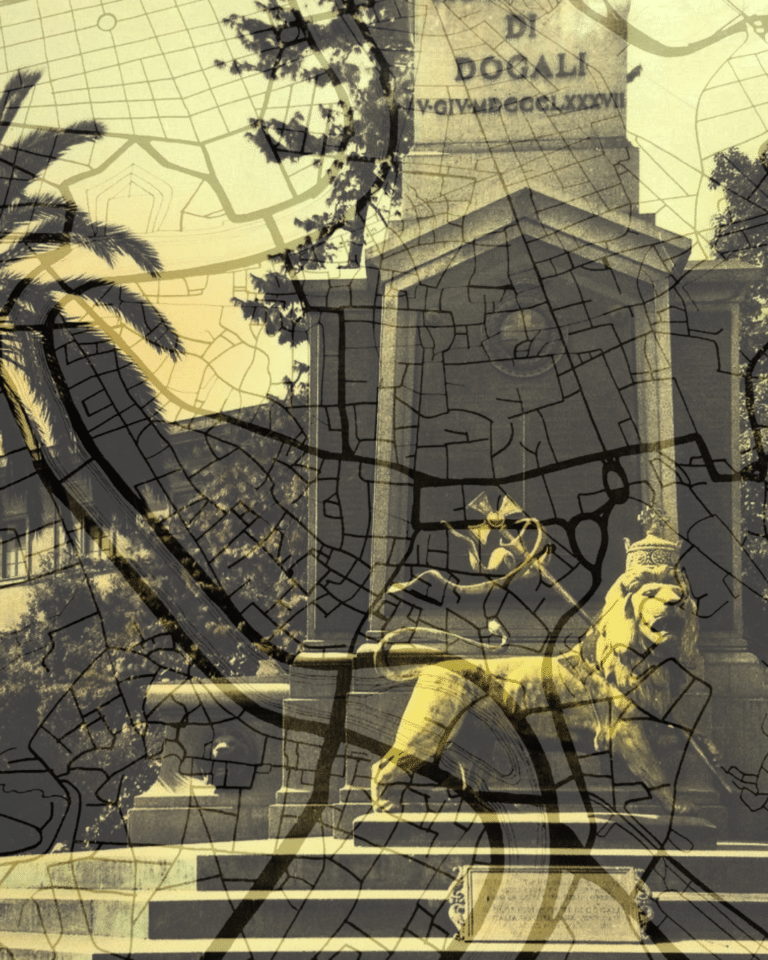
What is the relationship between the historical memory of a country and its cities, especially when that memory concerns colonialism and migration? It is what will be investigated during the review “Race, Migration, Italy”, cycle of meetings promoted by the Casa Italiana Zerilli-Marimò in collaboration with the NYU Department of Italian Studies, which on Monday 23 March 2026 will host a lecture in New York dedicated to the relationship between Italian colonial heritage and contemporary urban space.
The meeting, entitled “Rethinking Rome. Colonial Markers, Black Activism, and the Struggle for Resignification”, will be held by Kwanza Musi Dos Santos, activist and educator engaged on the issues of antiracism and environmental justice. The lecture will analyze how the city of Rome, through monuments, toponomas and public architectures, continues to reflect – often implicitly – the Italian colonial history, long marginalized in public debate and also in the national historical memory. The starting point is a well-established observation in the academic field: urban space is not neutral, but contributes to building and transmitting historical and identity narratives.
The work of Dos Santos is part of a series of studies and practices that in recent years has gained visibility in Italy, especially after 2020 and the global spread of mobilizations related to the Black Lives Matter movement. In this context, Italy began to confront more openly with its colonial past – which includes the occupation of territories such as Eritrea, Somalia, Libya and Ethiopia between the end of the nineteenth and the fascist period – and its cultural and social consequences. The intervention will highlight the forms of activism developed by aphrodiscendent communities and researchers, including practices of “resignification” of urban spaces, such as campaigns for the removal or contextualization of statues and street names related to colonialism.
Dos Santos, formed between the University of Rome Tre, Friedrich Schiller University Jena and Tilburg University, is co-founder of the intercultural association This is Rome and member of the Union of Justice Advisory Board, a European organization led by people of active color on the issues of climate and racial justice. His work is at the intersection of academic research and activism, with interventions in international contexts such as the Black Europe Summer School in Amsterdam and participation in media productions, including a documentary by Vice News dedicated to the Black Lives Matter movement in Italy. The event is open to the public on registration and will be entirely in English.
L’articolo A New York meeting on Rome and Italian colonialism proviene da IlNewyorkese.
