
By Vincenzo Petrone (*)
ROMA (ITALPRESS) – The American military intervention, which according to indiscretions issued this night by the Pentagon had to take place on Wednesday, would be postponed a few days, probably waiting for the South China Sea to arrive in the Persian Gulf the naval carrier group Abraham Lincoln. Also to prevent Iran from reacting to an attack attempting to close the Strait of Hormuz. The suspension of the executions already decreed by 800 protesters, outraged by Trump as his personal success, may have contributed to this postponement.
According to the same indiscretions, the suspension would have been agreed by Iranian leaders with Washington, through mediators of Qatar and the Russian Federation. Of course, this does not exclude at all that the military attack there is, possibly towards the second half of the next week, that is when, with the operational position of Abraham Lincoln, the American Navy will be able to act in total autonomy, without the political conditioning of Qatar, which houses the base of Al Udeid, or of other Arab countries that should somehow authorize the sighs of the bombers who had to come from other more distant bases. After all publicly announced threats, a full back march of Trump seems unlikely. It remains more than ever plausible that the military attack somehow takes place.
However, the suspense about how, where and when of the intervention against Iran should not make Washington and Tehran think in these hours they are not actively negotiating with each other, and even that Israel remains passively to wait for American planes to strike the targets to make his voice heard in Washington and Tehran. The Tel Aviv Services would in fact have already informed the Iranians that Israel would not join an American intervention and would not attack Iranian targets in advance, if Iran warrants that, in case of US attack, Iranian missile retaliation, although symbolic, would not affect Israeli targets. And Iran would have accepted.
After that, with all if and but possible, what will happen on the field will depend on a dynamic that no one can really prefigure. However, one can try to discern at least intuitively the interests at stake in the Iran-USA-Israel triangle. In the probable subtrace dialogue, these interests are the core of the negotiation. A price will have to be paid to the American credibility in the region after the promise that “help is on the way”, but this optical effect can be obtained with an attack little more than symbolic on some barracks of the forces of repression or with a more consistent but still “telephonate” intervention and limited to strictly military objectives, without wanting to put at risk the power of Ayatollah Khamenei and its revolutionary Guards.
What Israel and Saudi Arabia can certainly not want is to bring back the Obama Agreement on Iran’s nuclear, the “Joint Comprehensive Plan of Action” which, never to forget, has had its merits, but also in the best of hypotheses would only limit Iranian enrichment activities. It would not have prevented them, nor would it have in any way reduced, and less prevented, the Iranian production of ballistic missiles able to easily hit Israel and the whole of the Gulf Region. On the ballistic missiles, it is a few days ago the news, indeed little resumption from the media, of the American abbordage of a Russian ship that from China transported in Iran an important cargo of ammonium perchlorate, essential component of the solid fuel that feeds the engines of the ballistic missiles.
This confirms that Iran has resumed its belly on the ground in recent months to restore the stocks of ballistic missiles that can hit Israel. And if an intervention of Israel should occur, it would have as primary objective the assembly structures of those missiles. Ultimately, Israel and Saudi Arabia are not worried about an imminent resumption of the Iranian nuclear program and therefore prefer that the Obama Agreement for now remains at the forefront. At the same time, in the 12-day war Israel inflicted a very hard blow on Iranian military potential, while the American bombing of Natanz, Fordow and Esfahan, if it did not obliterate the nuclear program, at least it delayed it several years. Although it does not succeed in destroying the approximately 260 kg of uranium enriched to 60% that Iran still possesses, but under mountains of rubble.
Polverizing dozens of anti-aircraft missile batteries, Israel has created free corridors in the Iranian air space that would allow it to return to “mow the fat”, i.e. return to hit every time it was necessary on the plane of perception of a revival of the threat. So, today the Iranian threat to Israel is under control and the threats of Khamenei are depotentiated. He cannot recognize it, but the Prince of the House of Saud, Bin Salman must have been more than happy with Israel’s “dirty work” because the Iranian nuclear program was a nightmare for the Saudi Kingdom. And it should be said that during and after the 12-day war, even in Europe, tears of pain have been wasted in the stationaries of Berlin, London, Paris and Rome.
The other question that might be at stake in the underbank contacts is that of a possible removal of the sanctions in existence, resulting from the Iranian violations of JCPOA. In fact, a few people can be pleased that the Khamenei bakers, at least until he is in power, return to fill hundreds of billions of dollars which, as the 50-year experience teaches, the Ayatollah prefer to spend in missiles and centrifuges for the enrichment of uranium. And to finance the Hezbollahs in Lebanon, the Hamas tunnels and weapons in Gaza and the Houthi in Yemen, as well as attacks in most of the world. But in these hours we begin to see in the background also the hypothesis that after a more or less symbolic attack, President Trump may feel that a “conditional” stabilization from Washington of the depotentiated theocratic regime is in the interest of the United States as a factor of regional stability.
And this stability cannot ignore the return of Iran to the legitimate oil market to give oxygen to the policies of containment of dissent and the Iranian domestic economic crisis, without therefore returning to finance terrorism around the world. While the Iranian nuclear theme would be left dormant for some time. The always and still transactive instinct of the American President is no longer allowed to be influenced by concepts dear to the old Europe, such as freedom and democracy. Unfortunately, in this possible underground negotiating scenario, what macroscopically would be put in the background would be the aspiration of a more or less substantial part of Iranians to freedom.
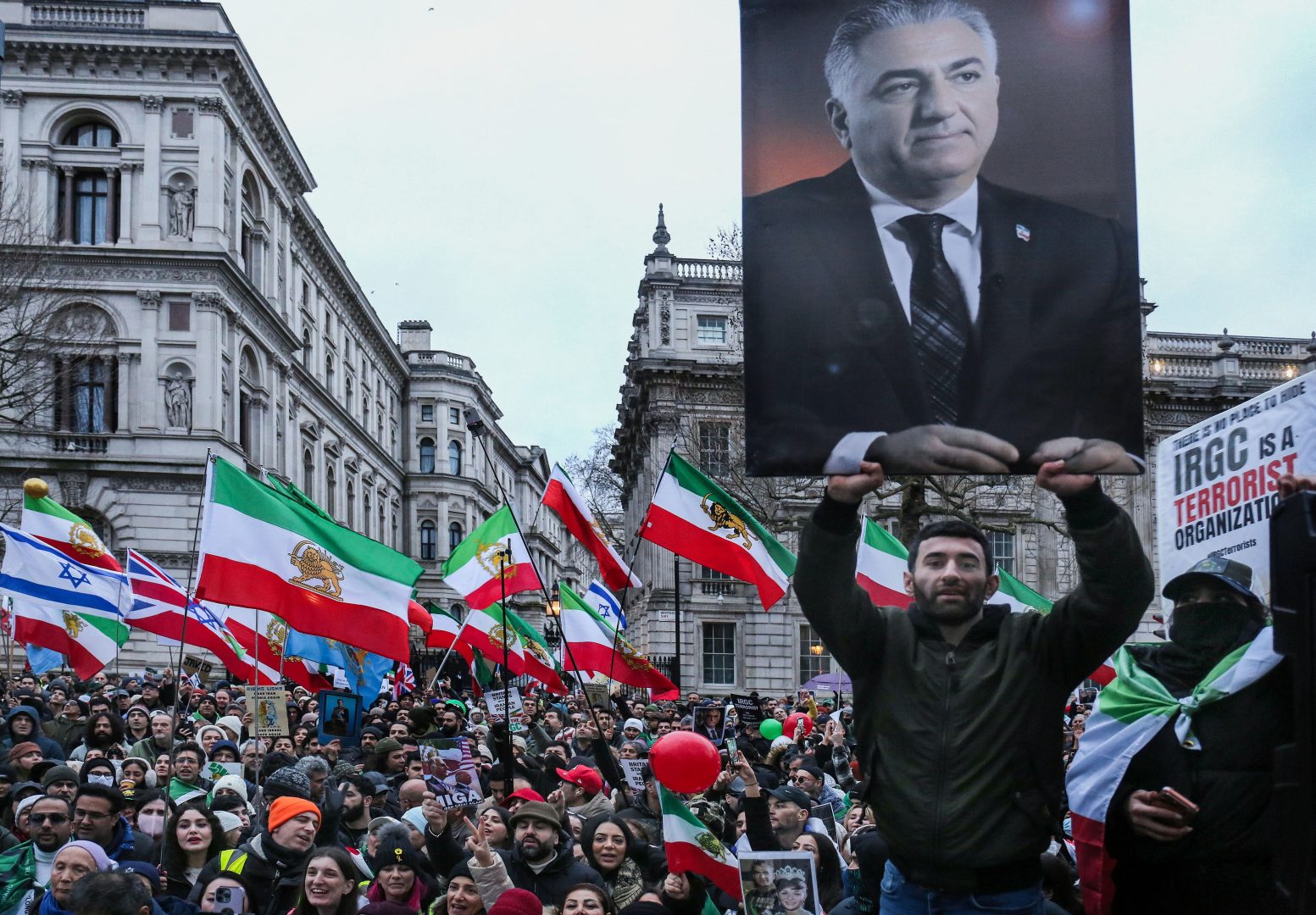
But is there really in reality an Iran that majority wants democracy, freedom of clothing, association, word and thought? The images of the streets of Tehran filled with courageous demonstrators are not enough to prove that this libertarian aspiration is absolutely majority in the country. And above all they do not show that the powerful and numerous merchants, the bazaars, those who in 1979 gave the final shoulder to the Shah closing the bazaars and then have acclaimed the triumphal return of Khomeini, have suddenly become so much more liberal than before.
It is hypothesized that the regime can satisfy the economic demands of the bazaars, including that of being able to continue making rain profits with the privileged currency trade. If Tehran can return to freely sell oil on the markets. The demonstrations we have seen in the Iranian cities have been interrupted since yesterday and, if they resume, the Guards of the Islamic Revolution have proven to be able to suppress them with the violence of recent days. Taking the sums, in Iran games are not made, the Theocratic Regime did not fall and, above all, the ultimate goals of the United States of Trump do not know each other.
They could begin to articulate through a more or less symbolic military intervention, faced with an Iranian commitment to slow down or freeze for some time their missile rearmament and funding of Hezbollah, Hamas and Houthi. The important counterpart would be a more or less formal loosening of sanctions. Many are the clues that suggest that on this scheme a negotiation is in progress. If it succeeds, this could be the substance of that “ Diplomatic Solution” and “de-escalation” that invoke important Arab allies leaders of America, along with some Europeans, among them our President of the Council yesterday, from Tokyo.
Many geological ages ago, the Americans during this negotiation with Iran would share information and support with us Europeans, Japanese and Canadians at the NATO table and the G7. But unfortunately these are only nostalgies of a time gone that will not return. So, “help is on the way”. I wonder if freedom will also come in the reduced terms in which so many Iranian girls hoped to get to feel the wind in the hair. If not just freedom as we mean it in Europe, at least like what, in these respects at least, had their mothers before Khomeini arrived.
(*) ambassador
-Photo IPA Agency-
(ITALPRESS).
